How much is a jin of Gastrodia elata seeds? An introduction to market prices
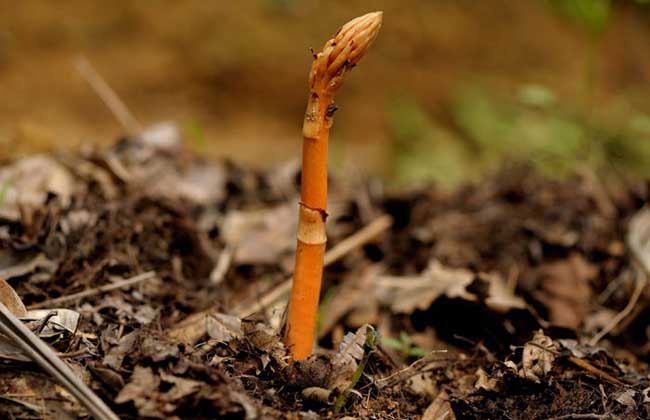
Gastrodia elata is a saprophytic herbaceous plant of the genus Gastrodia in the orchid family. The plant has no roots and no leaves and cannot carry out photosynthesis; it mainly relies on Armillaria mellea to supply nutrients for growth and reproduction. Therefore, the first step in cultivating Gastrodia elata is to cultivate a certain amount of high-quality Armillaria mellea material, and the second step is to purchase Gastrodia elata seeds and promptly plant them together with the Armillaria mellea material. Now let us take a look at how much a jin of Gastrodia elata seeds costs!
How much is a jin of Gastrodia elata seeds?
The price of Gastrodia elata seeds is around 40 to 50 yuan per jin. The market value of Gastrodia elata seeds is mainly determined by the quality of the seeds, chiefly whether they are wild, purebred, or black-red hybrid Gastrodia elata seeds; usually wild Gastrodia elata seeds are more expensive than both purebred and hybrid ones. At the same time, it also depends on whether they are generation 0 or generation 1 seeds. Generally, the price difference between generation 0 and generation 1 seeds is double. A jin of generation 0 Gastrodia elata seeds can generally plant about 1.5 square meters, while generation 1 Gastrodia elata seeds can plant about 1 square meter.
How to select Gastrodia elata seeds
1. You must choose fresh Gastrodia elata for planting, that is, do not buy Gastrodia elata seeds that have been stored for too long; try to choose Gastrodia elata seeds that have just been dug up.
2. Do not buy Gastrodia elata seeds treated with sulfur; when sulfur burns it produces smoke that can kill plants.
3. Do not buy seeds propagated indoors; Gastrodia elata grown indoors grows under artificial control, has poor resistance, and is not easy to survive.
4. Do not buy seeds that are all the same size; such seeds are basically pretty ones selected from culled Gastrodia elata seeds and sold as high-quality Gastrodia elata seeds, except for those dug on site.
5. Do not buy Gastrodia elata seeds from sandy fields; they are not suitable for long-distance transport, because during transport the sand rubs against the Gastrodia elata seeds, damaging them and affecting the seed survival rate!
Cultivated varieties of Gastrodia elata seeds
1. Red Gastrodia elata: The plant is relatively tall, often reaching 1.5 to 2 m. The rhizome is relatively large, often dumbbell-shaped, with the largest single weight reaching 1 kg and a water content of about 85%. The stem is orange-red. The flowers are yellow with a slight orange-red tinge, and the flowering period is April to May. It is produced in the provinces of the Yellow River basin and the Yangtze River basin. It grows fast, has strong adaptability, and is an excellent high-yield variety, with a single yield per square meter reaching more than 10 kg; it is widely cultivated.
2. Green Gastrodia elata: The plant is relatively tall, generally 1 to 1.5 m high. The rhizome is oblong-elliptical or obconical, with relatively dense nodes and many scale-like sheaths on the nodes, with the largest single weight reaching 600 g and a water content of about 70%. The stem is pale blue-green. The flowers are pale blue-green to white, and the flowering period is June to July. It is produced in the provinces and autonomous regions from Northeast China to Southwest China; it is not commonly seen in the wild and is occasionally cultivated.
3. Black Gastrodia elata: The plant is tall, 1.5 to 2 m high or taller. The rhizome is elliptical to ovate-elliptical, with relatively dense nodes, reaching more than 15 cm at the longest, with the largest single weight reaching 800 g and a water content often within 70%, sometimes only 60%. The stem is grayish-brown with white longitudinal stripes. The flowers are blue-green, and the flowering period is June to July. It is produced in western Guizhou and from northeastern to northwestern Yunnan. The rhizome has a particularly high dry-to-fresh ratio and is an excellent variety; most of the Gastrodia elata cultivated in Yunnan is black Gastrodia elata.
4. Pine Gastrodia elata: The plant is about 1 m high. The rhizome is often spindle-shaped or cylindrical, with a water content above 90%. The stem is yellowish-white. The flowers are white or pale yellow, and the flowering period is April to May. It is produced in northwestern Yunnan and often grows under pine and oak forests; because of its low dry-to-fresh ratio, it has not been introduced for cultivation.
5. Yellow Gastrodia elata: The plant is more than 1 m high, and the rhizome is ovate-oblong, with the largest single weight reaching 500 g and a water content of about 80%. The stem is pale yellow, pale yellow-green when young. The flowers are pale yellow, and the flowering period is April to May. It is produced in Henan, Hubei, western Guizhou and northeastern Yunnan, often growing at the edge of sparse forests, and is occasionally cultivated in the Southwest.
Cultivation techniques for Gastrodia elata seeds
1. Cultivation time: The cultivation time for Gastrodia elata is generally from late October of the current year to April of the following year. Sowing from late October to early December before the soil freezes is winter planting, and sowing after the soil thaws in March and April of spring is spring planting; in high-altitude mountainous areas the sowing time can be extended to May.
2. Cultivation site: The cultivation site for Gastrodia elata can be any land plot, such as in front of and behind houses, wild slopes, orchards and forest land, with sandy loam soil with strong air and water permeability being the best. The suitable temperature for growth is 10 to 30°C, the optimum temperature is 20 to 25°C, the relative air humidity is about 80%, the soil water content is 50 to 55%, and the pH value is 5 to 6, that is, a slightly acidic ecological environment
3. Land preparation and bed building: On flat land, beds can be made on the spot with a width of 80 cm, a depth of 10 cm, and unlimited length; on wild slopes, build terraced horizontal beds according to the slope and terrain, with a spacing of about 1 m between beds, and keep trees and weeds at the edges of the beds as much as possible to facilitate shading and prevent the bed edges or ridges from collapsing. In orchards and forest land, build beds according to the terrain and dig drainage ditches around them.
4. Temperature management: The suitable temperature for Gastrodia elata production is 13 to 25°C, and within this temperature range, the higher the better. In winter, prevent freezing; in areas below 1000 m above sea level, after planting, cover with 10 to 20 cm of thick branches, leaves and weeds, and in areas above 1000 m, the covering can be thickened to 30 cm. In summer and autumn, prevent high temperatures and drought; in addition to using shade materials to prevent high temperatures, water supplementation can also be used to lower the soil temperature. Water supplementation should be carried out after sunset when the soil temperature has dropped.