How much does a Eucommia ulmoides sapling cost? An overview of market prices
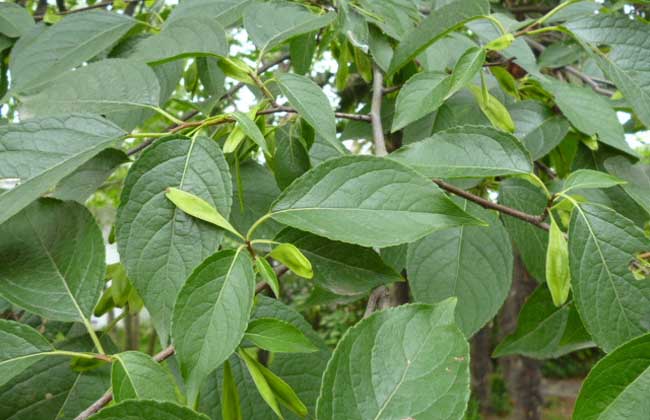
Eucommia ulmoides is a species endemic to China. It is a deciduous tree in the genus Eucommia, family Eucommiaceae. It prefers a warm, humid climate and a sunny environment. Mature plants can survive normally at -30°C. It can be cultivated in most parts of China and is distributed in Shaanxi, Gansu, Henan, Hubei, Sichuan, Yunnan, Guizhou, Hunan, Anhui, Jiangxi and other places. It has extremely high cultivation value. Let us now take a look at how much a Eucommia ulmoides sapling costs!
How much does a Eucommia ulmoides sapling cost?
Name Trunk diameter Price (yuan/plant) Name Trunk diameter Price (yuan/plant) Eucommia ulmoides sapling 4 cm 20 yuan Eucommia ulmoides sapling 5 cm 30 yuan Eucommia ulmoides sapling 6 cm 50 yuan Eucommia ulmoides sapling 8 cm 120 yuan Eucommia ulmoides sapling 10 cm 200 yuan Eucommia ulmoides sapling 12 cm 360 yuan Eucommia ulmoides sapling 15 cm 550 yuan Eucommia ulmoides sapling 18 cm 900 yuan Eucommia ulmoides sapling 20 cm 1300 yuan Eucommia ulmoides sapling 25 cm 1800 yuanNote: Eucommia ulmoides is a species endemic to China. In fact, sapling prices may fluctuate up or down depending on the time and season, market conditions, the size of the root ball, quality grade and other factors. The prices listed above for Eucommia ulmoides saplings of several different trunk diameters do not fully match every location due to differences in region and other conditions, so they are for reference only.
Propagation methods for Eucommia ulmoides saplings
1. Sowing: Sow in winter from November to December or in spring from February to March when the average temperature reaches above 10°C. Generally, warm regions are suitable for winter sowing, while cold regions can sow in autumn or spring to meet the low-temperature conditions required for seed germination.
2. Cuttage: In late spring and early summer, cut current-year softwood shoots into 5-6 cm cuttings and insert them into the seedbed to a depth of 2-3 cm. At a soil temperature of 21-25°C, they can root after 15-30 days.
3. Root cutting: When seedlings leave the nursery, prune the seedling roots and take roots 1-2 cm in diameter, cut them into 10-15 cm root segments for cuttage. The thicker end should be slightly exposed above the ground, and new shoots can sprout below the cut surface.
4. Layering: In spring, select strong branches and layer them into the soil to a depth of 15 cm. When the sprouts grow to a height of 7-10 cm, earth up and firm the soil. After 15-30 days, new roots can develop at the base of the sprouts.
5. Grafting: Use two-year-old seedlings as rootstock and select one-year-old branches from superior mother trees as scion. Cut-graft them onto the rootstock in early spring. The survival rate can reach above 90%.
Cultivation techniques for Eucommia ulmoides saplings
1. Site selection: For raising Eucommia ulmoides seedlings, choose a sunny gentle slope with deep, loose, fertile soil, soil from acidic to slightly alkaline, and good drainage. Deeply plow the soil, rake it level, and dig planting holes.
2. Base fertilizer: Apply 2.5 kg of farmyard manure, 0.2 kg of cake fertilizer, 0.2 kg of bone meal or superphosphate, and burned soil ash, etc., into the holes.
3. Cultivation: After Eucommia ulmoides seeds germinate, pay attention to cultivation and weeding, watering and fertilizing. Seedlings are averse to strong sunlight and need appropriate shading. In the dry season, spray irrigation should be done in time to prevent drought, and in the rainy season, attention should be paid to preventing waterlogging.
4. Topdressing: After Eucommia ulmoides seeds germinate, combine cultivation and weeding with topdressing 4-5 times, applying 1-1.5 kg of urea or 3000-4000 g of decomposed dilute manure per mu each time.
5. Shaping: If the trunk of a seedling grown from seed is crooked, in early spring remove all the aboveground part along the ground surface to promote new branches. From these, select 1 strong, vigorous, straight new branch as the new trunk and remove all the rest.
6. Field planting: Usually, when 1-2-year-old seedlings reach a height of more than 1 m, they can be planted out after leaf fall and before bud break the following spring.
7. Pruning: In autumn or the following spring, promptly remove basal branches and prune crossing and overly dense branches.
8. Fertilization: Mature trees should also be topdressed as appropriate. In northern regions, stop fertilizing in August to avoid excessive late-season growth that reduces cold resistance.