How much is Eucommia ulmoides per jin? Latest market price trends
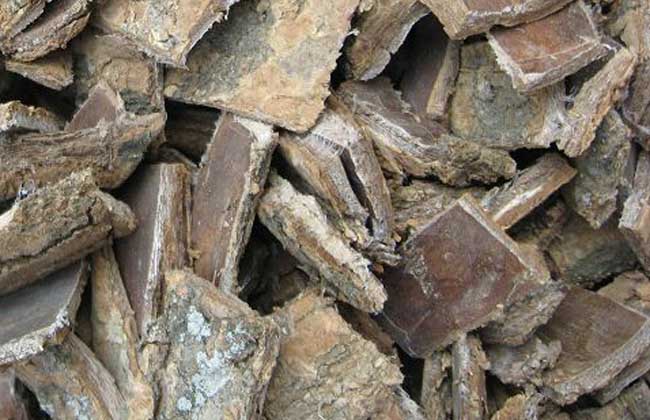
Medicinal Eucommia ulmoides is a precious tonic medicinal herb in China. It is the dried bark of the plant Eucommia ulmoides of the family Eucommiaceae, and has the effects of tonifying the liver and kidneys, strengthening sinews and bones, regulating the Chong and Ren meridians, and securing the meridians and preventing miscarriage. It can treat waist and leg pain or soreness and weakness caused by kidney yang deficiency, insecurity of the fetus caused by liver qi deficiency, damp itching of the scrotum, and other conditions. It is mainly produced in Shaanxi, Gansu, Henan, Hubei, Sichuan, Yunnan, Guizhou, Hunan, Anhui and other places. Let us take a look below at how much Eucommia ulmoides costs per jin!
How much does Eucommia ulmoides cost per jin?
Herb market Branch bark (yuan/jin) Medium slab bark (yuan/jin) Shreds (yuan/jin) Anguo herb market 10 11 13 Bozhou herb market 10 12 12 Yulin herb market 10 13 14 Hehuachi herb market 10 12 13Note: Eucommia ulmoides was listed as a top-grade herb in the Shennong Bencao Jing, but now as the regions and numbers of people cultivating Eucommia ulmoides have increased in recent years, its output has also been rising year by year. Therefore, if bought wholesale, one jin of Eucommia ulmoides may now cost less than 15 yuan, and if bought individually the price should not exceed 25 yuan.
Methods for identifying true and fake Eucommia ulmoides
1. Genuine Eucommia ulmoides: Eucommia ulmoides is in flat slab-like or block-like pieces, with rubber threads connecting the middle, 2 to 7 mm thick. The outer surface has grayish-white cork layer, with visible longitudinal grooves, sometimes lenticels visible in oblique square shapes, or sometimes the cork layer is removed, appearing grayish-brown; the inner surface is smooth and purple-brown. The texture is brittle and easily broken, and the broken section has fine dense silvery-white rubber threads, which can be slowly stretched to more than 1 cm before breaking. Stir-fried Eucommia ulmoides has a grayish-black surface, and the rubber threads in the broken section break easily or can only be stretched to about 0.5 cm.
2. Fake Hong Duzhong: Hong Duzhong is the bark of the climbing Eucommia or hairy Eucommia, or Hong Duzhong, plants of the family Apocynaceae. The medicinal material is relatively thin, the outer surface is yellowish-brown, the inner surface is yellowish-brown or reddish-brown, and the broken section has silvery-white rubber threads, but the rubber threads are fewer.
3. Fake Huangpi Duzhong: Huangpi Duzhong is the bark of Euonymus bungeanus or Yunnan Euonymus, etc., plants of the family Celastraceae, also called Tu Duzhong. The outer surface is gray or grayish-brown, the inner surface is pale yellow, and the broken section has a small amount of white twisted threads that break easily.
Domestic commercial grades of Eucommia ulmoides
1. Special grade: Dry goods, flat in shape, both ends cut evenly, coarse bark removed, surface grayish-brown, inner part dark brown, brittle in texture, with rubber threads connecting at the broken part, slightly bitter in taste, whole piece 70 to 80 cm long, more than 50 cm wide, more than 0.7 cm thick, with broken pieces not exceeding 10%. No curled shapes, impurities, or mildew.
2. Grade I: Whole piece more than 40 cm long, more than 40 cm wide, more than 0.5 cm thick, fragments not exceeding 10%, no curled shapes, impurities, or mildew.
3. Grade II: Flat or curled in shape, inner surface greenish-brown, whole piece more than 40 cm long, more than 30 cm wide, more than 0.3 cm thick, fragments not exceeding 10%, no curled shapes, impurities, or mildew.
4. Grade III: Any that does not meet the standards for special grade, Grade I, or Grade II, with a thickness of not less than 0.2 cm, including bark, root bark, and fragments, all belong to this grade.
Export commercial grades of Eucommia ulmoides
1. Grade I thick Eucommia ulmoides: Thick inner bark, coarse bark scraped off revealing yellowish-brown, no mold spots or broken tubes, minimum piece 15 sq cm or more, both ends cut into oblique openings, more than 1.0 cm thick.
2. Grade II thick Eucommia ulmoides: Thick inner bark, coarse bark scraped off revealing yellowish-brown, no mold spots or broken tubes, minimum piece 15 sq cm or more, both ends cut into oblique openings, 0.5 to 1.0 cm thick.
3. Grade III thick Eucommia ulmoides: Thick inner bark, coarse bark scraped off revealing yellowish-brown, no mold spots or broken tubes, minimum piece 15 sq cm or more, both ends cut into oblique openings, 0.3 to 0.5 cm thick.
4. Grade I thin Eucommia ulmoides: Thick inner bark, coarse bark scraped off revealing yellowish-brown, no mold spots or broken tubes, minimum piece 15 sq cm or more, both ends cut into oblique openings, 0.2 to 0.3 cm thick.
5. Grade II thin Eucommia ulmoides: Thick inner bark, coarse bark scraped off revealing yellowish-brown, no mold spots or broken tubes, minimum piece 15 sq cm or more, both ends cut into oblique openings, about 0.2 cm thick.