What is the latest market price of sweet potatoes per jin?
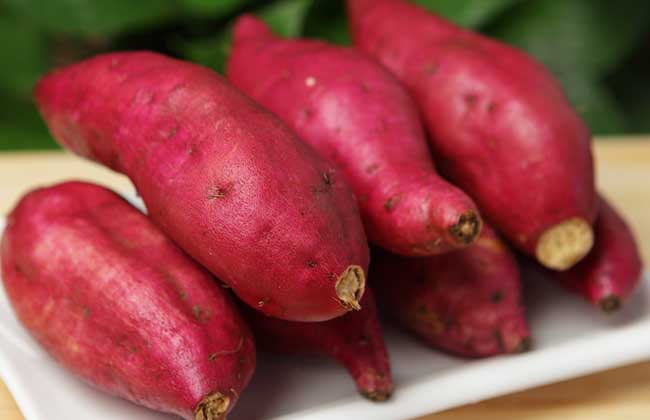
Sweet potato, also known as yam, red sweet potato, sweet potato and so on, is an annual herbaceous plant of the genus Ipomoea in the Convolvulaceae family. It is generally believed to have originated in Mexico and the tropical Americas from Colombia and Ecuador to Peru. It was introduced from the South Seas to Fujian and Guangdong at the end of the 16th century, and then spread to the Yangtze River and Yellow River basins and Taiwan, China, and other places. Today, China's sweet potato planting area and total output both rank first in the world. Let's take a look at how much sweet potato costs per jin!
How much is sweet potato per jin?
Product name City Highest price (yuan/kg) Lowest price (yuan/kg) Average price (yuan/kg) Sweet potato Hebei 2.40 2.20 2.20 Sweet potato Hubei 1.80 1.40 1.60 Sweet potato Shaanxi 1.60 1.40 1.50 Sweet potato Henan 1.00 1.00 1.00 Sweet potato Inner Mongolia 2.40 2.40 2.40Note: Sweet potato prices vary from place to place, and the annual market varies greatly with the seasons. At the same time, because the yield per mu of sweet potatoes is relatively high, prices are generally quite cheap when they first come to market in autumn. Moreover, as the sweet potato planting area has expanded year after year and production has continued to increase, it has been difficult for prices to rise.
How many jin per mu does sweet potato generally yield?
There is no fixed figure for how many jin of sweet potatoes are produced per mu. The yield varies according to planting conditions. It has the characteristics of wide adaptability, strong stress resistance, drought and barren tolerance, and few pests and diseases. When planted in places with good water and fertilizer conditions, the yield per mu can generally reach 4,000 to 6,000 jin for spring sweet potatoes, and high-yield cultivation can reach more than 10,000 jin. However, due to differences in natural conditions and cultivation levels, the per-unit yield level is also very uneven.
Where are the producing areas of sweet potato?
Sweet potatoes in China are mainly distributed in Beijing, Shanxi, Shandong, Henan, Tianjin, Hebei, the three northeastern provinces, Inner Mongolia, Yunnan, Sichuan, Hubei, Gansu, Anhui, Fujian, Shaanxi, Hunan, Guangdong, Jiangsu, Jiangxi and other places. The main producing areas nationwide are Sixian in Anhui (China's hometown of sweet potato), Lulong in Hebei, Liancheng in Fujian, Kaifeng and Dengzhou in Henan as well as Tongzhaipu in Tanghe, Sishui in Shandong, Nanchong in Sichuan and other areas.
What environment does sweet potato planting require?
1. Temperature: Sweet potato likes warmth and fears cold. It does not develop roots when the ground temperature is around 10°C. At 15°C, it takes 5 days to develop roots; at 17 to 18°C, roots develop normally; at 20°C, roots develop in 3 days; at 27 to 30°C, roots can develop in just one day. When the air temperature is 25 to 28°C, stems and leaves grow quickly; above 30°C, stems and leaves grow even faster, but the tubers expand slowly. Above 38°C, respiration consumption is high and stem and leaf growth is slow. Below 20°C, stem and leaf growth is also fast; at 15°C, growth stops; below 10°C, if it lasts too long or encounters frost, stems and leaves wither and die.
2. Light: Sweet potato likes light. Under sufficient light, the leaf color is darker, the leaf age is longer, the stems and vines are thick and strong, the conductive tissue of the stems is well developed, and the yield is relatively high. If there is insufficient light, the leaves turn yellow, there is more leaf drop, the leaf age is short, the stems and vines are thin and long, the conductive tissue is not well developed, and less organic nutrition formed by assimilation is transported to the tubers, resulting in low yield.
3. Water: Sweet potato is a drought-tolerant crop, but too much or too little water is not conducive to increasing yield. Sweet potato is afraid of flooding, especially after tuber formation, when flooding has a great impact on yield. Alternating dry and wet soil causes uneven growth rates inside and outside the tuberous roots, often resulting in cracked skin. In short, sweet potato is afraid of both waterlogging and drought. As people say: “Dry soil grows woody roots, wet soil grows fibrous roots, and neither dry nor wet soil grows tuberous roots.” To obtain high yield of sweet potato, irrigation should be timely and appropriate according to specific conditions, drainage should be timely and thorough, and in dry land, cultivation should be strengthened to conserve soil moisture.
4. Nutrients: Sweet potato has a strong ability to absorb fertilizer and tolerates barren soil, but to achieve high yield, sufficient fertilizer must be applied. In addition to nitrogen, phosphorus, and potassium, sulfur, iron, magnesium, calcium, etc. also play important roles. Among the three main elements, sweet potato has the greatest demand for potassium, followed by nitrogen, and the least for phosphorus. According to analysis, every 1,000 jin of sweet potato contains 3.5 jin of nitrogen, 1.75 jin of phosphorus, and 5.6 jin of potassium. Therefore, increasing potassium fertilizer and applying nitrogen and phosphorus fertilizers timely and appropriately has a significant effect on increasing yield.
5. Soil: Sandy loam and sandy soil with deep soil layers, rich organic matter, looseness, good aeration, and good drainage performance are best. When the soil is heavy and clayey, the tuber skin color is poor, rough, the tuber shape is irregular, the yield is low, and it is not resistant to storage. However, sandy loam and sandy soil generally have low fertility and poor water retention, so fertility should be gradually improved through measures such as fertilization to obtain high yield. Sweet potato is relatively tolerant of acidity and alkalinity, with an adaptable pH range of about 4.5 to 8.5, but 5.2 to 6.7 is preferable. When the soil salt content exceeds 0.2%, sweet potato should not be planted.