What is the market price of sweet potato starch per jin?
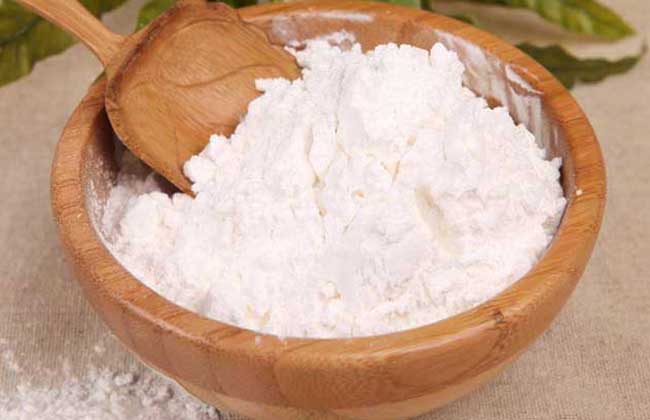
Sweet potato starch is one of the main products of sweet potato processing, and can be divided into two types: processed from fresh sweet potatoes and processed from dried sweet potatoes. However, because the quality of starch from fresh sweet potatoes is superior to that from dried sweet potatoes, starch is mostly processed from fresh potatoes. Since cutting sweet potatoes is rather troublesome, few people now use dried sweet potatoes to process starch. Let us take a look below at how much sweet potato starch costs per jin!
How much is sweet potato starch per jin?
Brand Specifications Price Brand Specifications Price Saiwengfu 250 g ¥4.70 Saiwengfu 400 g ¥7.50 Youjia 260 g ¥7.90 Linghua 330 g ¥6.50 Gusong 350 g ¥6.50 Gusong 500 g ¥5.90Note: The market price of sweet potato starch fluctuates from place to place. The current average price will not be lower than 3.2 yuan per jin, but because of differences in the quality of sweet potato starch and where it is sold, its price also fluctuates considerably. Moreover, what is now sold on the market is mostly processed and packaged product, so the price will be a bit higher.
How to choose sweet potato starch
1. Visual inspection: If sweet potato starch is bright and white in color, it means it has few impurities and is relatively pure; the higher the whiteness, the better the quality. Conversely, if there are many impurities, the quality is poor. When judging, take 5-10 g of sweet potato starch and spread it out on a clean glass plate, crush the starch with another piece of thick glass, and scrape the sample into a very thin layer. Observe whether the color of the sweet potato starch is pure white and whether it has luster, and see how many spots and inclusions there are. When observing, place the sample on a colorless, transparent, clean glass plate with white paper underneath, avoid direct light, and use reflected light; colored impurities such as dust, plant leaf fragments, and black sand and stones can then be clearly distinguished.
2. Finger rubbing: Use the senses of the fingers to detect the approximate moisture content of sweet potato starch. The method is to rub and pinch the sweet potato starch hard with the fingers. If it can be pinched into a thin sheet, shake the thin sheet on the fingers off onto the table from a height of 20 cm above the tabletop. If it falls as loose powder, it is dry, with a moisture content below 15%. If it falls as small fragments, the moisture content is 15-20%. If the thin sheet basically does not break apart, the moisture content is above 20%. Grab half a handful of sweet potato starch and clench it tightly in the hand; if it disperses when the hand is opened, the sweet potato starch is relatively dry; if it forms a lump in the hand and is difficult to disperse when the hand is opened, it means the sweet potato starch contains too much water.
3. Listening: Rub and pinch the sweet potato starch in the bag with the hands. If you hear a “ka ka” sound, or directly rub and pinch the sweet potato starch hard with the fingers and it makes a “ka ka” sound, it is pure sweet potato starch. If talc powder, wheat flour, or corn flour is mixed into the sweet potato starch, no sound can be heard, or the sound is not loud.
4. Taste: Take a small amount of starch into the mouth and use the taste buds, teeth, and other senses in the mouth to distinguish whether the sweet potato starch has off-flavors and impurities. For example, a strong sour taste indicates that when the sweet potato starch was processed using the sour slurry method, fermentation went too far and it was not washed with clean water after settling; starch like this makes noodles with slightly weaker chewiness. If the sweet potato starch has a sour musty smell, it indicates that the sweet potato starch was stored for a long time when humidity was high before drying and became moldy; this kind of sweet potato starch easily breaks into pieces when processed into noodles. If there is a talc powder taste, wheat flour taste, and so on, it indicates that these substances have been mixed in. When chewing carefully with the teeth, if there is a gritty feeling, it indicates that the sweet potato starch contains a relatively large amount of sand.
5. Water settling: Take 50 g of sweet potato starch, put it in a beaker or white bowl, add 150-200 mL of water and stir evenly, then stir in one direction for 1 minute, let it stand for 5 minutes, slowly pour out the sweet potato starch milk, and pay attention to whether there is mud and sand at the bottom and how much there is. Then place the sweet potato starch milk in a colorless transparent glass or beaker and let it settle for 3 hours, and check the settling condition. If it settles quickly, the starch sinks neatly, the upper water is clear, and there is no fine sand at the bottom, it is high-quality sweet potato starch. If it settles slowly, the upper water is rather yellow, and there is much sand, it is low-quality starch. If corn flour, rice flour, and the like are mixed in, it is not easy to settle in water and the upper water is extremely cloudy.
7. Sample comparison: Put starches of different quality grades determined through testing into colorless glass seed bottles or long colorless glass bottles, respectively, and attach labels noting the sample grade, time, source, and so on. When evaluating sweet potato starch from different sources and different processing batches, they can be compared with standard samples. This makes it possible to classify and use starches of different quality grades, so as to ensure continuous stability in the quality of reprocessed sweet potato starch products.
5. Pile tip: Use the hands to pile sweet potato starch into a cone shape and observe the degree of bluntness and roundness of the tip of the cone. Pure sweet potato starch forms a low, gentle pile tip, while adulterated sweet potato starch forms a high, steep pile tip.
How to eat sweet potato starch
1. Sweet potato liangfen
[Ingredients] 100 g raw sweet potato starch, 450 g water, 35 g light soy sauce, 15 g sesame oil, 15 g chili oil.
[Method] ① Pour the raw sweet potato starch into a container. ② Pour water into the raw sweet potato starch. ③ Filter it through a sieve. ④ Then put the filtered water in a container, preferably a pot with a thick bottom. ⑤ Stir constantly over medium-low heat. ⑥ When it changes color after stirring, it can be poured into a container, and after cooling, put it in the refrigerator. ⑦ Take it out of the refrigerator and it can be turned out onto a cutting board. ⑧ Cut into strips. ⑨ Put the seasonings on top; if there are crushed peanuts, shredded cucumber, or the like, add them as well.
2. Steamed pork ribs with sweet potato starch
[Ingredients] 1/2 jin small pork ribs, 2 tbsp sweet potato starch, 1 tsp salt, 1 tsp black pepper grains, 1 tsp pepper powder, 1 tsp minced ginger, 1 tsp minced garlic, 1 tsp soy sauce, 1 tsp wine.