How much does a purebred Tibetan Mastiff cost? Market price reference
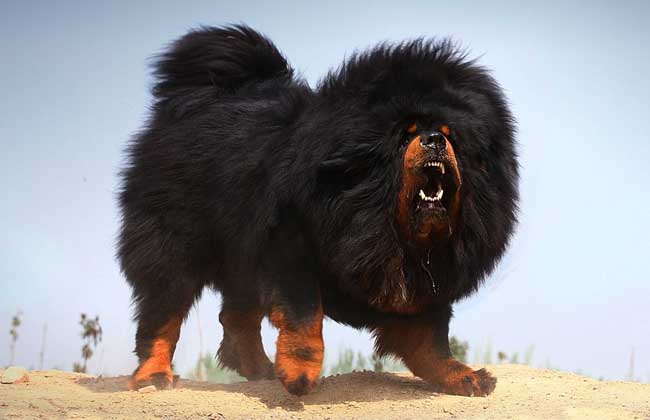
The Tibetan Mastiff is a large, fierce-tempered dog breed, also known as the Tubo Mastiff, Oriental Divine Dog, and Tibetan Mastiff Dog. Its coat colors are mostly iron-clad gold, yellow, black, and so on. It originated on the Qinghai-Tibet Plateau. Its typical characteristics are high alertness, extremely strong territorial awareness, extreme loyalty to its owner, strong hostility toward strangers within its territory, and skill at protecting its owner and their property. Now let us take a look at how much a purebred Tibetan Mastiff costs!
How much does a purebred Tibetan Mastiff cost?
Name Price Name Price Name Price Chigu Most expensive puppy 2 million Black Wolf 30 million Zhongyuan 20 million Mastiff King 3.9 million Jiangyuan Overlord 3.8 million Tibetan Mastiff Xijiang 8 million Tibetan Mastiff Male Leopard 16 million Tibetan Mastiff Golden Egg 30 million Western No. 1 4 million Golden Lion King 10 million Tianlong 1.2 million Snow Lion 2 millionNote: Tibetan Mastiffs have been hyped far too much. At most, they are just a fierce guard dog, with low intelligence, almost zero obedience, and extremely high ferocity. No matter how stern their gaze or how beautiful their appearance, they are not suitable for widespread promotion. Currently, the most expensive one in China is Ma Junren's Little Prince, priced at 40 million. In fact, this price was also stated by Ma Junren himself. At the time, a Korean wanted to buy it and offered 20 million, but he insisted on not selling. The Korean asked what price would make him sell, and Ma Junren said 40 million. In the end, the Korean had no choice but to spend 2 million to buy a son of Little Prince.
Morphological characteristics of the purebred Tibetan Mastiff
1. Mouth shape: The mouth shape of a purebred Tibetan Mastiff is square and straight, with the muzzle and head in harmonious proportion, and the upper lip drooping moderately. The mouth is not better the thicker it is; the proportions must be harmonious. A large drooping mouth means a cross between a Tibetan Mastiff and a Neapolitan Mastiff. If the mouth is as short as that of a Pekingese, it is definitely also a crossbreed. The lips are yellow. Some Tibetan Mastiffs now have black lips, now called dark gold-wrapped, and these Tibetan Mastiffs have unclear four-eye spots. This dark gold-wrapped type is the offspring of a cross between a Tibetan Mastiff and a kind of large black dog from the grasslands.
2. Head: The head of a purebred Tibetan Mastiff is large with a broad forehead (in proportion to its own body), and there is a small raised bump on the top of the head. The ears are moderate in size. Some Tibetan Mastiffs on the market now have ears that almost reach the nose; these are all crossbreeds. The ears of a purebred Tibetan Mastiff move according to the source of sound, while the ears of a crossbred Tibetan Mastiff do not move.
3. Neck: The neck of a purebred Tibetan Mastiff is thick and powerful, with a dewlap under the neck. Both an oversized dewlap that almost drags on the ground and the absence of a dewlap indicate crossbreeding.
4. Body: The body of a purebred Tibetan Mastiff is well-proportioned and harmonious. Viewed from the side, the line of the abdomen slopes upward from front to back. If the abdominal line is horizontal, then it is definitely a crossbreed or has been fed hormones.
5. Limbs: The limbs of a purebred Tibetan Mastiff are thick and powerful, in proportion to its own body, with feathering on the back of the legs. If there is no prominent feathering on the back of the limbs, then it is definitely a crossbreed.
6. Forechest: The Tibetan Mastiff can survive on the plateau, and thousands of years of evolution must have produced a powerful heart and lungs. An overly narrow forechest is definitely a sign of crossbreeding. The forechest of an adult Tibetan Mastiff must be at least three adult male palm-widths wide.
7. Color: The purebred Tibetan Mastiff is iron-clad gold. Rust red and yellow, or whitish, are normal. If the red is purplish, it is definitely a crossbreed, because Tibetan Mastiffs do not have the gene for purplish red.
8. Teeth: The purebred Tibetan Mastiff has retained the carnassial teeth of wild carnivores, while other dog breeds have already degenerated into “grinding and milling teeth.” Any without these carnassial teeth, no matter how good its appearance, is a crossbreed.
9. Overall: The purebred Tibetan Mastiff is well-proportioned and harmonious overall, an athletic type with good agility. If its body is bloated and it cannot turn flexibly when running, it is definitely a crossbred pig mastiff.
10. Bark: The bark of a purebred Tibetan Mastiff is deep, muffled, and highly penetrating. If the bark is a sharp, thin “wang wang,” it is definitely a crossbreed.
11. Height: The purebred Tibetan Mastiff is not especially tall, because animals in cold zones are generally smaller in size and have relatively smaller surface area. Some Tibetan Mastiffs with a shoulder height like a donkey are absolutely crossbreeds.
12. Growth rate: Purebred Tibetan Mastiffs do not grow as fast as hybrid rice. A pig mastiff can reach over 40 jin in 3 months.
Tips for selecting a purebred Tibetan Mastiff
1. Living environment is a major limitation for keeping a Tibetan Mastiff. Suburban farmhouses, villas, security companies, factories, warehouses, forest farms, pastoral areas, mining areas, and so on can choose the Tibetan Mastiff, a large guard dog with ornamental and economic value. For those living in apartment buildings, small pet dogs are better, preferably ones with a gentle temperament, no body odor, and not prone to barking.
2. Places to buy Tibetan Mastiffs include large Tibetan Mastiff breeding bases, pet markets, mobile dog sellers, and so on. Generally speaking, professional Tibetan Mastiff breeding bases are more reliable, and large dog markets are also good. Buyers need to consider this themselves based on their geographical location and personal preferences.
3. Place a small Tibetan Mastiff in a stable spot and snap your fingers at its side or behind it. If the puppy looks and searches in the direction of the sound source, it shows that its hearing is normal. Turn the ears outward and check whether the ears are red, swollen, injured, bleeding, odorous, or have sticky attachments, and whether there is dandruff at the ear tips. If not, then the puppy's ears are normal.
4. Under normal circumstances, the gums of a Tibetan Mastiff are flesh-pink. If they are grayish-white, it may be internal bleeding, physical weakness, malnutrition, congenital anemia, and so on. When there is stomatitis, glossitis, oral mucosal ulcers, dental disease, and so on in the mouth, there will be drooling, and bad breath can also be smelled. Drooling all over the mouth may be rabies; choose such Tibetan Mastiffs with caution.