How much does Fritillaria cirrhosa cost per gram? A detailed look at market prices
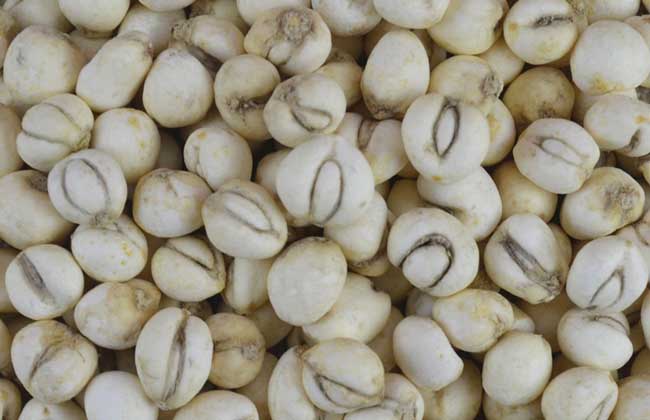
Fritillaria cirrhosa is also known as beimu, chuanbei, Minbei and so on. It is the dried bulb of the Liliaceae plants Fritillaria cirrhosa, Fritillaria unibracteata, Fritillaria przewalskii, Fritillaria delavayi, Fritillaria taipaiensis or Fritillaria wabuensis. It has the effects of clearing heat and moistening the lungs, resolving phlegm and relieving cough, and dissipating nodules and eliminating abscesses. Because of its relatively high medicinal value and wide range of uses, its price is comparatively expensive. Let us take a look below at how much Fritillaria cirrhosa costs per gram!
How much does Fritillaria cirrhosa cost per gram?
There are many kinds of Fritillaria cirrhosa, and the price differences are also very large. The most expensive should be wild Songbei, at about 1600 yuan per jin, which works out to 1.6 yuan per gram. If it is cultivated at home, it is somewhat cheaper, at about 150 yuan per jin. Fritillaria cirrhosa is mainly produced in Tibet (southern to eastern part), Yunnan (northwestern part) and Sichuan (western part), growing in forests, under shrubs, in grasslands or in wet places such as riverbanks and valleys, or in rock crevices. It is also found in Gansu (southern part), Qinghai, Ningxia, Shaanxi (Qinling) and Shanxi (southern part), but there are very few specimens from the latter provinces, and the flower color and morphology differ slightly, so they are very likely new types and must be further collected and studied.
What kinds of Fritillaria cirrhosa are there?
1. Songbei: Songbei is conical or nearly spherical, 0.3-0.8 cm high and 0.3-0.9 cm in diameter. The surface is off-white. The outer scale leaves are 2 pieces, very different in size, with the large piece tightly clasping the small piece, and the unclasped part crescent-shaped. The top is closed, with a nearly cylindrical, slightly pointed central bud and 1-2 small scale leaves inside. The apex is bluntly rounded or slightly pointed, the base is flat and slightly sunken, and in the center there is 1 grayish-brown bulb disc, occasionally with residual fibrous roots. It is hard and brittle, with a white cross-section and abundant powder. The odor is slight and the taste is slightly bitter.
2. Qingbei: Qingbei is the dried bulb of the Liliaceae plant Fritillaria unibracteata, nearly flat-spherical, 0.4-1.4 cm high and 0.4-1.6 cm in diameter. The outer scale leaves are 2 pieces, similar in size, clasping each other oppositely. The top is split open, with 2-3 central buds and small scale leaves and a slender cylindrical residual stem inside.
3. Lubei: Lubei is long conical, 0.7-2.5 cm high and 0.5-2.5 cm in diameter. The surface is off-white or light brownish-yellow, sometimes with brown spots. The outer scale leaves are 2 pieces, similar in size, with the top split open and slightly pointed, revealing the small inner scale leaves and central bud, and the base is slightly pointed or rather blunt.
4. Home-cultivated: Home-cultivated Fritillaria cirrhosa is nearly flat-spherical or short cylindrical, 0.5-2 cm high and 1-2.5 cm in diameter. The surface is off-white or light brownish-yellow, slightly rough, sometimes with light yellow spots. The outer scale leaves are 2 pieces, similar in size, with the top mostly split open and relatively flat.
The medicinal effects of Fritillaria cirrhosa
1. Dissipating nodules and eliminating abscesses: Beimu has the effect of dissipating nodules and eliminating abscesses. Both Chuanbei and Zhebei have the effects of clearing heat, resolving phlegm, dissipating nodules and eliminating abscesses. They can be used to treat scrofula mostly caused by stagnation of phlegm-fire, sores and breast abscesses caused by accumulated heat toxin, and lung abscess with coughing up pus and blood, chest tightness and cough, with very good results.
2. Clearing the lungs and resolving phlegm: Fritillaria cirrhosa is cold in nature and bitter in taste, and has the function of clearing the lungs and resolving phlegm. It can be used to treat chronic cough from internal injury, dry cough, and coughing with dry phlegm or hot phlegm, with quite good results. Zhebei is bitter in taste and has the effects of clearing and resolving hot phlegm and directing lung qi downward, and is mostly used to treat cough from externally contracted wind-heat and cough caused by phlegm-heat congesting the lungs.
3. Detoxifying and reducing swelling: Tubeimu is the dried tuber of the Cucurbitaceae plant Bolbostemma paniculatum, bitter in nature and taste, and has the effects of detoxifying, dissipating nodules and reducing swelling. It can be used to treat breast abscesses, scrofula, phlegm nodules and other conditions, with very good results.
How to consume Fritillaria cirrhosa
1. Pig lung and beimu soup
[Ingredients] 150 grams pig lung, 15 grams Fritillaria cirrhosa, 60 grams white sugar, 30 grams lily, 30 grams Chinese yam, 20 grams coix seed.
[Method] Decoct in water and take as soup.
[Effects] Mainly treats pulmonary tuberculosis of the yin-yang deficiency type, manifested as coughing and hemoptysis, bone-steaming consumptive fever, night sweats and seminal emission, emaciated body, shortness of breath and spontaneous sweating, facial puffiness and limb swelling, reduced appetite, loose stools, red tongue with little fluid, or pale and enlarged tongue with teeth marks, and a faint, fine pulse.
2. Stewed chicken with Salvia miltiorrhiza and Fritillaria cirrhosa
[Ingredients] 10 grams Fritillaria cirrhosa, 10 grams Salvia miltiorrhiza, 200 grams chicken, 20 grams winter mushroom, 10 grams Shaoxing wine, 5 grams salt, 10 grams scallion, 5 grams ginger.
[Method] Wash the chicken, cut into 4 cm square pieces; soften the winter mushroom thoroughly, wash, and cut into two halves; soften the Salvia miltiorrhiza thoroughly and cut into 3 cm long sections. Crush the ginger loose and cut the scallion into sections. Put the chicken, Salvia miltiorrhiza, Fritillaria cirrhosa, winter mushroom, Shaoxing wine, salt, ginger and scallion into a pot, add 400 ml of stock, bring to a boil over high heat, then simmer over low heat for 1 hour and it is done.
[Effects] Invigorates blood and unblocks yang, relieves cough and removes stasis, mainly suitable for patients with phlegm-stasis type coronary heart disease.
3. Snow pear and beimu porridge
[Ingredients] 100 grams japonica rice, 500 grams pear.
[Method] Soak the Fritillaria cirrhosa in cold water for 1 hour, then take it out; soak the round glutinous rice in cold water for 1 hour, then drain and set aside. Wash the snow pear, peel it, cut it open, remove the core, and slice it for later use. Add clean water to a porridge pot, bring to a boil over high heat, add the Fritillaria cirrhosa and round glutinous rice, turn to low heat, bring to a boil, and continue cooking for 40 minutes, then add the snow pear slices and cook for 20 minutes, and finally season with rock sugar.