How much does a Chinese rural dog cost? A full breakdown of market prices
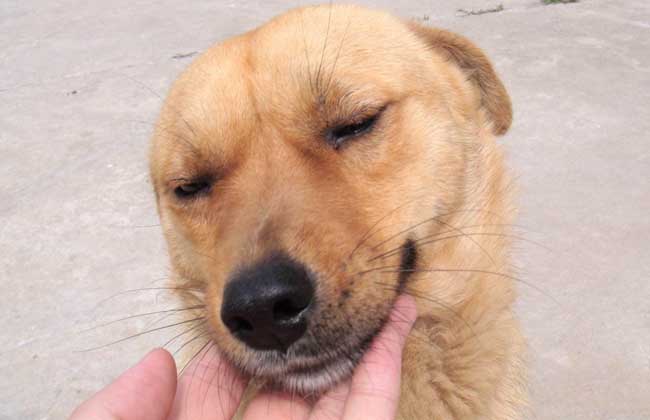
The Chinese rural dog, also known as the yellow dog, native dog, or firewood dog, is mainly distributed south of the Great Wall and east of the Qinghai-Tibet Plateau, in the low-altitude Han Chinese settlements centered on the Central Plains. It is widespread in Han Chinese rural areas and is a product of the Han Chinese agrarian society spanning several thousand years. However, because large numbers of foreign dog breeds have been introduced into China in recent years, the purebred Chinese rural dog is on the verge of extinction and urgently needs protection. Let's take a look below at how much a Chinese rural dog costs!
How much does a Chinese rural dog cost?
The Chinese rural dog can be said to be the cheapest dog on the market today. An ordinary Chinese rural dog costs around 100 yuan, while a better one may cost a bit more, in the range of a few hundred yuan. In most areas, however, Chinese rural dog puppies are given away or exchanged for just a small token amount, with no fixed price. Unlike many pet dogs, the Chinese rural dog is affectionate only toward its owner and family, and will bark angrily when it encounters strangers, which is also an important trait of a guard dog.
Physical characteristics of the Chinese rural dog
1. Head: The head features are closer to the appearance of its ancestor the wolf, with a pointed muzzle, a short muzzle, and a flat forehead.
2. Ears: The ears are set high, small, and either upright or semi-upright; semi-upright ears droop halfway toward the front of the head.
3. Tail: The tail curls upward and is held especially high when walking, mainly of the money-tail and sickle-tail types.
4. Hind legs: When standing still, the hind legs are noticeably straight and perpendicular to the ground, with no obvious bending at the ankle joint.
5. Coat: Mainly brown hair, coarse in texture and easy to keep clean. Colors include yellow, white, black, and mixed.
6. Body shape: The body is well-proportioned and compact, of medium size, with a body-length-to-shoulder-height ratio of about 1:1; together with the straight hind legs that are almost perpendicular to the ground, this makes the entire body square in shape.
Behavioral habits of the Chinese rural dog
1. Hierarchy: Chinese rural dogs have a “hierarchy” when living in groups. Establishing such an order keeps the whole group stable and reduces vicious fights and wars caused by competition for food, living space, and mates.
2. Circling before sleep: Before lying down, a Chinese rural dog always circles around first, and only after confirming there is no danger will it go to sleep peacefully.
3. Enjoying petting: Chinese rural dogs enjoy being petted on the belly and back.
4. Attitude toward strangers: A Chinese rural dog judges the strength of an opponent by the height of its own line of sight when dealing with strangers.
5. Exposing the belly: When a Chinese rural dog lets others see its belly, it is showing surrender, admission of fault, submission, or affection, and it will never attack an opponent that has fallen and exposed its belly.
6. Wagging the tail: A Chinese rural dog wagging its tail is a form of communication similar to a human smile.
7. Avoiding the group: When sick, a Chinese rural dog instinctively avoids humans or other dogs and hides in a dark place to recover or die, which is a kind of “atavism”.
8. Urine marking: Wolves use urine to mark “territory, attract mates, or serve as road signs”, and the Chinese rural dog, having evolved from the wolf, has also inherited this habit from its ancestor.
9. Territorial awareness: The Chinese rural dog has territorial habits, occupying a certain range and protecting it, not allowing other animals to intrude. It uses secretions from the anal glands to give its feces a special odor, and secretions from the sweat glands between its toes along with scratching the ground with its hind legs as territorial markers.