How much does a pearl necklace generally cost?
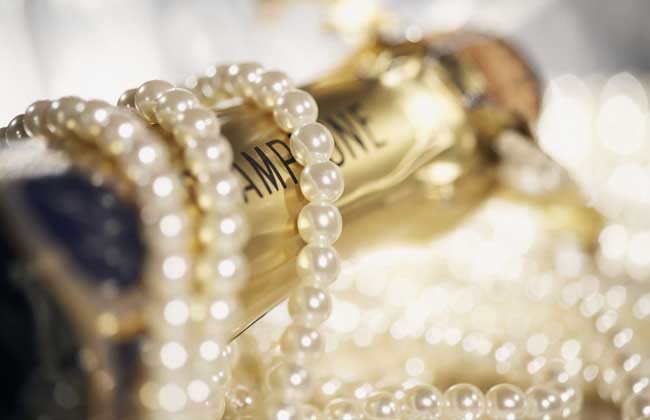
A pearl necklace is jewelry made from pearls. Natural pearl necklaces have certain health benefits; in particular, for women during menstruation or when feeling irritable and moody during menopause, wearing a pearl necklace can have a good regulating and soothing effect, and can also help prevent and treat chronic pharyngitis and thyroid problems, while making the skin especially smooth and delicate. Gently massaging the skin with pearls morning and evening also has skincare, beauty, and spot-fading and wrinkle-reducing effects. Now let us take a look at how much a pearl necklace costs!
How much does a pearl necklace cost?
The price of pearl necklaces is usually rather expensive. At present, the market price of a 7 mm high-quality freshwater pearl necklace is about 1700 yuan, the market price of an 8 mm high-quality freshwater pearl necklace is about 3400 yuan, and the market price of a 9 mm freshwater pearl necklace is about 6800 yuan. The market price of a 6.5-7 mm high-quality seawater pearl necklace is about 3000 yuan, the market price of a 7-7.5 mm seawater pearl necklace is about 5000 yuan, the market price of a 7.5-8 mm seawater pearl necklace is about 10000 yuan, and the market price of an 8-8.5 mm seawater pearl necklace is about 20000 wan. It is not hard to see that for every 1 mm increase in pearl size, its value doubles.
Buying guide for pearl necklaces
1. People with a yellowish and pale complexion should buy cream, golden yellow, light rose, and brown colors.
2. People with a red and white complexion should choose white, purple, pink, silver-white, and gray.
3. People with a dark complexion with brown tones should choose blue, gray, deep purple, or brown.
4. People with a narrow face shape should choose short necklaces, and people with a wide face shape should choose long necklaces.
Quality standards for pearl necklaces
1. Luster: The most important standard for evaluating pearls is luster. It is like a radiance shining out from within, adding a veil of mystery to the pearl, giving it extra vitality, and making it deeply moving. For cultured pearls, luster is an even clearer indicator of quality, because only after being wrapped layer upon layer in nacre secretions can they give off a captivating brilliance.
2. Size: Generally speaking, the larger the pearl, the higher its value, but some deformed pearls are an exception. Likewise, size is not the main factor in judging whether a pearl is good or bad. The size of a pearl should be chosen according to the wearer's figure and face shape, so determining a pearl's quality should focus on luster rather than size.
3. Hue: The choice of pearl color is entirely a matter of personal taste. Of course, hues such as pink, silver-white, and light gold have special market value because they are rare or popular, but basically color is not important in evaluating a pearl's quality.
4. Shape: Generally speaking, perfect pearls are mostly perfectly round or elegantly teardrop-shaped, but likewise the choice of shape is also a matter of personal preference. The evaluation of pearls mainly depends on quality rather than a complete appearance.
5. Surface: In principle, the fewer pits or spots on a pearl's surface, the higher its value, but generally even very expensive pearls have more or less some small flaws on the surface, so truly flawless pearls are extremely rare.
How to tell real pearl necklaces from fake ones
1. Observe the luster: The orient reflected from the surface or inner nacre layers of pearls is not all the same. The so-called pearly luster needs to be carefully appreciated together with the actual object. Pearl luster is a special luster reflected from the fine internal structure of the pearl through light diffraction, and this luster appears especially clear under dim lighting. The luster reflected by plastic pearls is too bright, and the luster of coated craft pearls is unnatural, so they should be carefully identified.
2. Surface characteristics: Flaws on the surface of a pearl directly affect its appearance. In fact, pearls without flaws are extremely rare. Flaws are the birthmarks that make each pearl different from others, appearing as flaw spots or bands, and they provide a basis for distinguishing true from false. When foreign matter intrudes into the nacre layer, a flaw spot will bulge on the surface. With a magnifying glass, some band characteristics can usually be seen.
3. Touch by hand: When you stroke a pearl with your hand, fake pearls feel greasy, while real pearls feel fresh and clean, cool and comfortable, and feel cool when worn.
4. Friction effect: The crystals that make up the nacre layer are arranged unevenly and in orderly fashion, so there is a gritty feeling during friction. If the quality is good, this gritty feeling appears more uniform. Plastic beads, however, slip when rubbed and feel smooth and greasy.
5. Burn with fire: When fake pearls are burned with fire, a flame appears, the burned surface turns black with smoke, and the surface nacre layer falls off. The burned surface of real pearls has no black smoke color, and the surface layer remains intact and does not fall off.
Pearl necklace care methods
1. Keep away from clean water: Do not clean pearl necklaces with water. Water can enter the small holes in the pearls, and it is not only difficult to wipe dry, but may also cause fermentation inside, and the pearl thread may also turn green. If you sweat a lot while wearing them, you can carefully wipe them clean with a soft damp towel, let them air dry, and then store them.