How much does a Siamese cat cost? A detailed look at the latest prices
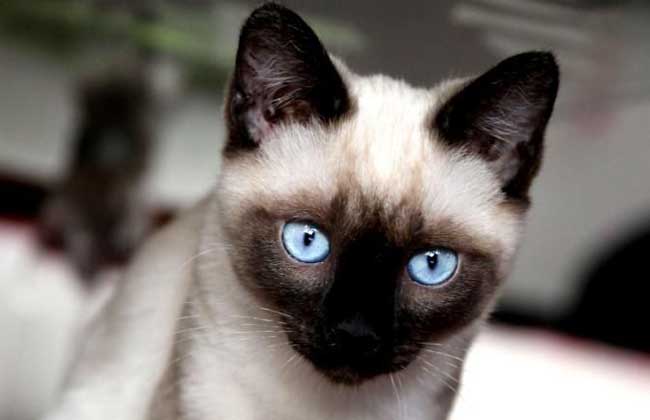
The Siamese cat, also known as the Thai cat, Wichian Mat cat and so on, is a world-famous short-haired cat. More than 200 years ago this precious cat was kept only in the royal palaces and great temples of Thailand, making it a noble that never stepped outside. Today, as a well-known pet cat, it can adapt well to the local climate of its owner, and it has a strong-willed, active personality, is intelligent and nimble, extremely curious and understanding. Let us take a look below at how much a Siamese cat costs!
How much does a Siamese cat cost?
The market price of Siamese cats is generally not expensive. A good kitten can be bought for 200-500 yuan, one around 400 yuan has been vaccinated, and one around 200 yuan definitely has not been vaccinated. An ordinary adult Siamese cat costs about 500-1,500 yuan, a purebred Siamese kitten about 1,000-5,000 yuan, and an adult about 8,000-10,000 yuan. Prices also differ from city to city. In Shanghai an ordinary Siamese cat costs 1,000-1,500 yuan, one of good breed more than 2,000 yuan, and a show-class one tens of thousands of yuan; in Beijing about 500 yuan; in Shenzhen about 800 yuan; and in Xi'an about 500 yuan. Prices also differ by point color. A tabby point costs about 1,000 yuan, a seal point about 300-400 yuan, a chocolate point about 400-500 yuan, a red point 300-600 yuan for the pet class, and a coffee point about 400 to 500 yuan for a male and about 500 to 600 yuan for a female.
How to choose a Siamese cat
1. Coat: feel the texture of the kitten's coat to see whether it is smooth and whether there are any tangles, and check for fleas or other pests.
2. Ears: the kitten's ears should be clean and dry, and you should make sure the ears are not packed with earwax.
3. Eyes and nose: the third eyelid should not protrude, the eyes should be clean and bright, and the nose should be moist.
4. Mouth and teeth: a healthy kitten's mouth is pink, the teeth are white, and the gums are not inflamed.
5. Anus: lift the cat's tail and look for any signs of diarrhea. The anus should be clean, with no traces of feces.
6. Abdomen: gently feel the lower part of the cat's belly with one hand. The abdomen should be slightly round and not hard. Check for lumps (a sign of hernia), then let go and let the cat walk freely to see whether it limps.
How to pick a Siamese cat
1. Neat in appearance, lively and spirited, nimble in movement, and feeling heavier in your arms than you expected.
2. Open the mouth and look: the mouth, gums and tongue are light red, the teeth bite together normally, and there is no particular abnormal odor.
3. The cat's ears should be clean and free of discharge. If the cat constantly scratches its ears or shakes its head, it may already be infected with ear mites.
4. The nose tip is slightly red, moist and glossy; the back of your hand should feel it as rather cool and moist, and there should be no nasal discharge or secretions around the nostrils.
5. The eyes should be clear and bright, with no discharge at the corners, and the third eyelid should not show at the corners of the eyes (when many cats fall ill, the third eyelid is the first thing to appear).
6. The body is moderately developed, the muscles firm, the limbs thick but not bent, walking is normal, and pulling on the legs and feet produces a strong response.
7. The abdomen should be slightly round, and you should not be able to feel the ribs. If the cat's abdomen is distended, it may be a sign of roundworm infection or peritonitis; a slightly protruding belly in a kitten is normal.
8. The hair around the anus is clean, and there is no stain at the anal opening.
9. A healthy kitten's coat should be glossy, fluffy and standing up.
10. It responds immediately when it hears a sound, wants to play when teased, and has a strong appetite when it smells meat.
Siamese cat breed classifications
1. Seal point: one of the traditional colors of the Siamese cat, first appearing in Europe in the 1880s. The coat is short, fine and smooth, clinging close to the body; it matures early, but must be older before it can mate and reproduce.
2. Blue point: one of the traditional colors of the Siamese cat, and one of the most popular varieties since the 1930s. It is said to be the gentlest and most affectionate of the Siamese cats.
3. Chocolate point: one of the traditional colors of the Siamese cat, developed from the seal point Siamese cat. The kitten is almost pure white and only grows its full chocolate-colored points at around one year of age.
4. Lilac point: one of the traditional colors of the Siamese cat, first appearing in 1896 at an exhibition in the United Kingdom, where it was eliminated at the time because its point color was “not blue enough”.
5. Red point: the red point was originally called the “orange point cat”. It was first exhibited in the United Kingdom in 1934 and was controversial because its coat color differed from that of the traditional Siamese cat; it was produced by breeding with the red tabby Persian cat.
6. Cream point: like the red point, the cream point is a new variety with delicate coloring, and abroad it is also called the “cheese point”.
7. Seal tortie: the seal tortie Siamese cat is closely related to the red point Siamese cat, and its call is even louder than that of an ordinary Siamese cat; it is born with a big voice.
8. Blue tortie: the tortie pattern is obtained by mating with the tortoiseshell shorthair cat, and after selection the body characteristics of the Siamese cat were retained; like other tortoiseshell cats, only females occur.