How much does a Sphynx cat cost roughly?
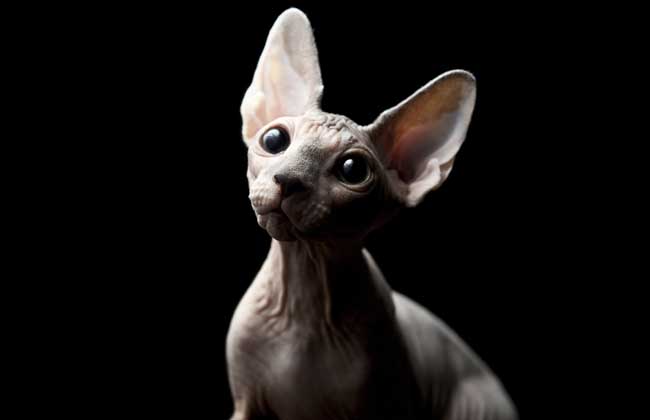
The Sphynx cat, also known as the Canadian Hairless cat, was developed in 1966 in Toronto, Ontario, Canada, by cat lovers who, from a litter of nearly hairless kittens, bred through inbreeding to create a cat especially for people allergic to cat hair. It has a gentle temperament, is highly independent, shows no aggression, and gets along with other cats and dogs. Let's take a look below at how much a Sphynx cat costs!
How much does a Sphynx cat cost?
The market price of the Sphynx cat is very expensive, with an average price of around 30000 yuan; an ordinary family would not spend such a high price to buy a pet cat. The main reason for its high price is that the Sphynx cat is the product of a gene mutation, and gene mutations are inherently unstable. Moreover, breeding Sphynx cats requires that both parents be hairless cats for there to be a chance of producing hairless kittens. The hairless trait is extremely rare, so naturally their numbers are very scarce.
Morphological characteristics of the Sphynx cat
Apart from some thin, soft downy hair on the ears, mouth, nose, front of the tail, and feet, the Sphynx cat is hairless over the rest of its body, with wrinkled and elastic skin. Its weight generally reaches 3.5 to 7 kg, with well-developed muscles, a deep chest, a somewhat arched back, and a compact abdomen that does not tuck up. The limbs are slender with fine bones, and the hind legs are longer than the front legs. The head is angular, broad and wedge-shaped, with prominent cheekbones, lean cheeks, and a face that forms an equilateral triangle. The ears are large, upright, and set high on top of the head, with pointed and rounded tips that tilt slightly forward. The eyes are large and slightly protruding in a lemon shape, slightly slanted, and mostly blue or golden. The upper eye corners slant toward the ears, with a relatively wide spacing. The tail is as thin and long as a rat's, curving upward like a long whip.
Feeding methods for the Sphynx cat
1. The Sphynx cat enters the adult stage at 12 months of age or older, when its body and digestive system have basically matured and it can digest and absorb nutrients well. Nutritionally, it needs complete and balanced nutrition to maintain the Sphynx cat's optimal health while preventing aging.
2. When a Sphynx cat reaches 7 years of age or older, many health problems appear, especially in metabolism, such as the kidneys and eyes. To address such problems, it is important to feed them low-fat, low-energy food to help them maintain a normal weight. In addition, the fiber content in the food should be ensured to keep the digestive tract healthy, and the levels of magnesium and phosphorus should be reduced to maintain the health of the urinary system and kidneys. Also, they should be given food that is as easy to digest as possible.
3. When raising a Sphynx cat, weigh it regularly to ensure the cat's weight stays within the normal range, and feed it according to the advice of a veterinarian and nutritionist. At the same time, regularly assess the cat's physical condition and adjust the amount of food fed according to its condition.
4. Compared with other cats, the Sphynx cat sweats more, and its body temperature is also 4°C higher than that of an ordinary cat, so it must eat constantly to maintain its metabolism. It is suitable for apartment living. In summer, owners need to apply sunscreen to them to prevent sunburn, and in winter, they need to add clothing to cover their bodies and keep them warm.
5. The Sphynx cat is a cat that is very sensitive to sunlight. Because it is hairless, it has poor ability to regulate external temperature and is afraid of both cold and heat. Since the white areas tend to tan easily, keeping the room temperature between 25 and 30 degrees will make this cat feel very comfortable. When the temperature is below 20 degrees, it will feel cold, and if the indoor temperature is below 10 degrees, it will freeze to death.