How much does a cashmere goat cost? A detailed explanation of market prices
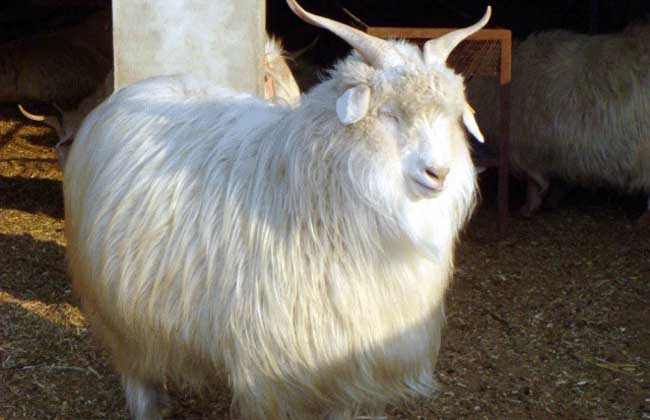
The cashmere goat is a unique biological resource of China. Through long-term natural selection and artificial breeding, it has become the breed with the highest cashmere yield and the best cashmere fiber quality in the world today. Its main product, cashmere, is fine and soft, as white as jade in color, bright and lustrous in sheen, and smooth and delicate to the touch. Its textiles sell well around the world. Let's take a look below at how much a cashmere goat costs!
How much does a cashmere goat cost?
The market price of cashmere goats varies according to the breed, age in months, and region. Generally, ordinary goats cost between 300 and 1000 yuan, while breeding goats are generally between 1300 and 2000 yuan (depending on whether male or female). Generally, a purebred male goat can reach about 350 jin, and a female goat can reach about 300 jin. The price of original breeding rams ranges from 5000 to 10000 yuan, and pregnant ewes with kids are generally between 1500 and 1800 yuan.
What breeds of cashmere goats are there?
China is rich in cashmere goat breed resources, mainly including more than 30 purebred breeds such as Liaoning cashmere goats, Jinlan cashmere goats, Inner Mongolia cashmere goats (Inner Mongolia Erlangshan goats, Inner Mongolia Alxa Left Banner white cashmere goats, Inner Mongolia Albas white cashmere goats), Hexi cashmere goats, Tibet cashmere goats, Sichuan cashmere goats, and Shandong cashmere goats. In addition, China also has a large number of crossbred improved breeds, new goat breeds developed through methods such as multiple crossbreeding, selective interbreeding, and inbreeding using local goat breeds with relatively good production performance, such as the Longdong white cashmere goat, which is a new breed selected and bred by crossing the Longdong black goat as the female parent and the Liaoning cashmere goat as the male parent.
How can cashmere yield be increased?
1. In cashmere goat breeding management, try to select purebred goats or goats with heterosis when forming groups. At the same time, breeding rams and wethers generally have the highest cashmere yield, young goats come next, and parous ewes have the lowest, so wethers should make up an appropriately high proportion in the group structure.
2. In winter and spring, pay attention to feeding mixed feed, silage forage, etc., so that protein feed in the daily ration is no less than 13% and crude fiber is no less than 20%. Among minerals, pay attention to supplementing calcium, phosphorus, and sulfur. In particular, sulfur is an indispensable substance for forming cashmere, and sufficient sulfur plays an important role in increasing cashmere yield and quality.
3. Change the feeding method at the right time. When pastoral areas enter winter, after most goats have conceived, it is best to use full-time housed feeding and pen raising. After lambing is completed and cashmere combing is finished in late spring of the following year, they can be turned back to grazing. This can both avoid cashmere being snagged and lost during the cashmere-producing period and improve the lamb survival rate.
4. Regular medicated baths to prevent external parasitic diseases (such as sarcoptic mange) are also one of the indispensable measures for increasing cashmere yield.