How much does a Japanese Akita Inu cost? A detailed look at market prices
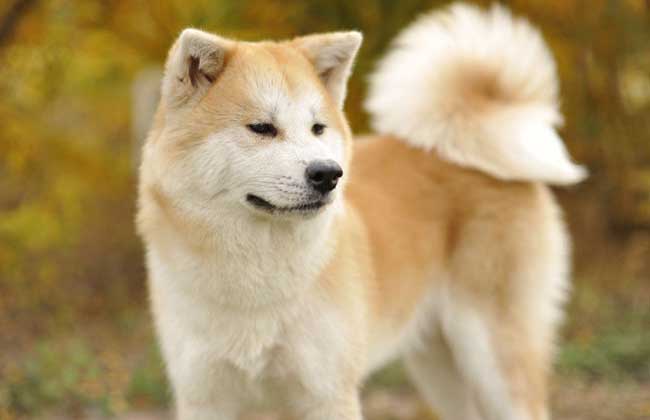
The Akita Inu is the national dog of Japan, also known as the Japanese Akita Inu, Japanese-line Akita Inu, and so on. In Japan it is a family pet dog famous for its loyalty to its owner, with a calm and gentle temperament, keen senses, a strong and powerful build, bravery, and ease of training. It is also extremely robust and sturdy, and is also extremely loyal to its owner. Let us take a look below at how much a Japanese Akita Inu costs!
How much does an Akita Inu cost?
City prices: In Beijing, a puppy costs about 10000 yuan each, and an adult Akita Inu costs about 8000 yuan each, with a price difference between males and females of at most about 2000 yuan. In Shanghai, a puppy costs about 1000 yuan each, and an adult dog costs about 1280 yuan each. In Shenzhen, Guangdong, the price of an Akita Inu is about 1000 yuan each, and in Guangzhou, the price of an Akita Inu is about 3000 yuan each.Note: The price of a purebred Japanese-line Akita Inu puppy is about 5000 yuan each, and the price of a pure white male Akita Inu is about 8000 yuan each. At the same time, the Akita Inu has two breeds, the Japanese-line Akita Inu and the American-line Akita Inu, and the prices of these two breeds also differ somewhat. The price of the Japanese-line Akita Inu is between 1000 and 10000 yuan, while the American line is cheaper, at between 1000 and 8000 yuan.
The difference between an Akita Inu and a Shiba Inu
1. Appearance: The overall body of the Shiba Inu is smaller than that of the Akita Inu. Simply put, the Shiba Inu is like a scaled-down version of the Akita Inu. The Shiba Inu is medium in size, with thick muscles and very well-developed limbs; its small body is agile and active. The Akita Inu looks huge and powerful, with a triangular head, small round eyes, and two erect ears that are in a straight line with the back of the neck, and a large tail with a strong curl, symmetrical with its broad head.
2. Limbs: The front limbs of the Shiba Inu are straight, and the hind limbs have firm, tight muscles. The Akita Inu, viewed from the front, has straight front limbs with strong, solid bones, and its hind limbs have more muscle, and it is the hind limbs that are more developed. However, viewed from the side, the Akita Inu's front limbs are not so straight.
3. Foot shape: The front feet of the Shiba Inu resemble the common cat's foot, with round toes, thick and compact pads, and the front feet also have a pair of dewclaws, which can be removed, while the hind feet have no such dewclaws. The front and hind feet of the Akita Inu are both very similar to cat feet, with no dewclaws.
4. Coat: The Shiba Inu has a double coat; the outer coat is rather stiff and fairly straight, while the inner coat is soft and on the thick side. The coat on the face, ears and legs is short, and the hair on the tail is slightly longer and stands upright, like a brush. The Akita Inu's coat has two layers, upper and lower; the undercoat is on the thick side, soft and dense, and shorter than the topcoat, while the topcoat is straight and rather hard. The hair on the head, limbs and ears is short, the hair on the shoulders and hips is longer than the hair on other parts of the body, and the hair on the tail is longer and dense.
5. Gait: The Shiba Inu moves nimbly and walks lightly. Because its front foot pads also give it a springy quality when walking, when trotting its legs draw in toward the center of the body and its back remains stable. The Akita Inu walks strongly and powerfully with a moderate stride, its hind feet staying level, and its front limbs and hind limbs staying on one horizontal line.
6. Coat color: The Akita Inu and the Shiba Inu also differ in coat color. The Akita Inu's coat color is mainly divided into three kinds, namely red, white and brindle. The Shiba Inu's coat has four colors: white, red, sesame and black.
How to choose an Akita Inu
1. Neat in appearance, lively and full of energy, agile in movement, and when held with the hands it feels heavier than expected, that is, a solid weight.
2. Open the mouth and look: the oral cavity, gums and tongue are light red, the teeth bite normally, and there is no particular abnormal odor.
3. An Akita Inu puppy's ears should be clean and free of discharge. If the Akita Inu puppy frequently keeps scratching its ears or shaking its head, it may already be infected with ear mites.
4. The nose tip is slightly red, moist and glossy; the tip of the nose should feel rather cool and moist to the back of the hand, and there is no nasal discharge or secretion around the nostrils.
5. The eyes should be clear and bright, with no discharge at the corners, and the third eyelid should not show at the corners of the eyes (many Akita Inu puppies, when they fall ill, first show the third eyelid).
6. The body is moderately developed, the muscles are firm, the limbs are thick but not bent, walking is normal, and when the legs and feet are pulled with the hands the reaction is strong.
7. The abdomen should be slightly round, and the ribs should not be felt by hand. If an Akita Inu puppy's abdomen is distended, it may be a symptom of roundworm infection or peritonitis; a slightly protruding belly in a small Akita Inu puppy is a normal phenomenon.
8. The hair around the anus is clean, and there is no stain at the anal opening.
9. A healthy Akita Inu puppy's coat should be glossy, fluffy and standing upright. A messy, lusterless coat indicates that it has already been infected with a disease or has recently recovered from an illness, and it is best not to choose it.
10. It responds immediately upon hearing a sound, has a desire to play when teased, and has a strong appetite when it smells meat.