How much does a palm tree cost? Market price reference
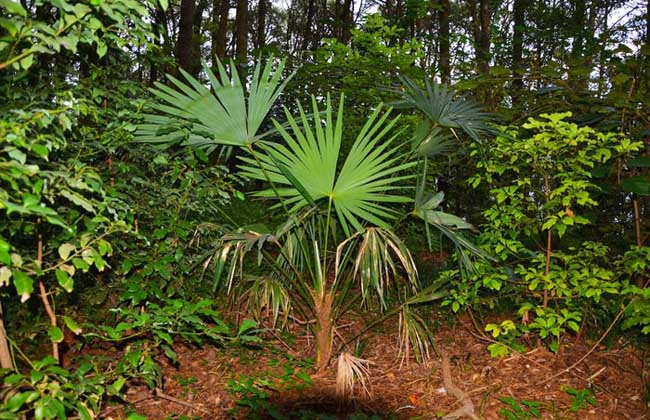
The palm tree is one of the most cold-hardy plants in the palm family, also known as Tang palm, Pin palm, palm tree, mountain palm, etc. It is an evergreen tree of the genus Trachycarpus in the palm family, reaching up to 7 m in height, with a cylindrical trunk, nearly round leaves, and fine rounded teeth on both sides of the leaf stalk, and stout inflorescences. It is now cultivated all over the world and has extremely high cultivation value. Let us take a look below at how much a palm tree costs!
How much does a palm tree cost?
Variety Height (m) Price (yuan) Variety Height (m) Price (yuan) Variety Height (m) Price (yuan) Palm tree 0.5 12 Palm tree 1.0 35 Palm tree 1.5 75 Palm tree 2.0 100 Palm tree 2.5 180 Palm tree 3.0 260 Palm tree 3.5 360 Palm tree 4.0 500 Palm tree 4.5 800Note: Palm trees are widely cultivated throughout the south. Mainly the palm fiber is stripped from the bark to make ropes and to weave coir raincoats, palm bed ticking, and floor mats, to make brushes, and to serve as stuffing for sofas, etc. The tender leaves can be bleached to make fans and straw hats, and the unopened flower buds are edible. The palm bark and leaf stalks (palm board) calcined into charcoal and used as medicine have a hemostatic effect. In addition, the palm tree has a graceful form and is also an excellent tree species for courtyard landscaping.
The cultivation value of the palm tree
1. Medicinal value: The palm bark and leaf stalks (palm board) of the palm tree, calcined into charcoal and used as medicine, have a hemostatic effect. The fruit, leaves, flowers, roots, etc. are also used as medicine and have an astringent hemostatic effect. For unstoppable nosebleeds, burn palm into ash and blow it into the bleeding nostril. For unstoppable uterine bleeding, burn palm bark until its nature is retained, take three qian on an empty stomach, and send it down with light wine. For diarrhea and dysentery, burn palm bark until its nature is retained, grind it into powder, and take one spoonful with water.
2. Landscaping value: The palm is tall and graceful, presenting a southern scenery, has strong adaptability, and can resist a variety of toxic gases. Palm bark has a wide range of uses and is in short supply, so it is an ideal tree species for combining landscaping with production, and is also an excellent tree species for factory greening. It can be planted in rows, in clumps, or in large patches, and is also often potted or barrel-planted for indoor decoration, decoration in front of buildings, and arranging meeting venues.
3. Economic value: The leaf sheath fiber of the palm bark has strong tensile strength, is wear-resistant and rot-resistant, and is used to weave coir raincoats, fishing nets, twist ropes, make brushes, carpets, mattresses, etc. Old leaves can be processed into ropes. The trunk can be used for pavilion pillars and water troughs, and can also be made into fan ribs, wooden combs, etc. The tender flower stalks are edible. The flowers, fruits, and seeds are used as medicine. The seeds are rich in starch and protein, and after processing are very good feed.
The planting technology of the palm tree
1. Seed collection and storage: Collect seeds from vigorous trees 15 to 40 years old; seeds from young trees and old trees are not suitable for use. Harvest in November to December, when the palm seeds are fully mature and grayish-brown in color. After removing the small branch stems from the seeds, place them indoors, spread them 12 to 15 cm thick, and air them for about 15 days, then they can be sown. If waiting for spring sowing, the seeds should be mixed with wet sand, spread indoors, covered with a layer of rice straw, and stored with moisture retained.
2. Nursery land preparation: The land for the nursery should be selected as sandy loam or clay loam close to a water source, not easily affected by drought or waterlogging, and relatively fertile. Generally, for every 7 sq m, apply 8 to 10 loads of decomposed human manure and urine and 20 kg of superphosphate. After plowing and turning, make beds 1.4 m wide, break up the soil clods on the bed surface, and then sow.
3. Timely sowing: Before sowing, soak the seeds in plant ash water for 48 to 64 hours, wipe off the fruit skin and the waxy substance on the outside of the seeds, wash them clean, and sow. Drill sowing, with row spacing of 20 to 25 cm. After sowing, cover the seeds with a mixture of ash manure and finely crushed fertile soil and miscellaneous manure; do not cover too thickly, with 2 to 2.5 cm as the limit. Then cover with a layer of rice (wheat) straw to prevent the soil from drying out and crusting.
4. Seedling stage management: When more than 80% have emerged, lift off the covering grass in the evening and use a watering can to moisten the bed surface. During the seedling stage, keep the soil moist and promptly pull out weeds. One month after emergence, apply 2 kg of urea diluted in water for every 7 sq m. After 3 to 4 months, when the seedlings have grown 3 leaves, carry out temporary planting.
5. Timely temporary planting: The soil for temporary planting should be loose and fertile, and for every 667 sq m apply 80 to 10 loads of decomposed miscellaneous manure. The row and plant spacing for temporary planting is 15 cm × 13 cm. After planting, water every evening until they survive. One month later, begin loosening the soil and applying topdressing. In the high-temperature season, insert miscanthus stalks between the seedlings for shade. When the seedlings are about 60 cm tall, they can be transplanted.
6. Land selection and transplanting: Choose mountain-foot slope land with moist, fertile soil and good drainage, especially idle land such as field edges, land borders, beside houses, stream banks, and roadsides. Low-lying land, heavy clay, dead yellow soil, overly acidic or overly alkaline soil, and land with shallow soil are all unsuitable for planting. For planting in large patches, in July and August of the year before transplanting, cut down all the weeds and shrubs on the ground, dig deep about 30 cm, and bury the weeds and shrubs in the soil. When it is time to transplant, break up the soil clods, pick out stones, tree roots, etc., and dig holes for afforestation.