How much does a big-headed turtle cost per turtle?
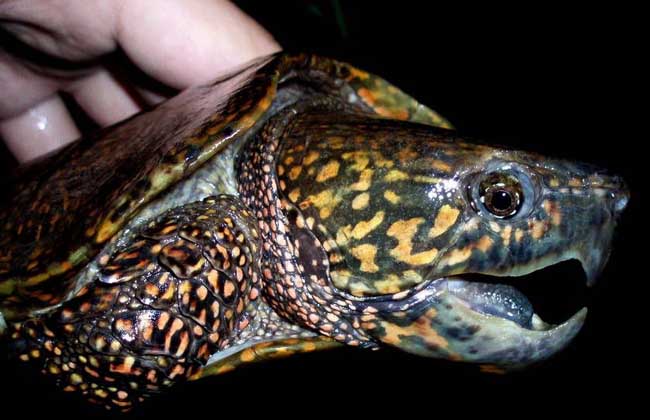
The big-headed turtle is one of the most unusual freshwater turtles in China, also known as the flat-shelled turtle, big-head turtle, parrot turtle, etc. It is an amphibious turtle species of the genus Platysternon in the family Platysternidae, and likes to live in mountain streams full of boulders and gravel with fast-flowing water, foraging for snails, clams, shellfish, shrimp, fish, crabs, frogs, insects and snails, and when hungry it also eats leaves and grass roots. Now let us take a look at how much a big-headed turtle costs!
How much does a big-headed turtle cost?
The wholesale price of big-headed turtle hatchlings is 350 yuan each, the retail price is around 400 each, the price for those under one jin is between 800 and 1000 yuan, and for those over one jin the price is between 1500 yuan and 2000 yuan per jin. The big-headed turtle not only has ornamental value but also medicinal value, and the number of wild big-headed turtles is extremely scarce, which makes the price of big-headed turtles on the current market very expensive. Most big-headed turtles on the current market are sold by weight, and generally the price is about 1000±500 yuan/jin, though of course there are certain differences in price depending on the location.
Identification of male and female big-headed turtles
1. Male: the abdominal shell is relatively long, the flat center of the chest is slightly concave, the tail is thick, and the cloacal opening is farther from the rear edge of the plastron, about 2.5 cm from the base of the tail.
2. Female: the center of the chest is very flat with no concavity, and the body is very wide, and the anus is closer to the edge of the abdomen, about 1.5 cm from the base of the tail.
How to keep big-headed turtles
1. Water quality management: The water temperature for keeping big-headed turtles should not be too high, preferably below 32 degrees, and the turtle tank should avoid direct sunlight as much as possible. Water quality must be strictly controlled; in the south, tap water can be used directly for keeping them, and mountain spring water, well water or stream water can also be used, while in the north tap water needs to be left to stand for a period before it can be used. Moreover, the big-headed turtle has a fierce temperament, so it must never be mixed with other turtles or kept together with multiple big-headed turtles.
2. Water level management: The water depth for keeping big-headed turtles should at least reach above the turtle's carapace, and should not exceed 1 m at the deepest, and there need to be enough stones or other climbing objects in the tank for the turtle to cling to, preferably stones with a rough surface so it can breathe and exchange air. The tank walls should be tall enough to prevent the big-headed turtle from escaping. Analysis: The powerful tail and four claws of the big-headed turtle allow it to easily escape from a low turtle tank.
3. Food selection: The big-headed turtle has a relatively broad diet and eats both animal feed and plant feed. To make it grow quickly, animal feed should be the main part and plant feed supplementary, and various vitamins, trace elements and mineral feeds such as calcium and phosphorus also need to be added. The ratio of animal to plant feed should be 7:3 or 8:2, and the feed should be fresh, processed and fed on the same day, and spoiled or rotten food should not be fed.
4. Bait feeding: Before feeding big-headed turtles, large pieces of bait such as fish and shrimp need to be processed into small pieces to make it easier for the turtle to eat, and the bait should be put into the water to suit the big-headed turtle's habit of liking to eat underwater. Each feeding amount is 2 to 3% of the turtle's body weight, once a day in summer, once every 2 days in spring and autumn, and no feeding is needed when the water temperature is below 20 degrees C. The feeding time should basically be fixed each time; feeding at regular times helps the turtle form a conditioned reflex and also makes it easier to observe the turtle's eating situation.
5. Disease prevention and control: The big-headed turtle has relatively strong vitality and generally does not get sick under normal circumstances, but if it is kept poorly, diseases related to nutrition and metabolism and so on can also occur, and if disease occurs it needs to be treated promptly with the right medicine. At the same time, attention should be paid to changing the water in the rearing pond, once every 2 days in summer and once every 5 days in spring and autumn, to keep the water clean and do a good job of preventing turtle diseases.