How much does a miniature horse cost? An introduction to market prices
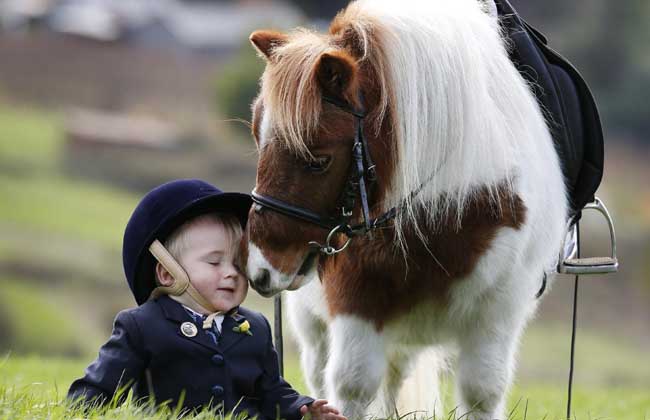
The miniature horse, also known as the pocket horse, is native to Australia. It stands 60-100 cm tall at the withers, with an average height of 80 cm, a body length of about 100 cm, and a weight of 50-100 kg. It can be bred once it comes into heat at about one year old. Its raising method is no different from that of various domestic horse breeds. It is docile, smart, cute, loyal and reliable, and is deeply favored by young people. Let's take a look below at how much a miniature horse costs!
How much does a miniature horse cost?
There are two types of miniature horses, the Chinese pony and the British pony, subdivided into the Chinese Debao pony, the Hangong pony, the Yunnan pony, etc. Among British ponies there is the British Shetland pony. Ponies are classified by price in the same way as ordinary horses: a stud horse costs about twice as much as a crossbred horse, and a trained horse also costs about 50 percent more than an untrained horse. Therefore, the British Shetland pony has the highest price, reaching 100,000 to over 100,000. Chinese pony prices are generally comparable, with an ordinary pony costing around 10,000 yuan, and some horses can reach a price of 100,000 yuan.
The growth habits of the miniature horse
1. Characteristics: The miniature horse is good at climbing mountains and wading through water, has a steady and nimble gait, strong adaptability, tolerates thirst and hardship, tolerates cold, tolerates rough feeding, is easy to condition, has a high reproduction rate, and has strong disease resistance.
2. Feeding habits: The miniature horse mainly feeds on roughage, straw and green grass, and is rarely given supplemental concentrated feed. In addition, feeding it peas, corn and the like can make its coat color bright and glossy.
3. Reproduction: The miniature horse is viviparous and has stable heredity. Under natural mating, the conception rate is about 70-80%, with two foals in three years or one foal in two years, and about 10 foals over its lifetime.
The body characteristics of the miniature horse
1. Head and neck: The head is flat and straight, the forehead is moderately wide, the eyes are small and protruding, the ears are erect and short, the nostrils flexibly expand and contract, and the neck and head are well proportioned in structure and thick.
2. Forequarters: Good shoulder angle, compact muscles, well-developed chest, straight and strong forelimbs, obvious carpal joints, short and straight cannon bones, and medium-length pasterns. With suitable angles, the hooves are small and round, and the hoof wall stands firm.
3. Hindquarters: The loin and back are flat and straight, the muscles are well developed, compact and symmetrical, the rump is slightly sloping, the hocks are strong and slightly turned inward, the pasterns are moderate, the hooves are nearly round, and the hoof wall is tough; slightly turned inward, the pasterns are moderate, the hooves are nearly round, and the hoof wall is tough.
4. Coat color: Most are bay, and a few are chestnut, grey, black, white, and rabbit-brown. An individual pony with moderate nutrition is normal, which is beneficial for climbing mountains and wading through water and helps with speed, endurance and jumping.