How much does a Bengal cat cost?
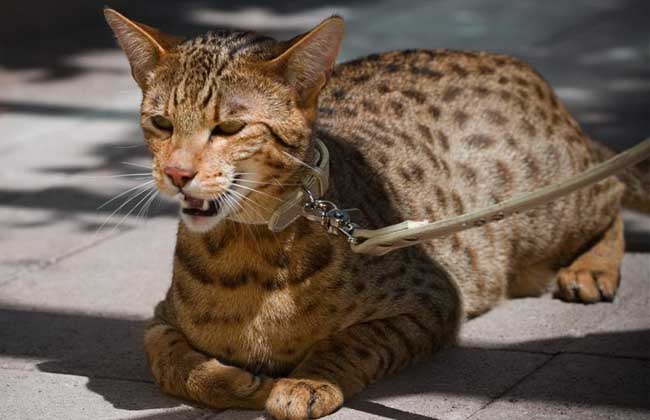
The Bengal cat has a rounded outline, with a head shape that is longer in length and narrower in width. The head is slightly small in proportion to the entire body. The skull forms a gentle curve behind the ears that slopes all the way down to the neck. The jawbone of an adult male cat is broad, and the head overall looks more wild than that of other domestic cats. Let's take a look below at how much a Bengal cat costs!
How much does a Bengal cat cost?
The price of Bengal cats generally ranges from several thousand to several tens of thousands depending on the breed. The Bengal cat has an elegant and beautiful appearance and an outgoing personality, and is also one of the most widely kept pet cat breeds. Simply put, it is very suitable for keeping at home. Moreover, Bengal cats are more obedient than other breeds of pet cats. Especially after scientific and systematic training, they become even more sensible and well-behaved. They can stand up and sit down like a pet dog, and owners can train them to walk on a leash for walks and strolls.
Color varieties of the Bengal cat
1. Golden Leopard: From gray, sandy yellow to golden yellow and red copper, all fall within the color range of the Golden Leopard. This is the most traditional color, and the Asian Leopard Cat is this color. In the TICA standard, warm red copper is the most popular. The pairing of gold and gold sand, when illuminated by light, shows a sparkling and striking appearance, giving a quite noble feeling.
2. Silver Leopard: The Silver Leopard is a recently recognized color. This color is influenced by a dominant silver gene. The silver gene fades the other colors of the fur, leaving only pure white, thus creating a high-quality silver visual effect. The most premium among Silver Leopards is the glossy silver, because only a small number of Silver Leopards have gloss, so Silver Leopards with a silvery sheen are even more precious.
3. Snow Leopard: Snow Leopards are divided into three types: Ivory Emerald, Mink Emerald, and Ivory Sapphire. The Ivory Emerald has an ivory-white base coat color and emerald-green eyes. The Mink Emerald is similar to the Ivory Emerald, with the difference being that its base coat color is a bright light brown. The Ivory Sapphire has an ivory-white base coat color and sapphire-like eyes.
Morphological characteristics of the Bengal cat
1. Head shape: A broad, modified wedge-shaped head with a rounded outline; the head shape is longer in length and narrower in width.
2. Head: Slightly small in proportion to the entire body, but it should not be too exaggeratedly small.
3. Skull: The skull forms a gentle curve behind the ears that slopes all the way down to the neck.
4. Ears: Medium to small, with a broad base and rounded tips; when viewed from the side, the ear tips should point forward.
5. Eyes: Oval-shaped, very close to round. The two eyes are set very far apart, slightly angled toward the base of the ears.
6. Chin: A strong chin that, when viewed from the side, forms a straight line with the tip of the nose.
7. Muzzle: Full and broad, with a large and prominent muzzle and nose as well as high and protruding cheekbones.
8. Nose: Large and broad, with skin in a slightly loose state.
9. Neck: Long, sturdy, and strong, in perfect proportion to the body.
10. Torso: Slender and sturdy, not Oriental or Foreign type, medium to large in size.
11. Legs: Medium in length, with the hind legs slightly longer than the front legs.
12. Paws: Thick, round, with prominent joints.
13. Tail: Medium in length, slender, with a rounded cone shape at the end.
14. Bone structure: Strong and sturdy, never giving a delicate or weak impression.