How much is a Phalaenopsis orchid per pot? Market price reference
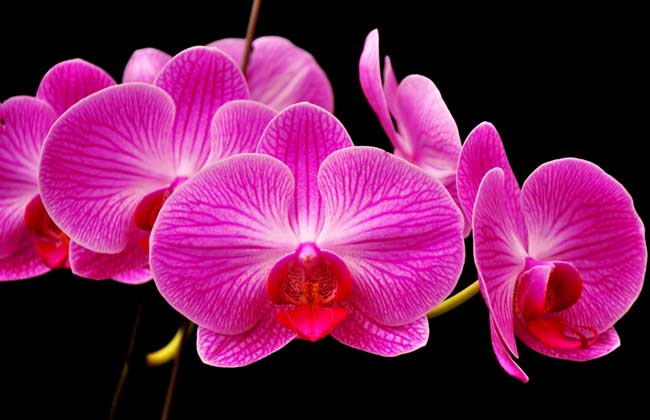
Phalaenopsis orchids are epiphytic orchids of the genus Phalaenopsis in the family Orchidaceae, native to subtropical rainforest regions. They are named for their butterfly-like dancing appearance and have extremely high ornamental value for cultivation, making them highly favored by flower enthusiasts and earning them the title of "Queen of Orchids." Moreover, the market price of Phalaenopsis orchids is also very affordable. Let's take a look below at how much a pot of Phalaenopsis orchids costs!
How much is a Phalaenopsis orchid per pot?
The market price of Phalaenopsis orchids is roughly between 80 and 300 yuan per pot (about 4 to 6 good stems). Phalaenopsis orchids have been a popular high-end flower in recent years, with a relatively large number of admirers. When choosing Phalaenopsis orchids, selections are generally made based on variety, height, and crown width. The ordinary price is 30 to 35 yuan per stem. If they are well-decorated, a general one costs about two to three hundred yuan per pot, while the price of Phalaenopsis seedlings is generally around 0.12 yuan per plant.
How to grow Phalaenopsis orchids
1. Temperature: Phalaenopsis orchids prefer a high-temperature, high-humidity environment. Attention should be paid to increasing warmth in autumn and winter, at the turn of winter and spring, and when temperatures are low in winter. In summer when temperatures are on the high side, cooling and ventilation are needed. If the temperature exceeds 32°C, they will enter a semi-dormant state, so prolonged high temperatures should be avoided. The peak flowering period is around the Spring Festival, and appropriate cooling can extend the viewing time. During flowering, the nighttime temperature is best kept between 13 and 16°C, but must not fall below 13°C.
2. Humidity: The suitable air humidity for Phalaenopsis orchid growth is 60 to 80%. During the vigorous new root elongation period, more watering is needed, while during the post-flowering dormant period, less watering is needed. In spring and autumn, water once daily around 5 p.m. In summer, when the plant grows vigorously, water once each at 9 a.m. and 5 p.m. In winter, with weak light and low temperatures, watering once every other week is sufficient, and it should be done before 10 a.m. If a cold wave arrives, watering should be avoided and the plant kept dry until the cold wave passes before resuming watering.
3. Light: Although Phalaenopsis orchids are relatively shade-loving, the plants still need to receive some light, especially before and after the flowering period. Appropriate light can promote flowering and make the blooms more vivid and long-lasting. Generally, they should be placed in a spot with diffused indoor light, and direct sunlight should be avoided.
4. Ventilation: The normal growth of Phalaenopsis orchids requires circulating fresh air, so good ventilation is essential when growing them at home, especially during the high-humidity period in summer. Good ventilation must be maintained to prevent heat stress and also to avoid infection from pests and diseases.
5. Fertilizing: Phalaenopsis orchids need fertilizing year-round. Unless low temperatures persist for a long time, fertilizing should not be stopped. Winter is the flower bud differentiation period for Phalaenopsis orchids, and stopping fertilizer can easily lead to no flowers or few flowers. Spring and summer are the growth period, and a dilute liquid fertilizer can be applied once every 7 to 10 days. Organic fertilizer is preferable, and a special nutrient solution for Phalaenopsis orchids can also be used, but do not apply it when there are flower buds, otherwise the buds may easily drop early. Fertilizing should be done after watering in the afternoon. After several fertilizations, flush the pot and plant with plenty of water to prevent residual inorganic salts from harming the roots.
6. Diseases: Phalaenopsis orchids are prone to soft rot and gray leaf spot. Soft rot is extremely contagious. Once detected, immediately isolate the diseased plant. The diseased plant can be treated with mancozeb or thiophanate-methyl, generally sterilizing once every 15 days. The common growing media for Phalaenopsis orchids are mainly sphagnum moss and moss, so the potting medium should not be soil. Instead, use sphagnum moss, pumice, tree fern fibers, charcoal pieces, etc.
Precautions for Phalaenopsis orchids
1. Overwatering: Friends who grow Phalaenopsis orchids always worry that the plant lacks water, so they water every day regardless of whether the growing medium is dry, causing severe root rot.
2. Temperature too low: Usually, flowering Phalaenopsis orchids are mostly available on the market in early spring, and after being brought home they are generally placed in living rooms and other places for viewing. Although the daytime temperature in these places is sufficient, the nighttime temperature is somewhat on the low side.
3. Overfertilizing: Applying fertilizer whenever available without paying attention to concentration, thinking that fertilizing will make them grow faster. Be aware that Phalaenopsis orchids should be given light fertilizer, applied in small amounts but more frequently. Remember that "over-supplementing" must not be excessive, otherwise it will backfire.
4. Large pot for a small plant: Thinking that using a large pot can give Phalaenopsis orchids a more spacious environment and sufficient medium. In fact, after using a large pot, the sphagnum moss does not dry easily. Be aware that Phalaenopsis orchids like air circulation, and good aeration keeps them comfortable.
5. Bud drying: Most Phalaenopsis orchids nowadays are forced into bloom. After leaving the production base and undergoing environmental changes, bud drying problems easily occur. At this time, do not assume it is due to dryness and do not water more. Instead, increase indoor humidity and control indoor temperature; the temperature must not be too high. When purchasing flowers, try to choose ones with thicker petals.