How much does a Himalayan yew cost per plant?
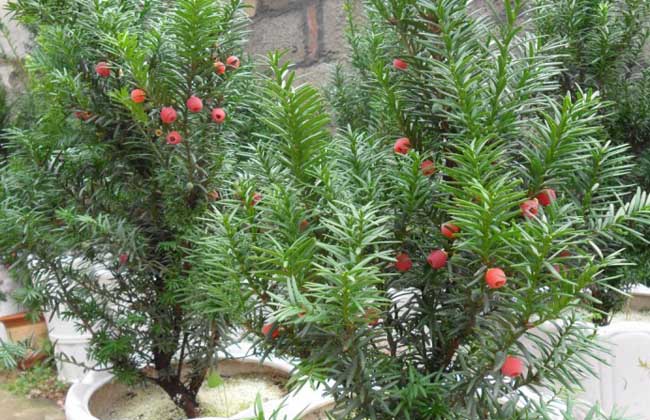
The Himalayan yew is a natural hybrid, an evergreen shrub of the genus Taxus in the family Taxaceae, also known as the European yew. Its female parent is the Japanese yew and its male parent is the European yew. It has been grown and developed in the United States and Canada for nearly 100 years, and it is also distributed in southern China. It has extremely high cultivation value. Let us take a look below at how much a Himalayan yew costs per plant!
How much do Himalayan yew saplings cost?
Specification (height) Price (yuan/plant) Specification (height) Price (yuan/plant) Specification (height) Price (yuan/plant) 30 cm 15 yuan 40 cm 20 yuan 50 cm 40 yuan 80 cm 100 yuan 1 m 150 yuan 1.5 m 400 yuanNote: The Himalayan yew can bear fruit and red berries in 3 years. Three-year-old Himalayan yews basically all have flower buds. The flower buds of male Himalayan yews are relatively large and obvious. The flower buds become obvious from August and continue until they bloom around March of the following year, pollinating the female plants. The flower buds of female plants are relatively small and very similar to buds. When they bloom, they are a small drop of water and have no pollen.
Propagation methods of the Himalayan yew
1. Sowing: Yews are generally sown in early spring. After the seeds have been stored for 1 year, when 30% of the seeds have cracked and shown white, sieve out the seeds in time, place them in a 0.2% potassium permanganate solution to disinfect for 10 minutes, then rinse them clean with water. After drying off the surface water, sow them evenly in the furrows. After sowing, dig up yellow soil with mycorrhizae from under a pine forest, sift it, and cover the seeds with it, with a thickness such that the seeds are no longer visible. During the seedling stage, pay attention to shading, and build a shade shed during the seedling period. The seed germination rate is above 70%.
2. Cutting: During the tree's dormant and sprouting period, choose a mixed substrate of sand, sawdust, and perlite as the cutting soil. Select 1- to 4-year-old lignified seedling branches, cut the cuttings into small sections 10 cm, 15 cm, or 30 cm long. When cutting the branches, the cuts are required to be smooth, with the lower cut in a horse-ear shape, and remove the leaves from the lower 2/3. Choose agents such as ATP, ABT, NAA, IBAA, etc., to treat the cuttings, then insert them and cover with film. The cutting survival rate is generally above 85%.
Cultivation methods for the Himalayan yew
1. Light: The Himalayan yew likes shade and should not be exposed to direct sunlight. Place it in a corner of the living room, bedroom, or balcony. In the evening, it can be placed on the windowsill to let it get some air.
2. Environment: The Himalayan yew does not have great demands on the environment. In addition to doing the first point and avoiding direct sunlight, also note that indoors it should not be directly blown by an air conditioner, should not be close to heating in winter, and cigarette butts, tea leaves, and other debris should not be casually thrown into the pot.
3. Watering: The Himalayan yew needs different amounts of water at different periods. During the growing period (March to November), it needs more water, while during the dormant period (December to February), it needs relatively less. The watering cycle cannot be generalized. In spring and autumn, generally water once every 5 to 7 days; in summer, water once every 3 to 5 days; in winter, water thoroughly once every 7 to 10 days.
4. Pests and diseases: In high-temperature and dry seasons, individual young Himalayan yews may develop leaf blight and red blight, which can be prevented and controlled by spraying 1% Bordeaux mixture. If the leaves turn yellow or there are pests and diseases, methyl thiophanate and monopotassium phosphate can be used for irrigation or spraying. The general dosage is one small bag mixed with 1 to 2 liters of water.
5. Fertilizing: The fertilizing principle for the Himalayan yew is small amounts applied multiple times. From November each year to March of the following year, apply farmyard manure at the roots. From early April to early June, topdress with urea every 15 days, applying 10 to 30 grams per plant, until early June. From mid-to-late September to the end of October, apply compound fertilizer every 15 days.
6. Pruning: The main use of the Himalayan yew is medicinal development, and both branches and leaves are medicinal raw materials, so it is generally not pruned. For landscaping use, it can be pruned into various shapes such as spherical, tower-shaped, and umbrella-shaped according to landscaping needs.
Precautions for the Himalayan yew
1. Because the climate in the north is dry with little rain, water when the soil surface is dry, and note that it should be watered thoroughly at one time, especially in summer. The air in the north is dry, and the leaf surface is prone to drooping from lack of water. When the leaf surface does not look plump, use a small spray bottle to spray water on the leaf surface from bottom to top (in summer, it can be sprayed every day).
2. The Himalayan yew is a shade-loving plant and is suitable for indoor placement, but it should not be placed at the air outlet of an air conditioner or next to heating, otherwise the leaf moisture evaporation of the Himalayan yew will increase, easily causing the branches and leaves of the Himalayan yew to dehydrate rapidly, resulting in curled and withered leaves.
3. Bonsai Himalayan yews should not be watered with tea water. In particular, Beijing's water quality is relatively hard and has high alkalinity, so the water must be left to stand for a day before being used for watering and spraying.