How much does a Komondor cost? Market price overview
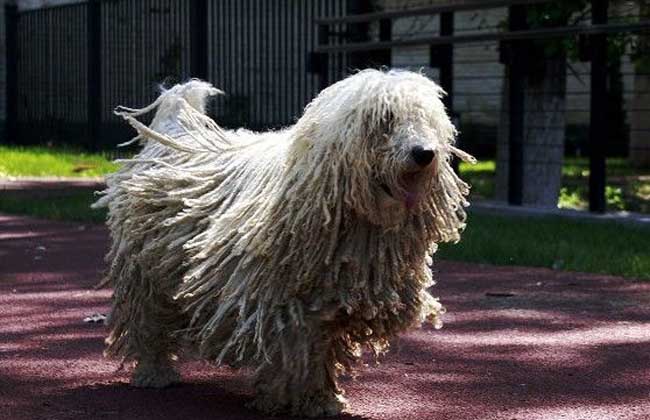
The Komondor, also known as the Komondor dog, mop dog, etc., comes from the Puszta region of Hungary. It is entirely white, with cord-like hair hanging vertically; growing vertically for 4 years, it can reach the ground. Because it looks like a moving mop when running, is loyal to its owner, has a strong sense of territory and protection, and is fast, agile and nimble, it is very popular. Now let's take a look at how much a Komondor costs!
How much does a Komondor cost?
The price of a Komondor is about 1000 to 30000 yuan each. The Komondor is the king of Hungarian livestock guardians, and today in the United States it is regarded as an unusual breed. It is muscular and covered with dense, white rope-like fur that protects it from predators. Despite its huge size, it is not bulky, and is surprisingly fast, agile and nimble. It is brave and fearless, capable of protecting sheep and other livestock from wolves, coyotes, wild dogs or human thieves.
Selection criteria for the Komondor
1. Head shape: The length of the head is about 2/5 of the shoulder height.
2. Eyes: The eyes are medium-sized, almond-shaped, dark brown in color, with gray or black eyelids.
3. Ears: The ear shape is a long triangle with slightly rounded tips. The ear roots are set moderately, and the length can extend to the inner corners of the eyes on both sides.
4. Mouth: The muzzle is wide and thick, with the tip appearing truncated.
5. Body type: The body appears powerful, with a deep chest, well-developed muscles and proper proportions.
6. Limbs: The shoulders are appropriately sloping. The forelimbs are straight, with sufficient bone mass and well-developed muscles. The forearms are close to the body, and the elbows are not loose.
7. Tail: The length extends to the hock. It is slightly curved upward, and the tip of the tail may curve to one side or may not curve.
8. Coat: The coat has two layers, with a soft, dense, fluffy undercoat. The outer coat is in firm cord-like strands, and feels like felt to the touch.
Temperament characteristics of the Komondor
1. Territorial instinct: Guarding the home and its territory against intrusion by humans or other dogs is the Komondor's instinct; it will ignore birds or other animals entering the territory. Dogs regard people and dogs as their own kind, and unfamiliar members of their own kind are all suspicious intruders.
2. Pack mentality: Wild dogs are pack animals, and domestic dogs regard their owner as the leader of the pack, responsible for the defense of the group. If a stranger (person or dog) is accepted by the leader of the pack (the dog owner) without aggressive behavior, the Komondor will also accept this stranger. When the leader (the dog owner) is absent, the dog takes his place and assumes responsibility for guarding the territory, and its behavior is also very different; even a small, quiet female dog will show “territorial aggression”.
3. Chasing mail carriers: Brief visitors (such as mail carriers) will strengthen the dog's “territorial aggression”. Because the dog barks and warns the visitor to leave, their quick departure makes the Komondor think they are fearful and cowardly, and it classifies the mail carrier as a type of target that can be chased and that will retreat. The countermeasure for this behavior is for the owner to arrange to introduce the mail carrier to the dog, so that the dog often sees you (the leader of the pack) accepting the visitor's appearance.
4. Hunting instinct: Although dogs have been domesticated for thousands of years, some dogs still have the instinct to chase and capture prey, stalking, catching and killing some small animals, but most Komondors will only chase prey for a while.
5. Chasing cats: To the Komondor, a cat is an object of exercise rather than a meal. Because cats are smaller in size, have fur, move quickly, and are always ready to escape, they trigger the dog's instinct to capture prey. Generally speaking, this kind of chasing is harmless, and only makes the cat hiss and spit. Dogs can recognize different cats and can live peacefully with the cat of the same household; they may chase a cat outside, and after returning home, nest together with the cat of the same household.