How much does a Cocker Spaniel generally cost on the market?
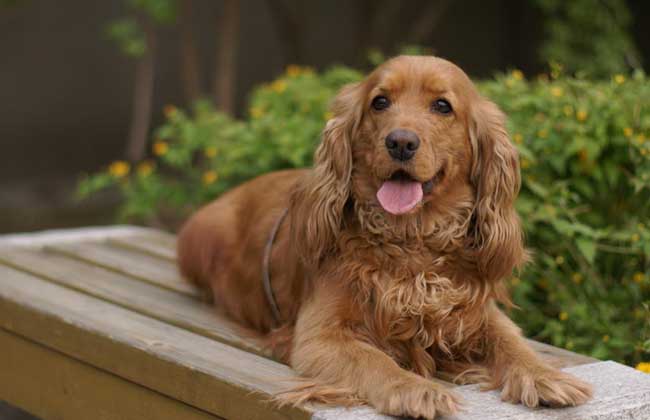
The Cocker Spaniel, also known as the Woodcock Spaniel or Cocker Woodcock Spaniel, can be divided into the English Cocker Spaniel and the American Cocker Spaniel. Its ancestors were Spaniels, originally introduced from Spain to England, where they were used for hunting birds, and later brought to the United States, where they were extensively bred and improved, becoming the two smaller types of Cocker Spaniel we see today. Let's take a look below at how much a Cocker Spaniel costs!
How much does a Cocker Spaniel cost?
City American Cocker Spaniel English Cocker Spaniel Chongqing 1300-1600 yuan 800-1000 yuan Beijing about 1000 yuan about 950 yuan Shanghai about 1800 yuan about 750 yuanNote: The male English Cocker Spaniel has a shoulder height of 40-43 cm and the female 38-40 cm, while the male American Cocker Spaniel has a shoulder height of 38 cm and the female 36 cm. Besides the difference in height, the English Cocker Spaniel and the American Cocker Spaniel also give a different overall impression: the English Cocker Spaniel's build appears relatively simple and unadorned, while the American Cocker Spaniel appears relatively exaggerated and glamorous.
How to identify a Cocker Spaniel
1. Build: The English Cocker Spaniel is slightly larger but not clumsy, strong but not coarse. The American Cocker Spaniel is small but not delicate, with a glamorous appearance.
2. Head: The English Cocker Spaniel has moderately sized oval eyes, a moderately flat skull, a moderate stop, a moderately narrow and long muzzle, a moderately full upper lip, and is altogether well-proportioned. The American Cocker Spaniel, by contrast, has a pair of rounder and larger eyes, a rounder skull, a deeper stop, a short and thick square muzzle, and an upper lip that covers the lower jaw.
3. Bridge of the nose: The bridge of the nose is the most obvious difference between the American Cocker Spaniel and the English Cocker Spaniel. The English Cocker Spaniel has a straight nasal bridge, which makes the coat look short and the head look large; the American Cocker Spaniel has a curved nasal bridge. A rough distinction can be made simply by observing the nasal bridge.
4. Coat: The English Cocker Spaniel has moderate feathering, so its body structure can be observed more clearly; it is basically dressed in a short, trim coat. The American Cocker Spaniel has very abundant feathering on its body, especially on the legs, as if it were wearing loose, baggy silk plush trousers.
5. Tail: The tail set of the American Cocker Spaniel is slightly higher than that of the English Cocker Spaniel.
The Cocker Spaniel's living habits
1. Excitement: The most common way a Cocker Spaniel shows excitement and happiness is by wagging its tail vigorously and jumping upward. On many occasions the Cocker Spaniel also expresses itself by "smiling": the specific signs are wrinkles piled up on the nose, the upper lip drawn back to reveal the teeth, the eyes slightly closed and sometimes even narrowed to a slit, a gentle gaze, the mouth slightly open, the ears stretched backward, a humming sound coming from the nose, and the body twisting softly.
2. Anger: When angry, the facial expression of a Cocker Spaniel is almost the same as when it "smiles": the nose is raised, the upper lip is drawn back to reveal the teeth inside. The difference is that the eyes are wide open with a sharp gaze, and the ears are stretched straight back at a diagonal. Usually the mouth is tightly closed, and it will make a threatening "whoosh" sound, stomp the ground forcefully with its limbs, hold its body rigid, with the tail either raised steeply or stretched straight out, and keep a certain distance from people.
3. Sadness: The eyes are dull, the head is lowered, and it draws close to its owner, looking up at the owner with a pleading gaze; sometimes it will also hide in a corner or under a stool, becoming extremely quiet.
4. Fear: The tail hangs down or is tucked between the two legs, which is the most obvious sign. The ears are stretched backward, the whole body's coat stands on end, the eyes are wide open, the whole body trembles, and it either stands motionless or moves its limbs restlessly, or even backs away.
5. Expectation: If the Cocker Spaniel wags its tail, stands calmly, and looks directly at a person with both eyes, it means it is waiting to be taken out to play, or that it is time to feed it.
6. Affection: If the tail is raised high and kept wagging, the head sways, the body arches, and sometimes it even stretches out its front paws toward a person, it means it wants to be affectionate with people and is asking to play.
How to choose a Cocker Spaniel
1. First-time owners had best consult some materials introducing this breed of dog before buying, so as to have some understanding of this dog's shape and temperament and thus have a standard when choosing.
2. The Cocker Spaniel has a relatively broad face, a flat forehead, a distinct stop, a plump and broad nose, relatively large and bright eyes, a relatively large distance between the two eyes, and dark-colored eyes and nose.
3. The tail set is very low, and the ears are both long and large, hanging down on either side of the cheeks, with medium-length feathering on them.
4. Apart from the shorter coat on the head, face and back, the ears, neck, limbs and feet, and under the belly all have longer feathering that droops downward with a slight wave.
5. The chest is deep and broad, and the body, including the back, appears strong and sturdy; when walking, the steps are light and quick with a large stride, and it runs extremely fast. Those that are weak and feeble, slow in movement, or sluggish in reaction should not be bought.
6. The coat is dense and soft, fine and smooth as silk, with a slightly wavy curl, which is one of this dog's important characteristics. When buying, the coat quality must be distinguished; if the coat is coarse and hard rather than soft, it does not conform to this breed's standard and should not be selected.