What is the typical market price for a Chinchilla cat?
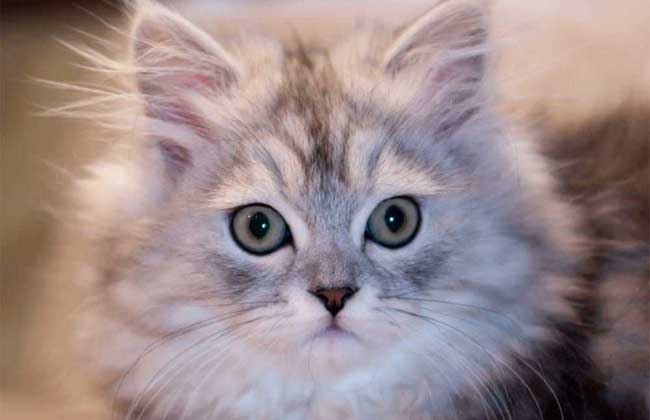
The Chinchilla is one of the earliest cat breeds developed entirely through artificial breeding, refined over many years of careful selective breeding. Its country of origin is the United Kingdom, and it was developed from the Persian cat through deliberate human breeding. In cat-fancying circles it is commonly nicknamed the "man-made cat." It first appeared as an independent breed in 1894 at the Crystal Palace Cat Show in the UK. Let's take a look below at how much a Chinchilla cat costs!
How much does a Chinchilla cat cost?
A purebred Chinchilla cat costs around 2,000 to 4,000 yuan, while some very purebred Chinchilla cats cost tens of thousands of yuan. The most successful Chinchilla cat in history was Ch Fulmer Zaida, born in 1895 and owned by Mrs. Decies, who between the ages of 6 and 10 (1901 to 1905) won the overall championship at 17 cat shows in a row. The current record holder is Snow Cloud, owned by Mrs. Crockmore, who between 1948 and 1955 won a total of 18 championships, 5 reserve championships and 1 third place.
How to choose a Chinchilla cat
1. Eye shape: The eyes should be green or blue-green, and the eye shape should be full, meaning the eyes must be round. Only then will the cat's appearance be very sweet and its quality very good. It is worth noting the almond-shaped eye, as this eye shape greatly diminishes the cat's quality.
2. Nose: The nose line and lip line are also black. The nose is brick red, and the length of the nose is an important criterion for judging the quality of a Chinchilla.
3. Side profile: A good-quality Chinchilla's face should look flat when viewed from the side. If the nose already protrudes like that of an ordinary domestic cat, with an obvious high bridge, then there is no question of any "quality" - at most it can be regarded as pet grade.
4. Paw pads: All of a Chinchilla's paw pads must be black. Uneven coloring on the body, such as stray hairs of a color not caused by acquired factors, is not acceptable.
Personality traits of the Chinchilla cat
1. Like the Persian cat, the Chinchilla cat looks noble and gorgeous, an aristocratic creature standing above it all. However, it has a stronger sense of being the "master" than the Persian cat, and will not consider itself your "subject" - everything it does is to secure a better life for itself. So if you want your Chinchilla to be more obedient, it is best to guide it in the manner of a friend; otherwise it can become defiant.
2. Although the Chinchilla also likes quiet, it is somewhat more lively than the Persian cat, and also more agile. To ensure the cat gets enough exercise, the owner can play a little game with it every day. If you do not have enough time to keep the cat company, then prepare a few more toys, so the cat will not feel unbearably lonely from having no one to accompany it.
3. The Chinchilla cat can sometimes be a little willful. When the owner encounters the cat throwing a little tantrum, snacks and other forms of enticement can be used to guide it, making it easier for the cat to accept your commands.
4. The Chinchilla is very clean, and will lick its paws and tidy its fur at any time. The purpose of this is to remove odors and dust from its body. Note that a cat that frequently licks its body may swallow too much hair, so the owner can regularly feed it cat grass.
How to keep a Chinchilla cat
1. Gastrointestinal and skin care: Keeping a Chinchilla cat is just like caring for a Persian cat - pay extra attention to its gastrointestinal and skin care. Because the Chinchilla cat produces excessive facial secretions, facial cleaning and care are also essential.
2. Keep the home dry: The Chinchilla cat is best suited to living in a dry environment. If you love your cat, you may need to run the air conditioning or a dehumidifier to lower the humidity so it can live more comfortably.
3. Brush the coat every day: For brushing, the owner should spend 5 to 10 minutes each day brushing the cat to prevent the undercoat from matting. A cat that is not brushed regularly may have its fur cut or shaved off entirely because of excessive, tight matting. A messy coat is also a breeding ground for bacteria, so if you love your cat you absolutely must not be lazy.
4. Clean the body regularly: If the living environment is damp and the home is cluttered, the cat will often have the chance to walk around and easily pick up dust all over its body, so the owner should clean the cat every 2 to 3 weeks. Conversely, if the owner can keep the home dry and clean, the cat only needs a bath about once every 2 months.
5. Feed at set times and in set amounts: For feeding, it is best to feed the Chinchilla cat in a "set times, set amounts" manner, because this makes it easier for the owner to notice when the cat has no appetite and to guard early against illness or indigestion.
6. Patience needed for training: Do not train the Chinchilla for more than 15 minutes at a time. To get the best results from training, the owner can train the cat before meals, because that is when the cat is most receptive to training. If the cat cannot learn the skill you are teaching for a long time, you must not scold or even physically punish it, otherwise it may never be willing to learn again.