How much does an osmanthus tree cost? A complete look at the latest prices
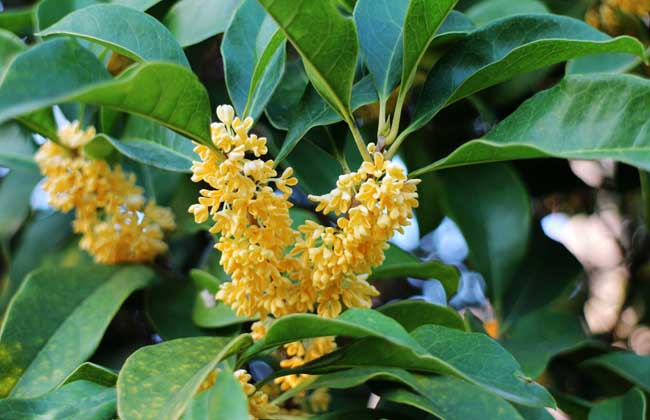
Golden osmanthus is a variety of osmanthus, and it is also an osmanthus variety with high ornamental, economic and practical value. Its flowers are golden yellow, its fragrance is rich, and its leaves are deep green. Among the many osmanthus varieties, it has the highest ornamental value. Its cultivation and breeding were already popular in ancient times, and today it has been introduced throughout the country. Let us take a look below at how much an osmanthus tree costs!
How much does an osmanthus tree cost?
Category Specification Price Specification Price Specification Price Tree ball (crown width) 1 m 60 yuan 1.5 m 120 yuan 1.8 m 160 yuan 2 m 180 yuan 2.5 m 240 yuan 3 m 350 yuan 3.5 m 600 yuan 4 m 2500 yuan 5 m 13000 yuan Single trunk (diameter at breast height) 2 cm 25 yuan 3 cm 40 yuan 4 cm 60 yuan 5 cm 120 yuan 6 cm 160 yuan 7 cm 250 yuan 8 cm 350 yuan 9 cm 650 yuan 10 cm 900 yuanNote: One-year-old seedlings of the osmanthus tree grown through sowing, cuttings and other methods are not suitable for immediate use as landscaping seedlings because of their poor resistance to drought, cold and barren soil. They should first be transplanted into a nursery plot and continue to be cultivated for 2 to 5 years. After they grow into medium-sized seedlings, they can then be transplanted.
Variety classification of osmanthus trees
1. Dangui: The flowers of Dangui are orange-yellow, with a strong fragrance, and the leaves are thick and dark in color. It generally blooms in autumn, and the flower color is very deep, mainly orange-yellow, orange-red and vermilion. Dangui is divided into Mantiaohong, Yanhonggui, Zhuangyuanhong, Zhushagui, Baiyudangui and Yingyedangui.
2. Jingui: The flowers of Jingui are golden yellow, and the fragrance is somewhat lighter than that of Dangui, while the leaves are thicker. Jingui blooms in autumn, and the flower color is mainly yellow (lemon yellow and golden yellow). It is further divided into many varieties such as Qiugui, Jinqiugui, Xiayejingui, Liuyesugui and Jinqiuzaogui.
3. Yingui: The flowers of Yingui are relatively white, with a slight yellowish tinge, and the leaves are thinner than those of other osmanthus trees. Its floral fragrance is about the same as that of Jingui and is not very strong. Yingui blooms in autumn, and the flower color is mainly white, appearing pure white, milky white and yellow-white, with a very few special ones appearing pale yellow. It is divided into Yulinglong, Liuyeyingui, Changyezaoyingui, Ziyingui, Baijie, Zaoyingui, Wanyingui and Jiulonggui, and so on.
4. Sijigui: Sijigui is also called Yueyuegui by many people. Its flowers are somewhat white, or pale yellow, with a lighter fragrance, and its leaves are relatively thin. Its biggest difference from other varieties is that it blooms in all four seasons.
Cultivation techniques for osmanthus trees
1. Land preparation and fertilization: Choose acidic sandy loam with sufficient sunlight, deep soil layers, rich in humus, strong permeability and convenient drainage and irrigation as the cultivation nursery plot. In the autumn and winter of the year before transplanting, first plow the entire nursery plot once, and dig the holes according to a plant-to-row spacing of 1×1.5 m and a planting hole size of 0.4×0.4×0.4 m. Apply 2 to 3 kg of fully decomposed farmyard manure of mild nature and 0.5 kg of phosphate fertilizer into each hole as base fertilizer. Mix the base fertilizer evenly with the surface loam and fill it into the holes. After the fertilizer is eroded and fermented by winter snow and spring rain, it is easily absorbed by the seedlings.
2. Timely transplanting: Jingui is best transplanted when the sap has not yet flowed or has just begun to flow, generally from early February to early March. When taking out the seedlings, keep as many roots as possible and damage as few roots as possible. After the seedlings are taken out, plant them as soon as possible. If seedlings need to be transferred from other places, pay attention to moisture retention to prevent the seedlings from dehydrating. After planting, compact the soil and water thoroughly once so that the seedling roots are in close contact with the soil.
3. Water and fertilizer management: After Jingui is transplanted, if heavy rain causes waterlogging in the nursery plot, dig trenches to drain the water. In case of drought, water to resist drought. In addition to applying sufficient base fertilizer, apply fertilizer 3 times each year, that is, in late March apply 0.1 to 0.3 kg of quick-acting nitrogen fertilizer per plant to promote growth in height and the production of many tender shoots; in July apply 0.1 to 0.3 kg of quick-acting phosphorus and potassium fertilizer per plant to improve its drought resistance; in October apply 2 to 3 kg of organic fertilizer (such as farmyard manure) per plant to improve its cold resistance and prepare for overwintering.
4. Pruning and shaping: Jingui sprouts and sends out shoots twice each year in spring and autumn. If pruning and bud removal are not done in time, it is very difficult to cultivate tall plants, and it is easy to form a phenomenon of dense upper branches and sparse lower branches, that is, strong above and weak below. When pruning, apart from shortening branches whose tree vigor and branch vigor are poor, thinning branches should generally be the main method. Promptly remove the sprouting tiller branches from the base of the trunk to avoid consuming nutrients within the tree and disrupting the tree shape.
5. Loosening soil and weeding: In spring and autumn, Jingui is cultivated once each time in combination with fertilization to improve the soil structure. Before overwintering, mound the base once and whitewash the trunk once, which can enhance cold resistance. Weed 2 to 3 times each year to prevent weeds from competing with the seedlings for water, fertilizer and light.