How much does a Canary Dog cost? Market price analysis
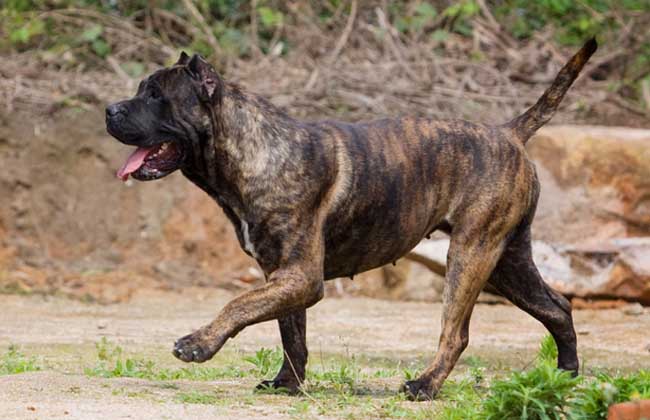
The Canary Dog (Presa Canario) is a breed developed from fighting dogs. Its ancestors may include the local endangered Bardino Majero dog and descendants of imported English Mastiffs. It is full of energy, highly excitable, easily aroused, and has a positive attitude. For many years it has been rated by many countries as the breed responsible for the most bites and deaths, and it is banned from being kept in most countries. Let us take a look below at how much a Canary Dog costs!
How much does a Canary Dog cost?
Canary Dogs are currently relatively rarely kept and rarely bred, and are not considered a highly popular breed, so the price is generally not cheap, usually starting at three to five thousand yuan, and anything under ten thousand is normal. First-generation puppies just imported should be around ten to twenty thousand, or even higher. As for some cheap ones sold online, it is sometimes due to poor appearance or other issues, and there are also unscrupulous sellers who pass off crossbreeds to trick beginners, so do not even look at anything under three thousand. In addition, when buying a puppy, you must look at the parents, including mating photos and nursing photos. Of course, if conditions allow, it is still best to buy from a kennel, as this has the lowest risk and offers guarantees.
Personality traits of the Canary Dog
The Canary Dog is full of energy and has the typical characteristics of a fierce dog, with high excitability and easy arousal. It has a positive attitude, is loyal, and appears calm and focused, especially when guarding and driving cattle. It is mentally balanced, has sufficient self-control, and its bark is serious and deep. At home it behaves elegantly and with gentlemanly bearing, is very loyal to its owner, and is suspicious of strangers. Its expression is confident, noble, and somewhat aloof. When it detects something suspicious, its expression becomes firm and focused. It moves agilely and elastically, with a large stride. The tail is carried low when active, rising only above the topline. When it is focused, both the head and tail are raised.
How to choose a Canary Dog
1. Head: The head is large and looks solid, covered with loose skin. Its shape is somewhat like a rectangular box. The ratio of the length of the skull to the muzzle is 6:4. The width of the head is 3/5 of its length.
2. Skull: The top of the head is convex and curved, but the front is flat. The cheekbones are clearly arched and have well-developed muscles, but the muscles do not protrude noticeably.
3. Ears: Medium-sized, widely spaced, covered with short, fine hair. The base of the ear is positioned slightly above the horizontal line of the eyes.
4. Eyes: Slightly oval, medium to large in size, fully open, slightly shaped like the character "eight", but neither sunken nor protruding.
5. Nose: The muzzle is shorter than the skull, accounting for about 40% of the entire head. Its width is 2/3 of the skull. The base is broad and tapers slightly toward the front. The line of the muzzle is straight.
6. Feet: Cat feet with round toes, and the toes are not very tightly closed together. The paw pads are well developed and black. The toenails are dark and match the coat color in time; white toenails are also undesirable.
7. Tail: Thick at the base and gradually tapering toward the tip. During movement, it is raised in a saber shape. There is no curling or bending of the tip toward the back. At rest, it hangs straight down with the tip slightly curled.
8. Coat: Short, coarse, very smooth, with no undercoat. The hair on the ears is short and fine, while the hair on the shoulders and top of the rump is slightly longer.
9. Coat color: There are colors such as light fawn, red brindle, and black brindle.