What is the market price of Tahitian black pearls?
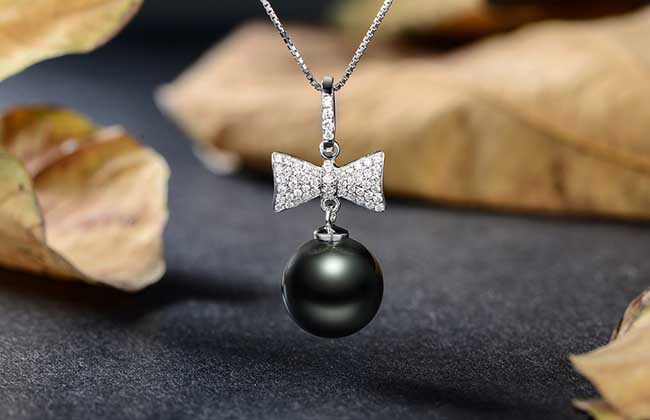
Tahitian black pearls are a specialty of the saltwater lagoons within French Polynesia in the South Pacific. They are exceptionally precious, enjoying the reputation of "queen of pearls" and "queen among pearls." Cultivating them is very difficult, the process of farming the pearl oysters is long and they easily die, and with the influence of factors such as weather and water quality, finished pearls are extremely rare. Let us now take a look at how much Tahitian black pearls cost!
Why are Tahitian black pearls so expensive?
At present, the main producing areas of black pearls are the French Polynesian Islands and the Cook Islands, and Tahiti Island in the French Polynesian Islands produces 95% of the world's black pearls. Black pearls come from a precious oyster that secretes black nacre, the black-lipped pearl oyster (Pinctada margaritifera). The black-lipped pearl oyster has very high requirements for environment and temperature and must grow in natural, unpolluted waters. Because the black-lipped pearl oyster is large, its cultivation cycle is very long, and during the process of cultivating the pearl oyster spat, due to the influence of weather, water quality and so on, such as tornadoes or rising water temperature, it very easily dies, so finished Tahitian black pearls are extremely rare.
How much do Tahitian black pearls cost?
Jewelry name Jewelry category Jewelry specification Reference price Heart Sea Pendant 9-9.5 mm A1AA2 1183 yuan Zhenmei Pendant 9.5-10 mm A1AA2 2450 yuan Qingxinyan Earrings 10-10.5 mm A1AA2A 4018 yuan South Seas Wing Ring 10.5-11 mm A1AA2 4623 yuan Zhuyandai Pendant 11-11.5 mm A1AA1 5700 yuanNote: At present, the world's annual output of high-quality natural black pearls is generally only within 150,000 pieces, of which more than 40% of black pearls with a particle size exceeding 11 mm are sold through international auctions. As for those finest natural Tahitian black pearls, after being auctioned, their value multiplies several times or even dozens of times. According to records, one 18.5 mm black pearl once sold for 70,000 US dollars, and a necklace comprising 51 black pearls actually reached a transaction price of an astonishing 3.7 million US dollars, a price that has already reached a jaw-dropping level.
How to care for Tahitian black pearls
1. Prevent acid erosion: To keep the luster and color of pearls unaffected, avoid letting pearls come into contact with acids, alkalis and chemicals, such as perfume, soap, hairspray and so on. Do not wear pearl jewelry while swimming or bathing, so please put on your lovely pearls after applying makeup.
2. Keep away from the kitchen: The surface of pearls has tiny pores, so it is not suitable to let them absorb dirty substances from the air. Pearls will absorb substances such as hairspray and perfume, so never wear beautiful pearls when getting a perm. Be careful in the kitchen too; do not wear beautiful pearls while cooking, as steam and oil fumes may penetrate into the pearls and make them turn yellow.
3. Treat them with flannel: After wearing pearls each time (especially on hot days), wipe the pearls clean before putting them away, and you can maintain their luster. It is best to use sheepskin or a fine, delicate flannel, and do not use facial tissue, because the friction of some facial tissues will wear away the pearls.
4. Keep away from clean water: Do not clean pearl necklaces with water. Water can enter the small pores of the pearls, and it is not only difficult to wipe dry, but may also cause fermentation inside, and the pearl thread may also turn green. If you sweat a lot while wearing them, you can carefully wipe them clean with a soft damp towel, let them dry naturally, and then put them back in the jewelry box. After pearls turn yellow, soaking them in dilute hydrochloric acid can dissolve the yellowed outer shell, restoring the pearls to a crystal-clear, brilliant and charming luster. However, if the color has turned yellow severely, it is difficult to reverse.
How is the price of black pearls appraised?
1. Size: The size of a pearl is calculated by its shortest diameter, generally ranging from 8 mm to 14 mm, and even 16 mm ones exist; those exceeding 18 mm are exceedingly rare. At present, the largest recorded pearl diameter is 21 mm.
2. Shape: Perfectly round pearls are recognized as the most beautiful pearls and are sought after by everyone. Perfectly round pearls are extremely rare, but pearls of other shapes also have their own distinctive charm.
3. Color: Under the refraction of light, cultured gray and black pearls have various different lusters. The most appreciated are peacock green, deep purple, sea blue, and various shades of gray and iridescent colors.
4. Nacre luster: The luster shining through Tahitian pearls is just like a mirror; when viewed directly, it can reflect a person's image, and it has reflected light colors, especially sparkling and brilliant.
5. Purity: Like other types of pearls, the value of Tahitian cultured pearls is mainly determined by the quality of the surface layer. To appraise the surface of a pearl, one looks at how many flaws it has; flaws such as dents, scratches and black spots will all reduce its value.
6. Grade: Pearls rated as “excellent quality” have extremely good nacre luster and a perfectly round, symmetrical shape, while size and color are not considered major factors. Pearls rated as having the most commercial quality refer to pearls with medium luster and some irregular surfaces. Pearls with organic blemishes or multiple flaws, or with an insufficient nacre layer, have no commercial value.