How much does a black bear dog cost? A detailed look at the market
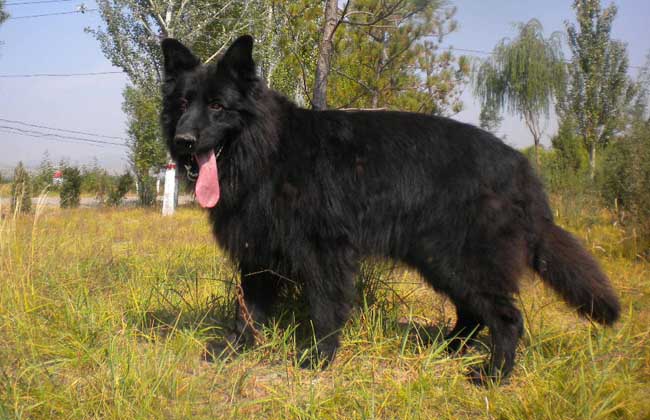
The black bear dog refers to the Jizhong black bear dog, a breed unique to North China in China. It originated earliest in the plateau regions, and currently only a few thousand purebred dogs remain. Its appearance is somewhat similar to the Rottweiler, and it is a large breed with a big head and big mouth. During puppyhood its eyes are black, and after maturity they remain yellow for life. Let us take a look together below at how much a black bear dog costs!
How much does a black bear dog cost?
Because the total number of black bear dogs alive today is not large, their price is relatively higher than before. Puppies cost between 3000 and 5000 yuan. If it is a transaction between acquaintances, the price can be discounted somewhat. Adult black bear dogs cost around 6000 yuan. This still depends on the quality of appearance and how the owner has raised it; health is the most important thing.
How intelligent is the black bear dog?
The intelligence of the black bear dog is equivalent to that of a 6 to 8 year old child, so its intelligence is also relatively high. It is said that dogs are the most attuned to human nature; in many situations, a dog can spontaneously understand its owner's meaning. As for behavior training of the black bear dog, after repeatedly training a command many times, it can master the action for that command well and give a satisfactory response. Commands should be short and easy to remember, with a consistent tone. For many high-difficulty command training tasks, a long period of professional training is still required.
How to select a black bear dog
1. Expression: shows alertness, attentiveness, and readiness to act at any time. The gaze shows intelligence and inquiry.
2. Eyes: brown, dark brown is better. Medium-sized, slightly almond-shaped, not protruding.
3. Ears: triangular in shape, firmly erect, in proper proportion to the head. The outer corner of the ear must not be lower than the center line of the eyes; drooping like a hound's is a disqualification.
4. Neck: rounded and arched, extending outward, gradually tapering from where it joins the body upward, muscular, with tight skin.
5. Head: the top of the head is slightly flat, not rounded or arched, width and length roughly equal, width must not be greater than length. Stop is moderate.
6. Muzzle: slightly pointed, must not look truncated, length roughly equal to the head. The outline is parallel to the outline of the head. The jaws are firm and powerful.
7. Nose: black, without stains or fading. Lips tight, black, with no pink visible from the outside.
8. Teeth: teeth are complete, powerful and white, evenly distributed, with a scissors bite or level bite. An undershot bite or overshot bite must not occur.
9. Topline: the withers are slightly higher, and the back remains level, straight and firm from the withers to the hips.
10. Chest: not wide, but quite deep, with depth reaching the elbows. The underline (from the deepest part of the chest to the belly) is a smooth and graceful curve.
11. Abdomen: moderately developed, neither excessively tucked up nor with a big belly.
12. Loin: viewed from above, it appears short, wide and firm, blending smoothly with the back.
13. Shoulder blades: long and sloping, slanting backward against the body, forming a clear angle with the forearms (about 90 degrees).
14. Legs: straight, firm and parallel to each other, with bones oval rather than round. Length and texture are very well proportioned to the whole. Pasterns are medium in length, firm, and very slightly sloping. Dewclaws may be removed.
15. Feet: round (cat feet), toes arched and very tight. Nails are firm and black (except for white nails matching white toes).
16. Hips: medium in length, gradually sloping.
17. Tail: firm at the root, with the tailbone extending to the hock. At rest, the tail hangs down with the end near the hock. When moving, the tail curls upward, with a firm and powerful end, and must not look like a hook.
18. Thighs: wide and very muscular, with the upper thigh bone and lower thigh bone parallel to the shoulder blade and forearm bone respectively, forming a clear angle at the rear knee joint.
19. Coat: the outer coat must be long, suitable, straight and thick. It should not be silky or bristly. The texture is medium coarse and hard, and the undercoat is very thick, allowing it to adapt to various climate conditions.