How much does a Greyhound cost? A look at market prices
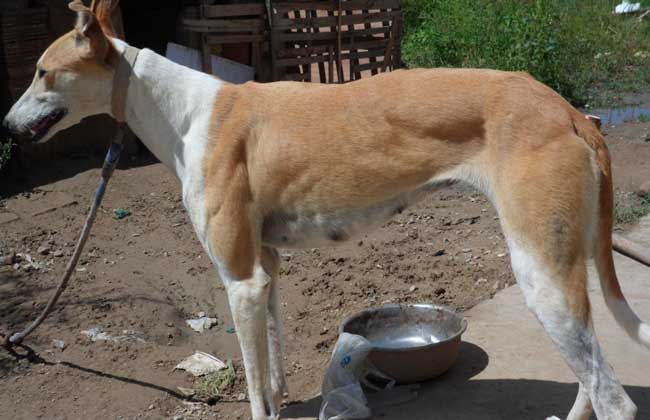
The Greyhound is an extremely rare purebred dog, also known as the Italian Greyhound, greyhound, and so on. Its form has remained unchanged from ancient times to the present. It originated in the Middle East. Adult dogs stand 68-76 cm tall and weigh 27-32 kg. In modern times, the Australian Greyhound is recognized worldwide as the finest, and racing dogs in various countries are all selected from Australia. Now let us take a look at how much a Greyhound costs!
How much does a Greyhound cost?
The price of a Greyhound is not very high, roughly ranging from a few hundred to a few thousand, and the expensive ones are only around five or six thousand. Generally, an ordinary puppy costs 1500-2000 yuan each, a fully grown live adult dog costs around 2000-50000 yuan, mid-range breeds cost around 5000-12000 yuan, and high-end breeds cost around 12000-25000 yuan each. There was once a well-trained Greyhound that sold for as much as 200,000 yuan.
How to choose a Greyhound
1. The price of a Greyhound depends on coat color, size, and various other conditions, with the average price all above a thousand yuan, so we must carefully screen when buying. Many people choose a Greyhound for the purpose of chasing prey and taking it out to play, so when selecting one, be sure to pay attention to its running speed; you can use prey to test its speed. The Greyhound has its own unique characteristics: slender, straight limbs and prominent hip muscles, which also prove that it runs often, and from this point its running ability can also be seen.
2. The Greyhound's nose is upturned, and its nostrils are very large. Its tail is long and hangs down, with the tip curling into an upturned shape. Most have short coats, and because they are always running, their bodies are slender too. They have very keen insight, and their sense of smell needs no mention. They look very friendly and are naturally docile, and it is precisely because of this that they have won many people's affection.
How to raise a Greyhound
1. A kennel is a necessary place for a Greyhound to live and dwell, so the quality of the kennel's structure directly affects the Greyhound's health. The kennel should be built reasonably according to the scale of raising and adapted to local conditions. The building site should be chosen in a place that is flat, dry in geology, well lit, convenient for drainage, and sturdy and safe. The kennel and its internal facilities should be frequently inspected and maintained to ensure the kennel remains intact.
2. The kennel should be cleaned every day to keep it clean. In hot summer, it should be rinsed frequently to prevent the occurrence of infectious diseases. Besides keeping it clean, the kennel should also be disinfected regularly. In spring, summer, and autumn, disinfection is needed twice a month. Before disinfection, first lead the Greyhound away from the kennel, prepare the disinfectant solution according to the instructions, and then evenly spray it in every corner of the kennel. One hour after disinfection, rinse the floor with clean water, and after it dries, bring the Greyhound back to the kennel.
3. In order to avoid the occurrence of various dog diseases, programmed disease prevention should be carried out during the Greyhound's growth process. First, the Greyhound should be vaccinated. The first vaccination is at 30 days of age, the second at 60 days of age, the third at 120 days of age, and another immunization at 6 months of age. The dosage for each vaccination should be based on the drug instructions.
4. Pay attention to checking the feces and regularly give the Greyhound deworming medication, such as piperazine or levamisole, to expel internal parasites. Sixty days after birth, all puppies should be given piperazine once, and afterward once every 2-3 months, but in areas with a high incidence of parasites it should be once a month or once every one and a half months. The Greyhound's unique physiological and anatomical characteristics mean that treatment usually requires a veterinarian familiar with this breed, especially in situations where anesthesia is needed.