How much does a Caucasian Shepherd Dog cost? A detailed price guide
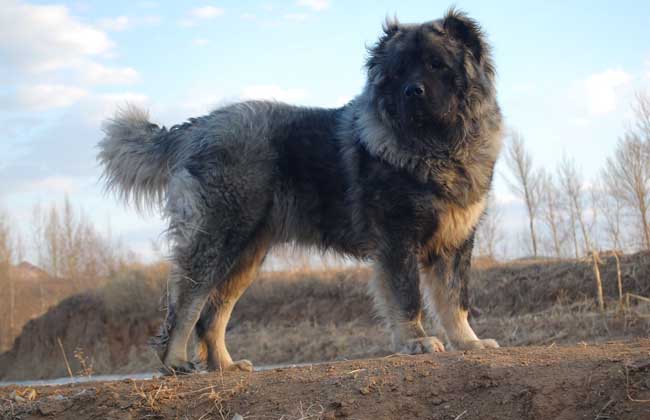
The Caucasian Shepherd Dog is one of the largest giant dog breeds in the world, with a strong body, strong disease resistance, a brave and fierce temperament, calm and stable, highly alert, with keen intuition, a strong will and full of self-confidence, loyal and obedient to its owner. It is most suitable for guarding homes, villas, warehouses, farms or ranches, but it is not suitable for ordinary families to keep. Let's take a look below at how much a Caucasian Shepherd Dog costs!
How much does a Caucasian Shepherd Dog cost?
The price of Caucasian Shepherd Dogs is not uniform. Generally speaking, prices at kennels in developed cities are more expensive, while prices in remote areas are cheaper, and the price certainly differs for dogs of different quality. Generally, a non-purebred Caucasian Shepherd Dog costs about 200-700 yuan each, a pet-grade one about 800-1000 yuan, a purebred one 1000-1500 yuan, and a show-grade dog between 2000 and 50000. For puppies there are also some differences in price: home-bred puppies generally 800 to 3000 yuan, kennel puppies generally 2000 to 100000 yuan, and show-grade puppies 10000 and above with no upper limit.
How to choose a Caucasian Shepherd Dog
1. Physique: An excellent, healthy dog is lively and active, while a sick dog is often listless, apathetic, or unusually excited and frightened; when picked up it feels heavier than it looks.
2. Eyes: An excellent dog's conjunctiva is pink, with no tearing and no discharge.
3. Nose: Normally a dog's nose tip is cool and moist with no mucus or thick discharge; if the nose tip is dry and cracked or thick discharge accumulates, then its health is poor.
4. Mouth: A healthy dog's mouth interior is pink with no bad odor, the tongue is bright red with no coating, the teeth are white and complete, and when closed the canine teeth interlock, with no incomplete closure or drooling.
5. Coat: The coat is warm but not hot, fluffy and neat, with fresh color; the skin is supple and not slack, neither too dry nor too moist, with no hair loss; check by turning the fur over for lice or insects.
6. Anus: A healthy dog's anus is tightly closed, and the surrounding area is clean with no foreign matter.
How to raise a Caucasian Shepherd Dog
1. When feeding the dog, keep to fixed times, fixed amounts, fixed temperature, a fixed person and a fixed place. At the same time, give the dog plenty of drinking water according to the different seasons. Cold, raw, rotten, spoiled or strongly smelling food must not be fed to the dog, to prevent illness.
2. When feeding the dog, the feeder must always be present and pay attention to observation. Before feeding, the bones or fish bones in the food must be removed first, so as not to injure the dog by choking. If the dog is found to eat little or not at all, the cause should be found out promptly and handled properly.
3. After vigorous exercise, the dog must not be fed immediately. Within thirty minutes after feeding, vigorous exercise is not advisable.
4. The dog's feeding utensils must be washed and disinfected frequently, and kept clean and hygienic. Utensils must be one set per dog and must not be shared, to avoid transmitting other diseases.
5. In order to train the dog's ability to adapt to eating various feeds and foods under various conditions, during training and use, dry food or cooked food may be appropriately fed to the dog, such as bread, biscuits, steamed buns, canned food, cooked eggs or cooked meat, etc.
How to train a Caucasian Shepherd Dog
1. Food reflex: Through feeding and management, the owner can ensure the dog's normal survival and development and build and strengthen the dog's attachment to its owner. At the same time, the dog's appetite can be used to lure it into performing certain actions, and food rewards can be used to strengthen and consolidate the dog's correct actions.
2. Freedom reflex: The dog uses this to break free from restrictions on its own activity and gain freedom. Used in dog training, it is an important reinforcement method and an effective measure for regulating the state of nervous system activity.
3. Defensive reflex: The dog uses this to safeguard its own safety, taking active attack or passive avoidance against a threatening target. It is the basis for training the dog's bravery and alertness.
4. Exploratory reflex: The dog uses this to promptly perceive changes in the external environment and things, and to find out their relevance to itself, so as to take corresponding action. It is the basis for cultivating the dog's guarding ability and inducing the dog to sniff and recognize scents.
5. Prey reflex: The main means by which wild dogs survive and obtain food; after domestication this characteristic has gradually degenerated to some extent. In training, through patient, meticulous and skillful inducement, one can fully harmonize and cultivate the dog's high excitement and strong possessiveness toward obtaining a desired object, which is an important basis for cultivating tracking, identification and search abilities.
6. Posture reflex: The dog uses this to coordinate the balance of its body posture. In training, one can use the dog's inherent natural action postures and the body's balance movement responses, and through correct inducement and appropriate compulsion, make the dog complete certain basic subject actions.