How much does a potted hyacinth generally cost?
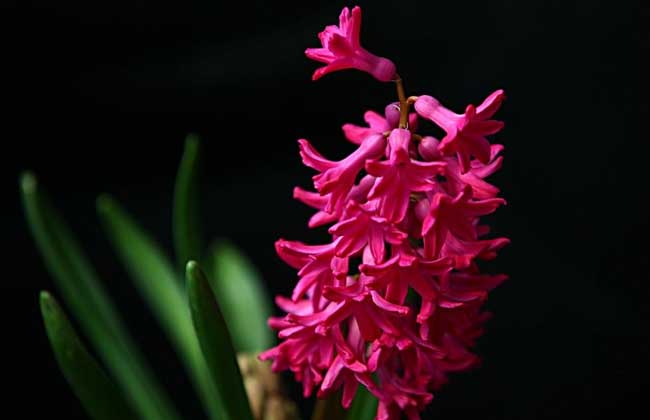
The hyacinth is also known as Dutch hyacinth, garden hyacinth, and five-colored hyacinth, among other names. It is a perennial herbaceous bulbous plant of the genus Hyacinthus in the family Hyacinthaceae. Before blooming, it looks like garlic. It originated in the coastal areas of the Mediterranean and Asia Minor. It has very high ornamental value and is suitable for arranging flower beds, flower borders, and flower troughs. It can also be used as a cut flower, potted plant, or water-grown ornamental. Now let us take a look at how much a hyacinth costs per pot!
How much does a hyacinth cost per pot?
The price of hyacinths depends on size and variety. The larger the size, the more expensive it is, and rare varieties are also relatively more expensive. Size can be understood as the size of the bulb; the larger the bulb, the more expensive it is. In flower markets, a pot of hyacinth with a hydroponic bottle costs about 15 to 20 yuan, though in some places it may be sold more cheaply, and 10 yuan is also possible. Buying a hyacinth bulb online costs about 4 to 5 yuan (not counting the hydroponic bottle), and a hydroponic bottle costs about 3 to 5 yuan (plastic ones are cheaper than glass ones). Some merchants advertise 0.5 yuan each or 6 yuan with free shipping and also include nutrient solution, a hydroponic bottle, and the like. It is recommended not to buy this kind of product; being greedy for small bargains easily leads to big losses. According to feedback from flower lovers who have bought them, this kind of hyacinth is mostly relatively small (because hyacinth flowering mainly depends on the nutrients in the bulb, and a bulb that is too small is not conducive to flowering) or has a single flower color.
How to select hyacinths
1. Touch the surface of the bulb with your hand to see whether there is mildew or incomplete development. If there is mildew, you will feel small pits and a soft texture; if development is incomplete, the surface of the bulb will not feel plump and round.
2. Visually check whether the root plate is neat, whether the surface is smooth, and whether there is serious color difference.
3. Hold the bulb and smell it carefully to see whether there is a serious rotting odor. Some bulbs are placed together with other bad bulbs and plants during transportation, making them prone to infection and carrying mildew.
How to grow hyacinths
1. Disinfect and dry in the shade: First disinfect and sterilize the bulb to prevent rot. Remove the dried outer skin and old roots of the bulb, soak it in potassium permanganate solution (the concentration should be a light purple-red) for a quarter of an hour for soaking disinfection. After disinfection, shake the water off the bulb and let it dry naturally in the shade for one day.
2. Plant at the right time: Because the flower buds of the bulb have already differentiated and formed, no base fertilizer is needed during planting. Plant the bulb into the potting soil, with the soil height covering the highest point of the bulb by 2 cm. If you have no experience growing bulbs, it is recommended to leave the highest point of the top of the bulb exposed half a cm above the soil (mainly to prevent stem rot caused by overwatering; the latter is recommended). After planting is complete, water the pot thoroughly.
3. Early care: After planting, it can be placed in an environment no higher than about 10°C to encourage root and sprout development. The entire root and sprout promotion period is about 20 to 30 days (it may vary depending on the ambient temperature). When watering, water thoroughly only after the soil has dried out. Be sure not to water at will. You can judge the degree of dryness and moisture by weighing the pot.
4. Later care: After sprouting, the temperature of the growing environment can be appropriately raised to shorten the time needed for flowering. The growing temperature is best controlled at about 15 to 20°C. Below 10°C, growth is relatively slow, but it does not have much effect on growth. Above 25°C, blind flower phenomenon is likely to occur (flower buds do not grow well and cannot bloom). Normally, the sunshine duration can be lengthened. With more sunlight, the plant is relatively shorter and the plant shape is more graceful. Under normal care, it takes about 30 days from sprouting to flowering. If the ambient temperature is high, flowering is earlier.
5. Care during the flowering period: The flowering period of hyacinth is about 10 to 15 days. If the ambient temperature is low, the flowering period is relatively longer. After flowering, it can be moved indoors for viewing, with an appropriate amount of light given each day to prevent excessive elongation of leaves and flower stems.
6. Post-flowering treatment: After the flowers fade, remove the spent flowers and keep the bulb. In routine management, apply nitrogen fertilizer (cake fertilizer) about once every 2 weeks to promote the development of the bulb in the soil. How well the bulb is maintained directly affects flowering again the next year. After summer arrives, the leaves will gradually turn yellow naturally, and the amount of watering can be gradually reduced. Once the bulb enters dormancy, stop water completely and place it in a cool place (below 30°C is suitable; too high a temperature is unfavorable for flower bud formation).
Precautions for growing hyacinths
1. Hyacinth likes moist soil but fears waterlogging. Soil moisture should be maintained between 60 and 70%. If too high, root respiration is inhibited and rot easily occurs; if too low, the aboveground part wilts and may even die. Air humidity should be maintained at about 80%, and humidity can be increased by misting and sprinkling water on the ground, or reduced by measures such as ventilation.
2. Hyacinth likes fertilizer and can also tolerate poor soil. During the growing period and early flowering stage, apply 10 times diluted decomposed liquid fertilizer 1 to 2 times each, or 1000 times diluted "Huaduoduo" all-purpose fertilizer 2 to 3 times each. After flowering, apply a topdressing of 10 times diluted decomposed liquid fertilizer mixed with an equal amount of 500 times diluted potassium dihydrogen phosphate, or 1000 times diluted "Huaduoduo" all-purpose fertilizer 1 to 2 times, which is beneficial for enlarging the underground bulb. Water-grown hyacinths do not need fertilizer and only need clean water for cultivation. When they are about to bloom, adding a few grains of urea to the water can make the leaf color more emerald green.