How much does a bulldog generally cost?
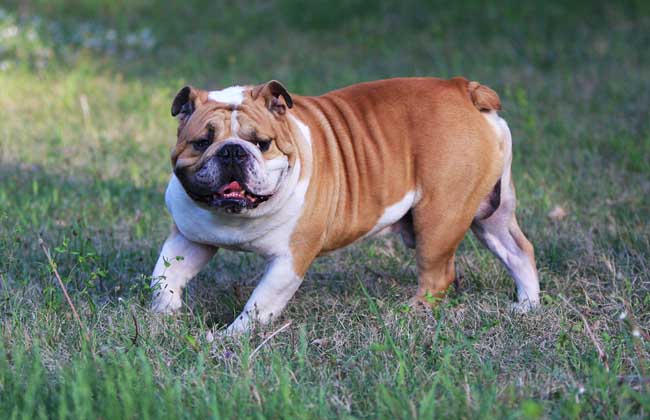
The bulldog is an animal of the genus Canis in the family Canidae, native to the United Kingdom, originating in the 19th century, and is one of the most combative dog breeds. At present, there are types such as the French Bulldog, English Bulldog, American Bulldog, and Spanish Bulldog, and the market price is relatively expensive among dogs. Let's take a look below at how much a bulldog costs!
How much does a bulldog cost?
Category Reference Price English Bulldog generally 1000 to 2000 yuan, better ones over 3000 yuan French Bulldog purebred systematic breeding is extremely rare in China, market price over 6000 yuan Bullmastiff almost unseen in China, market price over 10000 yuan Spanish Bulldog market price generally around 2000 to 3000 yuan Staffordshire Bull Terrier extremely rare in China, show-type market price over 8000 yuanSummary: The bulldog is a dog very worth keeping. Current bulldog prices are not in the hundreds; they are all over a thousand yuan, ranging from 4000 to 8000 yuan. Of course, this is only the general price. Depending on the city of purchase, the place of purchase, and differences in body size, color, and appearance, prices vary greatly.
Common Bulldog Breeds
1. English Bulldog: The English Bulldog is a dog breed originating in the United Kingdom, said to be descended from a cross between the Mastiff and the Bull Terrier. Its face has wrinkles; an adult dog weighs about 23 kg and stands 30 to 36 cm tall, belonging to the medium-sized dog category. It was originally used for baiting bulls, and after the sport was banned in the 19th century it became a companion dog. It is suitable for city life, suitable for hot weather, does not need frequent coat grooming, is not easy to train, and is an excellent watchdog.
2. French Bulldog: The French Bulldog is a small guard dog, native to France, with the English Bulldog as its ancestor. It was once one of the strongest breeds among bulldogs and was prominent for a time in bull-baiting competitions. Later, after French law banned bull-baiting activities, it became a companion dog, especially loved by women. Around 1860, many toy bulldogs came from the United Kingdom to France and were crossed with other local breeds, eventually becoming this small-sized French Bulldog with a flat skull and rose ears or bat ears.
3. American Bulldog: In the 19th century, many European immigrants moved to the United States with their dogs, and the American Bulldog is the descendant of those dogs; at the time most of those dogs were herding dogs. Although the American Bulldog has been bred into shape, it is still not recognized by any major breed registry organization in the Americas, nor has it been accepted to participate in touring exhibitions. This brave and agile fighting dog breed varies greatly in body size and coat color, and is very similar to the English Bulldog used in bull-baiting competitions in the 18th century.
4. Spanish Bulldog: The Spanish Bulldog was recognized as a breed in 1980, with its place of origin being Spain. Its ancestors have a history of more than 1500 years and were brought to Europe by the Alans. The Spanish Bulldog is a suitable family dog: persistent, fearless, loyal and devoted, hardworking, patient and loving toward children, and aggressive toward strangers. Males are about 258 to 63 cm, females about 55 to 60 cm, and weight about 35 to 40 kg.
How to Choose a Bulldog
1. Before choosing and buying, on the one hand you can refer to some materials introducing this dog, and on the other hand you can go to the home of someone who keeps this dog to observe on site, so as to understand the characteristics of each part of this dog's body; in this way, when choosing you can be fairly accurate.
2. The bulldog's head should be relatively large and square-shaped, the skull relatively flat between the two ears, with a depression between the eyes.
3. The muzzle should be relatively wide and deep, the lips should be relatively loose, wide and thick, the muscles on the forehead well developed, the lower jaw relatively deep, square, relatively wide and slightly upturned. The nose should also be relatively wide. Both lips and nose should be black.
4. The eyes should be under the skull, both large and round, relatively far from the ears, not protruding, and dark in color. The base of the ears should be very wide, the ear tips should be round and erect, the ear root position should be relatively high, and the ear hair should be fine and soft.
5. The neck should be relatively short and slightly arched, and the skin under the neck and at the throat should be relatively loose, but the skin and flesh should not droop.
6. The body should be short and round, with sturdy bones and relatively well-developed muscles, a relatively wide and deep chest, full ribs that tuck up at the rear, wide and short shoulders and back, a relatively narrow waist, and a curved rump with a well-developed abdomen.
7. The forelegs should be straight and short, the hind legs should be relatively strong and longer than the forelegs, the feet medium in size, and the toes and claws relatively short. The tail is docked, thick at the base, and hangs down.
8. The coat should be short, fine and smooth, soft and glossy. The coat color is slightly reddish brindle, light yellow or brown, or brindle markings on a white base.
9. If the ears are not bat-shaped, the nose color is too light, or the body weight exceeds the standard by too much, all are inferior specimens and not suitable for selection.
10. If the head is relatively small and long and narrow, the lower jaw is thin and pointed with little muscle, the two eyes protrude, and the eyes are light colors such as grayish yellow, all do not match the characteristics of this breed.
11. If the tail is thin and long and curls upward, the neck is thin and long and smooth and flat, the limbs are thin and long with little flesh, and the overall body is thin and long, all differ greatly from the standard of this breed, and it should not be bought.
12. When choosing, especially select those with a sturdy and robust body, a spirited standing posture when standing, and flexible, coordinated and relaxed steps when walking.