How much does a German Shepherd cost?
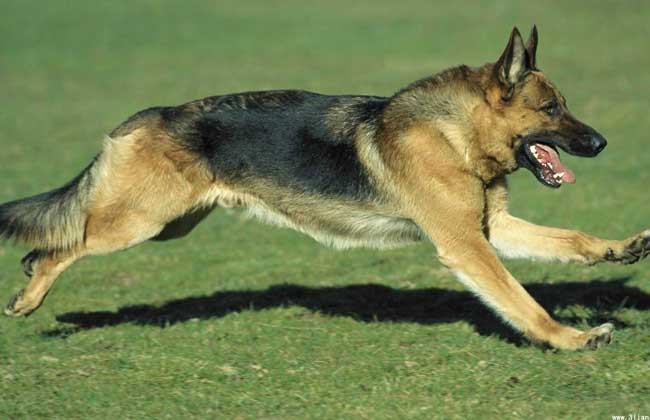
The German Shepherd is also known as the German Black Back (Bei), which is what people commonly call the German Wolf Dog. Because of its tall and large build, imposing appearance and extremely strong working ability, it is active all over the world as a military dog, police dog, search and rescue dog, guide dog, sheepdog, ornamental dog and family pet dog. Let's take a look below at how much a German Shepherd costs!
How much does a German Shepherd cost?
Category Reference price Sichuan German Shepherd price generally about 1000 to 2000 yuan Shandong German Shepherd price varies greatly, between 600 and 3000 yuan Kunming German Shepherd price about 2000 German Shepherd puppy price generally about 600 to 1200 yuan, a better one about 2000 to 3000 Purebred German Shepherd price varies greatly, ranging from 3000 to tens of thousands of yuan Long-haired German Shepherd price for a purebred over ten thousand, for a not very pure one about 5000 to 7000 yuanNote: The price of a German Shepherd varies greatly depending on the city of purchase, the place of purchase, and the body size, color and appearance of the dog. A family pet grade is generally 1500 to 3000 yuan, and those under 1000 yuan have no guarantee, most of them being crossbred dogs. Show-grade dogs are 10000 yuan to no upper limit, and the price of an ordinary-grade German Shepherd cannot be mentioned in the same breath as that of a show-grade German Shepherd.
How to choose a German Shepherd
1. Be sure not to choose puppies from maternal inbreeding, cross-bloodline breeding or mixed-bloodline breeding, but puppies from paternal inbreeding can be considered for purchase.
2. Generally do not choose female puppies that are too small in size or have too little bone mass. Even if such a female puppy is chosen, it is generally not suitable to be used as a breeding female to produce offspring. If breeding must be done, a stud dog of larger size or greater bone mass must be carefully selected to mate with it, so that offspring of slightly better quality may be produced; otherwise there will be either dystocia or “inferior” puppies.
3. A good show dog is not necessarily a good breeding dog, but a good breeding dog will certainly produce excellent show dogs. Therefore, when choosing puppies, do not one-sidedly believe that as long as the puppy is born to a dog that has won a major award it is good, and that a puppy born to a dog with no show record is bad. When purchasing, the basic principles and standards for choosing puppies must be followed.
4. Usually, for a female dog with excellent bloodlines, the puppies from her fourth litter are the best, because at this time the breeding female is at the optimal age for reproduction, and the puppies produced have the best genetic effect.
5. Pay attention to asking clearly the age of the stud dog at the time of mating, because a younger stud dog (generally speaking, dogs under 16 months of age are not suitable for mating) still has reproductive organs in the growth stage and not yet fully developed, with a smaller quantity of semen and lower quality. In the eyes of breeding experts, the genetic effect of the puppies it produces cannot be the best.
6. Do not reject puppies purified through paternal inbreeding, that is, after the first-generation mating, when the female puppy matures, mate it again with the paternal stud dog, and after four generations of this cycle it is possible for top-grade puppies to be born. As long as the stud dog is of pure bloodline, the quality of its offspring puppies is generally not very poor.
Care knowledge for the German Shepherd
1. Train its defecation rules: hygienic keeping prevents bad odors; even if it does not defecate according to the rules, do not lose your temper.
2. Train its walking rules: do not let the dog walk in front of the owner; let it walk on the owner's left side, and it is best to change the walking time and route every day.
3. Let the dog be social: let the dog remember social rules and strive to win the affection of people and other dogs. Overindulgence is not good; you should interact with the dog with the same attitude as raising a small child.
4. Crate training: once this is learned, there is no need to worry whether traveling together or staying home alone. Do not leave the dog with the impression of being locked up.
5. Forbid picking up things on the road to eat: to prevent eating rotten or poisonous things, when the dog is just about to pick up food dropped on the ground, tighten the leash and do not look the dog in the eye.
6. Forbid barking at the doorbell: do not let the barking disturb neighbors. Use a tape to record the doorbell sound and have a friend help press the doorbell, so the dog understands that barking is futile.
7. Rooms it cannot enter: in order not to leave a bad impression on guests who dislike dogs, reprimand it just as it is about to enter the room.
8. Forbid it from barking casually: in order not to cause trouble for neighbors and to let dogs and people coexist peacefully, find out the reason for the barking.
9. Forbid the bad habit of biting things: in order to prevent the dog from damaging things.
10. There must be rules for eating: giving the dog everything it wants to eat will harm its health.
11. Discipline in public housing: considering that some people dislike dogs, it cannot be allowed to do as it pleases.
12. Rules for staying home alone: in order to prevent the dog from playing mischievously with things in the room (such as the trash basket).
13. Discipline defecation so that the dog firmly remembers the toilet rules.