How much is silkworm cocoon per jin? Understand the price market in one article
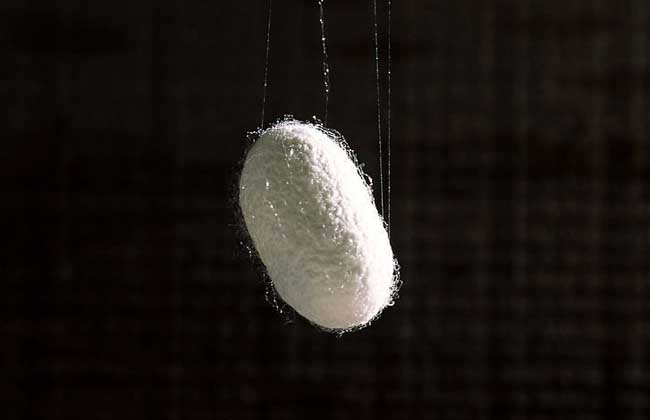
Silkworm cocoon is also known as silkworm clothing, cocoon yellow, silkworm cocoon shell, etc. It usually refers to mulberry silkworm cocoon, which is the sac-shaped protective layer during the pupal stage of the mulberry silkworm. It is produced in all silkworm-raising areas nationwide and contains the pupa body inside. The protective layer includes the cocoon outer floss, cocoon layer and pupa lining. The cocoon layer can be reeled into silk, and the cocoon outer floss and waste silk after reeling can be used as silk cotton and spun silk raw materials. Now let us take a look at how much silkworm cocoon is per jin!
How much is silkworm cocoon per jin?
The price of Grade A dried cocoons is about 58 yuan per jin, and fresh cocoons are about 17 yuan per jin, but this is the average price across the country. Prices vary from place to place. At the same time, prices also vary according to cocoon quality. Generally, cocoons with a high rate of good cocoons and traits such as good reelability, long silk length and high silk yield are all high-quality cocoons and sell at higher market prices. In addition, traits such as pure white cocoon color, normal luster and uniform cocoon shape are also important standards for high-quality cocoons.
Quality inspection of silkworm cocoons
1. Silk quantity value: Silk quantity value mainly refers to silk production and fresh cocoon silk yield.
2. Reelability value: Reelability value includes reelability rate, reelable silk length and other traits related to reeling production efficiency.
3. Silk quality value: Silk quality value includes cocoon silk fineness, difference between thick and thin, and cocoon silk traits.
4. Group value: Group value refers to the uniformity of various traits among individual cocoons in the same batch and the quantity of that batch of cocoons.
Quality indicators of silkworm cocoons
1. Cocoon layer rate: Cocoon layer rate refers to the percentage of cocoon layer weight in cocoon weight, and is the main indicator for grading silkworm cocoons. The higher the cocoon layer rate, the more silk. The cocoon layer rate of spring cocoons is generally 22-26%, and that of summer and autumn cocoons is 18-23%.
2. Cocoon silk length and cocoon silk weight: Cocoon silk length and cocoon silk weight refer to the length and weight of cocoon silk that can be reeled from one cocoon. Generally, spring cocoon silk length is 900-1,500 m, and cocoon silk weight is 0.35 g-0.45 g. Summer and autumn cocoon silk length is 700-1,200 m, and cocoon silk weight is 0.22-0.37 g.
3. Reelable silk length and reelability rate: Reelable silk length and reelability rate both reflect the ease or difficulty with which cocoon silk separates from the cocoon layer during reeling. Reelable silk length is the average silk length (m) that can be continuously reeled per joining during the reeling process. Reelability rate is the percentage of reelable silk length relative to cocoon silk length. Good reelability means fewer broken ends, more silk output and better quality. Poor reelability means more broken ends, increased waste silk, and decreased silk yield and raw silk quality. During reeling, re-end feeding often consumes more energy and raises costs.
4. Silk yield: Silk yield refers to the percentage of silk weight in cocoon weight, or is expressed as the cocoon layer reeling rate. It is a comprehensive indicator of cocoon quality. The level of silk yield mainly depends on factors such as the rate of good cocoons, cocoon layer rate and reelability rate. The silk yield of fresh cocoons is generally 14-16%, and can reach 19-21% at high levels. Cocoon layer reeling rate is the percentage of silk weight in cocoon layer weight, generally 75-85%.
5. Cocoon silk fineness: Cocoon silk fineness indicates the degree of thickness of cocoon silk. The unit is denier, abbreviated as "dan" or "D", commonly called "fen" or "tiaofen", that is, when 900 m of cocoon filament weighs 0.1 g, it is 1 denier. The larger the denier number, the thicker the cocoon silk. The average cocoon silk fineness of hybrid varieties is generally 2.8-3.3 denier for spring cocoons and 2.0-2.7 denier for summer and autumn cocoons.
6. Cocoon silk flaws: Abnormal phenomena appearing locally on cocoon silk are mostly caused by interruption during spinning or by the failure of the ∞-shaped glued part of the cocoon silk to separate during reeling. More flaws increase breakage during reeling and weaving and reduce quality.
7. Fine filament fineness separated from the cocoon layer: Fine filament fineness separated from the cocoon layer, also called micro-floss, is fine fiber in sericin. Its dyeing performance is poor and it affects fabric quality. It is one of the defects of cocoon silk.