How much does a single Lionhead rabbit roughly cost?
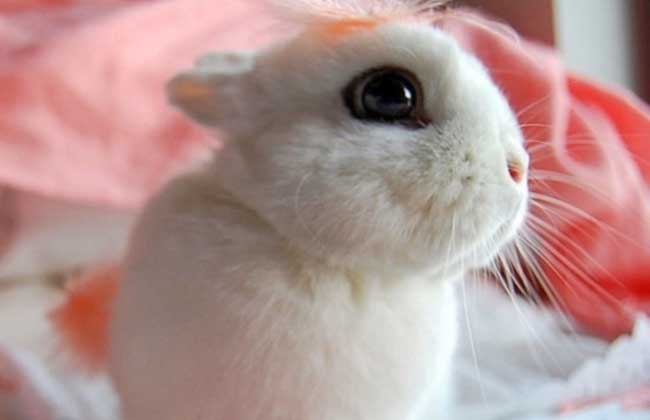
The Lionhead rabbit originates from France and is also known as the Hotot rabbit, Panda rabbit, and so on. It is almost entirely a herbivore. There is not much difference in appearance between the large Lionhead rabbit and the dwarf Lionhead rabbit; the only difference is the size of the individual. The large Lionhead rabbit is relatively common, while the dwarf Lionhead rabbit is not numerous in our country. Now let us take a look together at how much a Lionhead rabbit costs each!
How much does a Lionhead rabbit cost each?
The price of a Lionhead rabbit is about 50 to 500 yuan each. The body of the Lionhead rabbit is pure white, and only the fur around the eyes is black, making it look as if it has dark circles around its eyes, while the ears are shaped like a “V”, and the body is strong. The clearly defined black-and-white eye lines make the Lionhead rabbit look just like a panda, and its appearance is very endearing. Some Lionhead rabbits also have black ears, or only a black edge on the ears. In short, the biggest features for identifying a Lionhead rabbit are one white and two black: the whole body is white, and the eye rings and ears are black. Usually, that is the Lionhead rabbit.
What food does a Lionhead rabbit eat?
The Lionhead rabbit is almost entirely a herbivore. It very much likes to eat vegetables such as carrots, potatoes, and radish leaves, as well as dandelions, plantain, and so on. The market has recently introduced pelleted artificial feed for Lionhead rabbits to eat, which has the advantages of balanced nutrition and hardness that is good for the teeth. In the future, artificial feed can be used as the staple food, with just a small amount of vegetables or wild grass provided.
Can a Lionhead rabbit drink water?
Like other animals, a Lionhead rabbit will certainly die if it does not drink water. However, because in the past it was fed vegetables and wild grass containing a large amount of water, the water contained in these foods was sufficient for its needs. If it is fed too much water, it will affect the health of the stomach and intestines, causing diarrhea, and a wet cage easily makes the Lionhead rabbit sick. This is the reason it is said that Lionhead rabbits cannot drink water. If dry artificial feed is used as the staple food, then of course they need to drink water.
Lionhead rabbit breeding environment
1. Temperature: When building a rabbit hutch, an open, semi-open, or indoor cage-raised rabbit hutch should be selected according to the local climate characteristics. At the same time, attention should be paid to the heat preservation and insulation of the rabbit hutch, and flowers, grass, and trees should be planted around it. In summer, cooling measures such as installing cooling and ventilation equipment indoors or sprinkling well water on the ground, and reducing stocking density, should be taken.
2. Humidity: The relative humidity inside the rabbit hutch should preferably be 60 to 65%, and generally should not be lower than 55% or higher than 70%. Too much humidity easily causes mange, coccidiosis, eczema, and so on, while too little humidity can cause dryness of the respiratory mucosa, leading to bacterial and viral infections and illness. Ventilation should be strengthened, the stocking density inside the hutch reduced, and feces, urine, and bedding straw cleaned up in time, so as to reduce the humidity inside the hutch.
3. Noise: Lionhead rabbits are timid and easily startled. Sudden noise easily causes miscarriage in female rabbits, refusal to nurse, or the appearance of neurological symptoms, causing injuries from collisions. Therefore, when building a rabbit farm, the site should be chosen in a place far away from roads, industrial and mining enterprises. The feed processing workshop should be far away from the production area, and exhaust fans with low noise should be selected. The daily operations of the keepers should be gentle and steady. In the later stages of pregnancy, female rabbits should as far as possible not be disinfected with gasoline (kerosene) blowtorches, and setting off firecrackers around the rabbit hutch is prohibited.