How much does an Arabian horse cost roughly?
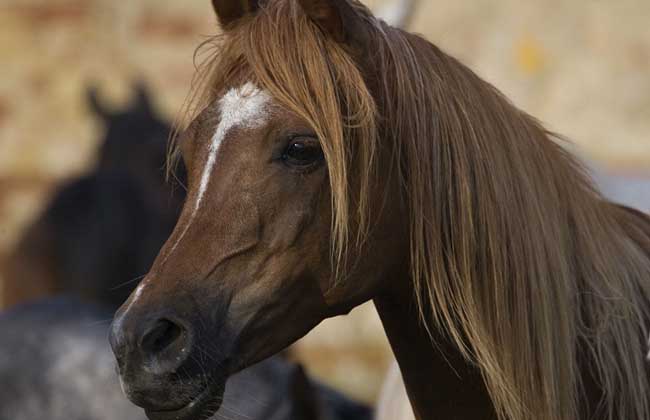
The Arabian horse is one of the oldest breeds, intelligent, active and full of endurance, with a distinctive head shape and a high-carried tail, making it easy to recognize. It originated 4500 years ago and historically spread from the Middle East to all parts of the world through war and trade and was used for crossbreeding. Almost all modern riding horses have Arabian bloodlines. Let's take a look below at how much an Arabian horse costs!
How much does an Arabian horse cost?
The price of an Arabian horse is about 18000 to 26000 yuan each, while the price of a purebred Arabian horse is about 80000 to 200000. The Arabian horse evolved and grew in a desert climate and was regarded as a treasure by the Bedouins. Purebred Arabian horses even became a symbol of reputation and brand. For politicians and royalty in many countries, owning a purebred Arabian horse is something worth showing off, and gifting a famous horse is considered an extremely high courtesy.
Bloodline branches of the Arabian horse
1. Kehilan: Kehilan is known for the depth of its chest, its powerful energy and its body size, with a shorter head shape paired with a full forehead and a broad jaw. Its average height is 152 cm, and most are gray and chestnut.
2. Seglawi: Seglawi is known for its elegance and refinement, performing better in speed than in endurance, with a delicate frame, a face and neck slightly longer than Kehilan's, an average height of 144 cm, and bay as the most common color.
3. Abeyan: Abeyan, like Seglawi, is slender and elegant, with a longer back compared with the typical Arabian horse, and a small body size, rarely taller than 144 cm. Most are gray, and unlike other bloodlines, they often have white markings.
4. Hamdani: Hamdani is generally considered more plain, with a slightly larger frame and a more muscular build, suitable for breeding to participate in competitive competitions. Seen from the side, the head is relatively straight, lacking the typical highly protruding forehead. Its body size is still fairly tall, over 154 cm, and gray or bay are common.
5. Hadban: Hadban can be said to be a smaller version of Hamdani, with a large frame and a muscular appearance, but with a gentle nature. Its average height is 145 cm, and the common colors are brown and bay, with a few having white markings.
External characteristics of the Arabian horse
1. Head: The Arabian horse has a beautiful, refined head, with a slightly short and wide forehead forming a wedge shape. The side of the face is preferably concave.
2. Eyes: The Arabian horse's eyes are especially large and prominent, deep-set and expressive.
3. Ears: The Arabian horse's ears are set far apart on both sides and often move back and forth.
4. Nose: The best feature of the Arabian horse's nose is large nostrils that can fit a one-pint water jug. The nostrils are clean and flexible, allowing a large amount of air exchange to exhale hot air and cool the body.
5. Withers: The Arabian horse's back is short and straight, and its withers are long and prominent.
6. Coat: The Arabian horse's coat is soft and fine. In summer the hair is very short, and in winter the hair is slightly longer and dense. The mane and tail are slender like silk.
7. Tail: The Arabian horse's tail is very flexible, and it likes to hold it high, sometimes level with or slightly higher than the back. When excited, it will be higher than the back.
8. Coat color: The Arabian horse's coat colors are mainly the single-color chestnut, with gray as the other three colors: bay, brown, and black. Some have white markings on the feet and head, but they will not appear on the body.
9. Height: The Arabian horse's height is usually between 142 and 153 cm.