How much is a box of bees? Market price reference
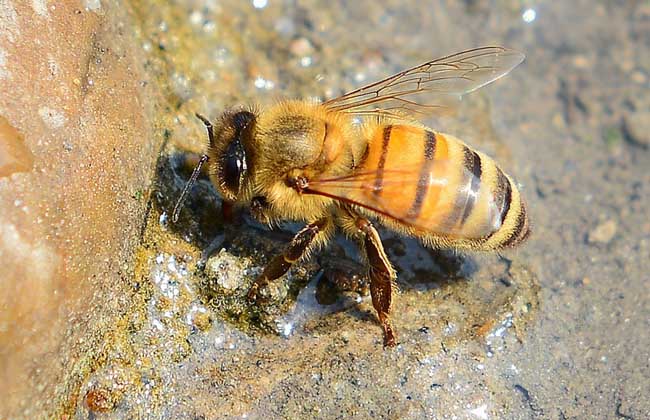
Bees are the source of honey, propolis and royal jelly, and also great contributors to pollinating plants. Today many people make a living by keeping bees, which can bring them a large income over the course of a year. Some newcomers also want to join the ranks of beekeepers, but they do not understand the price of bees. Let's take a look below at how much a box of bees costs!
How much is a box of bees?
Bees are generally not sold by the box, but by the frame (comb). Prices vary from place to place. Generally, bees cost about 200 yuan per box. At the same time, the price of bees also differs from season to season, and is usually more expensive in winter. Bees of good varieties are also more expensive; for example, the Chinese honeybee (Apis cerana) costs more than 20% more than other bees, and for a colony with multiple queens in one box, you have to pay half again as much.
Differences between the Chinese honeybee and the Italian bee
1. The Chinese honeybee is good at using scattered nectar sources. It has a keen sense of smell and is hardworking. When a few scattered nectar plants bloom in the outside world, it can collect from them and maintain normal colony reproduction. Under the same conditions, an Italian bee colony needs supplementary feeding, otherwise it will be in a state of starvation.
2. The Chinese honeybee flies nimbly and is not easily preyed upon by hornets, swallows, sparrows, dragonflies and the like. When there are many hornets in mountainous areas, the Chinese honeybee can still live well. It has natural resistance to mites and to American foulbrood, while the Italian bee does not.
3. The Chinese honeybee has strong adaptability. Its ability to resist cold, disease and enemies is superior to that of the Italian bee. Its time spent out working and collecting is also much greater than that of the Italian bee. In winter it also enters the overwintering state later than the Italian bee, so it can collect some high-quality winter honey, such as loquat honey. In spring it also enters work and spring reproduction earlier than the Italian bee.
4. The Chinese honeybee exceeds the Western honeybee in both the breadth and depth of pollination of local plants. The Chinese native bee is good at using scattered nectar sources and objectively pollinates various plants, making a special contribution to maintaining the reproduction of plants, especially rare plants in some deep mountain areas, and playing an irreplaceable role in promoting ecological balance. Because the Western Italian bee basically does not collect scattered nectar sources, its contribution to the ecological environment is far less than that of the Chinese native bee.
5. In appearance, the Chinese honeybee is mainly grayish-black all over, with alternating yellow rings, while the Italian bee has a clearly yellow front half and black rear half on its tail, and is larger than the Chinese honeybee. In terms of apiary layout, Chinese honeybees must be spread out with their entrances staggered, while Italian bees can be lined up in a row, neat and tightly placed.
How can you keep bees well?
1. Superior queen: The speed of colony reproduction and the level of output mainly depend on whether the queen is good or bad. A young and robust queen has strong egg-laying ability, the colony develops rapidly, and it can maintain a large colony. The worker bees also have strong collecting ability, work actively, show little swarming fever, and produce higher yields. Therefore, when keeping Chinese honeybees, you should, during the reproduction period, breed fine queens early from high-yield strong colonies in order to replace inferior small or aging queens.
2. Strong colony: A strong colony is the foundation of high yield, but a strong colony of Chinese honeybees is based on the actual situation of Chinese honeybees and cannot be mentioned in the same breath as a strong colony of Italian bees. Moreover, each period has its own standard for a strong colony. Only a strong colony can give full play to the queen's egg-laying ability, resist the invasion of pests and diseases, and safely pass the summer and autumn.
3. Sufficient honey: Sufficient stored honey in the hive can help the colony get through difficult times when nectar sources in the field are lacking. If the hive lacks honey, it will cause unrest in the colony, abandonment of larvae, and the queen stopping egg-laying, and may even lead to robbing bees and absconding. Therefore, during reproduction, on the premise of not hindering the expansion of the brood circle, you should often keep enough stored honey in the hive to encourage worker bees to secrete more jelly to feed the brood and raise new bees that are strong and large. If there is insufficient stored honey in the hive, artificial supplementary feeding is needed.
4. New comb: Chinese honeybees like new comb and dislike old comb. New comb has large cells and fresh wax. The queen especially likes to lay eggs on new comb, and reproduction is fast. The worker bees raised are robust and strong in collecting ability, and wax moths are less likely to occur in the colony. Therefore, you should seize favorable opportunities to build more new comb in order to replace old comb. Especially during the peak reproduction period, the peak honey flow period and the later stage of swarming, you should hurry to build comb.
5. Dense clustering: Chinese honeybees like dense clustering. You should often keep bees and combs in proper proportion, so as to help the bees protect the comb, defend against invasion by enemies such as wax moths, and also help with heat and moisture retention. Practice has proved that dense colony strength in winter makes the colony consume less honey and overwinter safely. Dense colony strength during the honey flow period can promote fast honey storage, early ripening and high yield. Dense clustering during the summer period can reduce colony decline and make it hard for enemies to invade.