What is the usual price of a eucalyptus sapling?
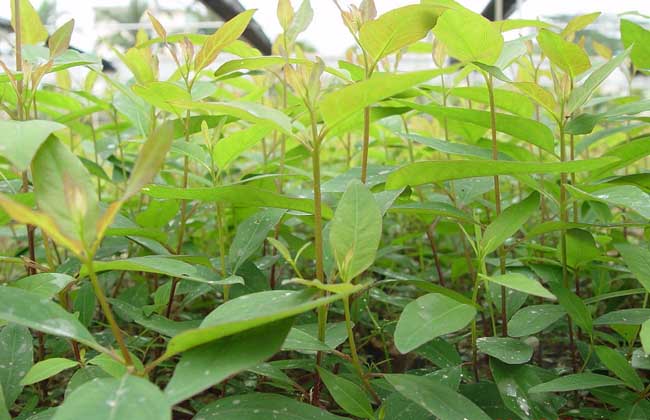
Eucalyptus is the collective name for plants of the genus Eucalyptus in the family Myrtaceae. The vast majority of its native range is on the Australian continent, where it grows on sunny plains, hillsides and roadsides. Its leaves can be harvested year-round, and it is cultivated in southern and southwestern China. Generally, it can flower and bear fruit 3 to 4 years after afforestation, and it has a certain cultivation value. Let us now take a look at how much eucalyptus saplings cost!
How much do eucalyptus saplings cost?
Eucalyptus saplings generally cost around 2 to 3 yuan each. Because they are saplings, the price is relatively cheap. They are available at the Evergreen Tree Four Seasons Specialty Store, where customer reviews are high, quality is guaranteed, and they are worth buying. Within 3 to 6 months after successful planting, the saplings are still growing weakly. To ensure the seedlings have sufficient light and nutrients, attention should be paid to clearing weeds to prevent them from competing with the saplings for growth elements. Spring is also the peak season for weed growth, so weeding is essential work. At the same time, to ensure the release of soil fertility, loosening the soil should also be carried out.
Doubts about the harm caused by eucalyptus
1. Doubt one: Eucalyptus is a “water pump” that will suck up water and cause drought. This is one of the most common doubts about eucalyptus. Because eucalyptus has a very high transpiration rate, it causes groundwater to drop significantly, just like a “water pump”, causing land drought and water depletion. In response, scientific research results have actually proven that eucalyptus has a fairly high water use efficiency compared with other coniferous trees, and the role eucalyptus forests play in water conservation, soil and water retention, and climate regulation is no less than that of other tree species. A large number of field observation experiments have also shown that eucalyptus does not directly cause drought. Data obtained by scientist Bailly and others from 8 years of observation also showed that most of the water in broad-leaved eucalyptus forests infiltrated into the soil, and instead could effectively conserve soil and water.
2. Doubt two: Eucalyptus is a “fertilizer absorber” that will cause “soil fertility decline”. Many people who have visited eucalyptus forests or planted eucalyptus themselves say that eucalyptus has an extremely high demand for soil fertilizer and nutrients, and that any land planted with eucalyptus sees fertility decline or even exhaustion, and other plants introduced on soil where eucalyptus has been planted simply cannot survive. In China, scientist Bai Jiayu, who has long been engaged in eucalyptus research, measured the nutrient uptake of eucalyptus and found that eucalyptus has a greater ability to use nutrients efficiently than other tropical tree species. Abroad, scientist Liani also observed eucalyptus forest soil and found that after the rapid growth period, eucalyptus returns the nutrient elements absorbed during that period to the soil.
3. Doubt three: Eucalyptus is a “tyrant tree” that will inhibit the growth of other species. Some people point out that eucalyptus is highly suppressive to local native and indigenous species, and that other species cannot survive alongside it. Indeed, based on scientific common sense, exotic species may cause harm to local ecological environments. But scientific research has also found that nearly all harmful exotic plants are herbaceous plants, while eucalyptus, as a tree, has not yet had its ecological harm truly confirmed. In addition, the phenomenon that some tree species are sensitive to the sap or fallen leaves of other tree species is also a normal phenomenon in nature. The Leizhou Peninsula in Guangdong once conducted a survey on this, and the research results also showed that local forest plant diversity did not decrease because of eucalyptus planting.
Common cultivated varieties of eucalyptus
1. Forest red gum (Eucalyptus tereticornis): Forest red gum is a large tree, 25 m tall. The bark is smooth, grayish white, and sheds in long strips. The young branches are round, slender, and drooping. Juvenile leaves are ovate. Intermediate leaves are broadly lanceolate. Mature leaves are narrowly lanceolate and slightly curved. Umbels are axillary, with stout peduncles. Flower buds are long ovate. Stamens have longitudinally dehiscing anthers, and capsules are nearly spherical. Its native range is the eastern coastal region of Australia, at elevations up to 1800 m, commonly on loam with relatively sufficient rainfall. It tolerates light frost in winter and is not suited to acidic soil. It is planted in Guangdong, Guangxi, Fujian, Guizhou, Yunnan and other places. The wood is pale and is used for construction, vehicles, ships, machinery, sleepers and so on.
2. River red gum (Eucalyptus camaldulensis): River red gum is the most widely distributed in Australia. Except for deserts and semi-deserts, it is distributed almost everywhere. Its more suitable conditions are areas below 250 m elevation, with annual rainfall of 250 to 600 mm, and habitats with only light frost in winter. It is most commonly found along riverbanks. It is also widely planted in China, from South China to Southwest China, and is a relatively ideal tree species. It grows rapidly and has a certain drought resistance and cold tolerance. The wood is red, highly decay-resistant, and suitable for sleepers, wooden stakes and so on.
3. Lemon-scented gum (Corymbia citriodora): Lemon-scented gum is an evergreen large tree, up to 40 m tall, with a diameter at breast height of up to 1.2 m. Its trunk is tall and straight, and its bark is smooth and pure white, earning it the title of “fairy in the forest”. It is native to Australia and has been introduced to China for nearly a hundred years. It is cultivated in South China and in Fujian, Zhejiang, Yunnan, Sichuan and other places. It is light-demanding, highly adaptable to climate and soil, drought-tolerant, fast-growing, and has a high timber yield. It is an important afforestation tree species in South China and is suitable for afforestation on the lower parts of low hills in the south, coastal mountain afforestation, and greening around the four sides. It is also an important fast-growing timber tree species and a very good aromatic oil tree species in the south.
4. Swamp mahogany (Eucalyptus robusta): Swamp mahogany, also known as small-leaved eucalyptus and wind-blown willow, is native to the basalt and sandstone areas along the east coast of Australia and is also distributed in drier inland areas. It is widely planted throughout South China, and a relatively large area of afforestation trials has been carried out on the Leizhou Peninsula in Guangdong, with preliminary results achieved. Seedling stems are mostly crooked. After cutting and regeneration, the sprouting stems are mostly upright. It is currently a commonly used tree species for afforestation in South China, though its wind resistance is somewhat poor and it is not resistant to typhoon strikes. The wood is pale red, hard and decay-resistant, and the leaves contain 0.82% oil.