How much do eucalyptus trees cost? An overview of the eucalyptus timber market
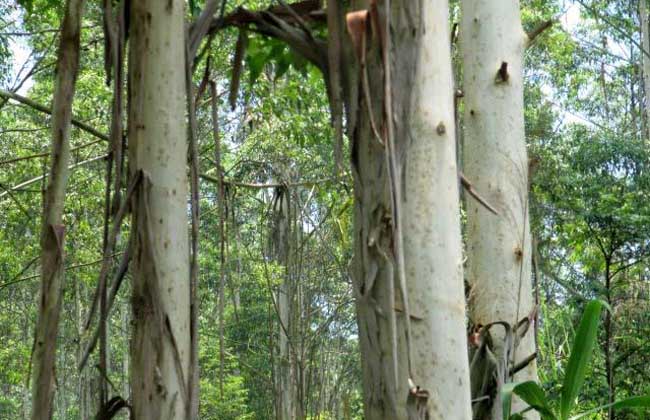
Eucalyptus is the collective name for plants of the genus Eucalyptus in the family Myrtaceae, with more than six hundred species. They shed leaves periodically within a year. Most varieties are tall trees, a few are small trees, and very few are shrub-like. Their place of origin is mainly the Australian continent, and they were introduced to various parts of the world in the 19th century. By 2012, 96 countries or regions had cultivated them. Let us now take a look at how much eucalyptus trees cost!
How much do eucalyptus trees cost?
The price of eucalyptus in China is generally calculated by veneer. One cubic meter of eucalyptus veneer costs 940 yuan. If it is eucalyptus veneer of very good quality, the price is 1100 yuan to 1200 yuan/cubic meter. This shows how expensive eucalyptus is. Eucalyptus veneer is the preferred building material for decoration. This kind of veneer has good strength and strong corrosion resistance. Many large companies and high-end home decorations choose to use eucalyptus veneer. With economic development, more and more people pursue high-end living environments, so the price trend of eucalyptus will also rise somewhat as sales increase.
What value does eucalyptus have?
1. Food value: The roots of eucalyptus can be eaten and can also yield water. In some places, eucalyptus is used as fuel, and the leaves of many eucalyptus species can be used as feed.
2. Medical value: Eucalyptus is slightly pungent, slightly bitter, and neutral. It has the effects of dispelling wind and relieving heat, inhibiting bacteria and reducing inflammation, and preserving freshness and relieving itching. It is mainly used to treat and prevent influenza, epidemic cerebrospinal meningitis, upper respiratory tract infections, pharyngitis, bronchitis, pneumonia, acute and chronic pyelonephritis, nephritis, dysentery, and filariasis, and is used externally for burns and scalds, cellulitis, mastitis, boils, erysipelas, paddy-field dermatitis, damp itching of the skin, athlete's foot, and so on.
3. Wood processing: China has successfully developed high-performance eucalyptus reconstituted wood, eucalyptus veneer laminated lumber, bamboo-eucalyptus composite materials, thick-core eucalyptus solid wood composite boards, and formaldehyde-free eucalyptus plywood manufacturing technology, and the comprehensive utilization rate of eucalyptus can be increased to more than 90%. Eucalyptus not only brings value to industry, but also brings economic benefits to other industries.
4. Papermaking raw material: Eucalyptus papermaking began as early as the early 20th century. Its fibers have an average length of 0.75-1.30 mm, and its color, density, and extract content ratio are all suitable for pulping. Many large paper mills also use eucalyptus to produce kraft paper and printing paper. The cellulose in eucalyptus wood can first be made into dissolving wood pulp and then processed into rayon, which has already achieved considerable success.
5. Essential oil extraction: Eucalyptus globulus and Eucalyptus stricta are the main varieties used to extract eucalyptus leaf oil. Eucalyptus leaf oil contains eucalyptol and is a colorless or light yellow liquid with a stimulating, cool fragrance. It is mainly used in toothpaste, mouthwash, food, medicine, and other fields.
Common varieties of eucalyptus
1. Eucalyptus tereticornis: Eucalyptus tereticornis is a tall tree, 25 m high. The bark is smooth, grayish white, and sheds in long strips. The young branches are round, slender, and drooping. Juvenile leaves are ovate. Intermediate leaves are broadly lanceolate. Mature leaves are narrowly lanceolate and slightly curved. Umbels are axillary, with stout peduncles. Flower buds are long ovate. Stamens have longitudinally dehiscent anthers, and capsules are nearly spherical. Its place of origin is the eastern coastal areas of Australia, at a maximum altitude of up to 1800 m. It is commonly found in loam with relatively sufficient rainfall, tolerates light frost in winter, and is not suitable for acidic soil. It is cultivated in Guangdong, Guangxi, Fujian, Guizhou, Yunnan, and other places. The wood is pale and is used for construction, vehicles, ships, machinery, sleepers, and so on.
2. Eucalyptus camaldulensis: Eucalyptus camaldulensis is the most widely distributed in Australia. Except for deserts and semi-deserts, it is distributed almost everywhere. Its more suitable conditions are areas below 250 m altitude, with annual rainfall of 250-600 mm, and habitats with only light frost in winter. It is most commonly found along riverbanks. It is also widely planted in China, from South China to Southwest China. It is a relatively ideal tree species, grows rapidly, and has a certain degree of drought resistance and cold tolerance. The wood is red, highly resistant to decay, and suitable for sleepers, wooden stakes, and so on.
3. Lemon eucalyptus: Lemon eucalyptus is an evergreen tall tree, up to 40 m high, with a diameter at breast height of up to 1.2 m. Its trunk form is tall, upright, and straight, and its bark is smooth and pure white, and it is known as the "fairy in the forest." It is native to Australia, and has been introduced to China for nearly a hundred years. It is cultivated in South China and in Fujian, Zhejiang, Yunnan, Sichuan, and other places. It is light-loving, highly adaptable to climate and soil, drought-tolerant, fast-growing, and has a high timber yield. It is an important afforestation tree species in South China and is suitable for afforestation on the lower parts of southern low hills, coastal mountain afforestation, and greening around villages, houses, roads, and water. It is also an important fast-growing timber tree species and a very good aromatic oil tree species in the south.
4. Eucalyptus exserta: Eucalyptus exserta, also known as small-leaf eucalyptus and wind-blown willow, is distributed from basalt and sandstone areas along the eastern coast of Australia to drier inland areas. It is widely planted throughout South China. Large-scale afforestation trials have been carried out on the Leizhou Peninsula in Guangdong and preliminary results have been achieved. The stems of seedlings are mostly crooked, but after felling and regeneration, the sprouted stems are mostly straight. It is currently a commonly used tree species for afforestation in South China, but its wind resistance is somewhat poor, and it is not tolerant of typhoon strikes. The wood is light red, hard, and decay-resistant, and the leaves contain 0.82% oil.
5. Eucalyptus grandis: Eucalyptus grandis is a densely shaded tall tree, up to 20 m high. The bark does not shed, is dark brown, and has irregular diagonal fissures. Young branches are angular. Young leaves are opposite, leathery, ovate, and stalked. Mature leaves are alternate, with thick leathery blades, ovate-lanceolate, unequal on both sides, and with glandular dots on both surfaces. Umbels are stout, with flattened peduncles, and short pedicels that are thick and flat. Petals and sepals fuse into a cap-like structure. Capsules are ovate-urn-shaped, slightly constricted in the upper half, with the capsule opening slightly enlarged, and the flowering period is April to September. It grows on sunny plains, slopes, and roadsides. It is native to Australia north of the southern latitude, and is cultivated in southern and southwestern China.