How much does wild soft-shelled turtle cost per jin at current market prices?
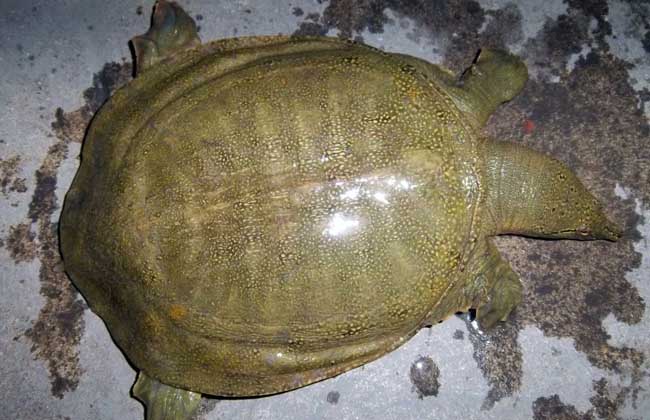
The soft-shelled turtle, scientifically known as Pelodiscus sinensis (Chinese softshell turtle) and also called tuan yu, jiao yu, etc., is an amphibious egg-laying reptile of the class Reptilia and family Trionychidae. It is produced throughout the country, but the soft-shelled turtles from the Dongting Lake area are the best in quality and have very high nutritional value. It is not only a delicious dish on the dining table, but also a tonic medicine with a wide range of uses. Let's take a look below at how much wild soft-shelled turtle costs per jin!
How much does wild soft-shelled turtle cost per jin?
The market price of wild soft-shelled turtle is several times more expensive than farmed soft-shelled turtle, mainly determined by the turtle's age and size. The larger ones are more expensive: small ones are around 200 to 300 per jin, large ones are around 500, and those around 3 jin cost more than 600 per jin. Farmed soft-shelled turtle is much cheaper, usually around 50 to 80 per jin.
How to identify wild soft-shelled turtle
1. Shell back appearance: The shell back of wild soft-shelled turtle is smooth and flat, with thin and even skin, a waxy luster, and the outline of the shell plates can be faintly seen. The shell back skin of farmed soft-shelled turtle is slightly thicker, with rough wart-like granules and no glossy texture, like toad skin, and the outline of the shell plates is hard to see.
2. Shell back color: Wild soft-shelled turtle has gray-black, earth-yellow, brown with black spots, etc., while farmed soft-shelled turtle is mostly black with a green tinge, yellow with a green tinge, green moss color, etc.
3. Body shape and appearance: Because wild soft-shelled turtle has long toiled for food in the natural state, its body is strong and vigorous, slightly flat, with firm muscles. Farmed soft-shelled turtle appears bloated, thick and clumsy, with soft muscles.
4. Pressing the plastron: The abdominal cartilage of wild soft-shelled turtle has relatively strong elasticity, and pressing with a finger gives a strong rebound. The abdominal cartilage of farmed soft-shelled turtle has weak elasticity; pressing with a finger feels soft and collapsed, with no rebound.
Nutritional value of wild soft-shelled turtle
1. Boosting immunity: Soft-shelled turtle is rich in nutrients such as animal gelatin, keratin, copper, and vitamin D. It can enhance the body's disease resistance and regulate the endocrine function of the human body. It is also a valuable tonic for improving the quality of breast milk and enhancing an infant's immunity and intelligence.
2. Beauty and skin care: The plastron of the soft-shelled turtle is called “guiban” (turtle shell), a precious traditional Chinese medicine with the effect of nourishing yin and reducing fire. It is used to treat dizziness, blurred vision, deficiency heat, night sweats, and other ailments. It also has a good effect on stubborn headaches left over from head trauma (such as neonatal cephalohematoma, etc.). Guiban gelatin is a macromolecular collagen protein containing various amino acids needed by the skin, and has the effect of beautifying and caring for the skin and promoting health and fitness. Of course, guiban is a traditional Chinese medicine, and whether to use it should be decided by a doctor based on the specific situation.
3. Anti-cancer and cancer-suppressing: Soft-shelled turtle meat and its extracts can effectively prevent and inhibit liver cancer, stomach cancer, and acute lymphocytic leukemia, and are used to prevent and treat weakness, anemia, leukopenia, and other conditions caused by radiotherapy and chemotherapy.
4. Reducing pressure and lowering lipids: Soft-shelled turtle also has a relatively good blood-purifying effect. Regular consumption can lower blood cholesterol, and is therefore beneficial to patients with hypertension and coronary heart disease.
5. Strengthening yang and the waist: Soft-shelled turtle can also “replenish damage from overexertion, strengthen yang qi, and greatly supplement the deficiency of yin”.
6. Nourishing yin and tonifying deficiency: Eating soft-shelled turtle also has a certain auxiliary therapeutic effect on pulmonary tuberculosis, anemia, weak constitution, and various other conditions.
7. Beneficial to postpartum women: Eating an appropriate amount of soft-shelled turtle helps postpartum women recover and improves the quality of breast milk.