How much is chalcedony? A comprehensive analysis of the market
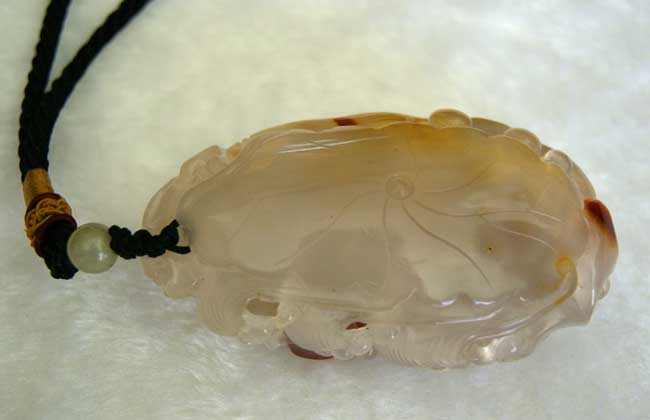
Compared with other types of jade, chalcedony is lower in price, and because of its rich colors, unusual patterns and unique charm, it is highly popular with consumers and is known as the “most affordable jade”. Therefore, as people's understanding of chalcedony gradually deepens, the price of chalcedony is bound to keep rising. Let's take a look below at how much chalcedony costs!
How much is chalcedony?
Chalcedony varies in type, color and place of origin, and its value differs accordingly. Its price mainly depends on the rarity of the type, color, jade quality, transparency and craftsmanship. Generally speaking, ordinary chalcedony products are mostly worth several hundred yuan, while distinctive, scarce chalcedony has no upper limit in value. In addition, the mining of natural chalcedony is extremely arduous and output is very limited, which keeps increasing the extraction cost of raw chalcedony. Things are precious when they are rare, and scarce natural chalcedony is all the more precious, so the scarcity of output determines the high value of chalcedony.
How to identify chalcedony
1. Observe the luster: genuine jade, whether translucent or opaque, has a warm, moist luster. A small amount of impurities inside or cotton-like patterns are normal. Fake jade has a dry, dull, lifeless luster, and some pieces even contain bubbles.
2. Test the hardness: when scratched or scraped with a knife, genuine jade leaves no marks.
3. Weigh the specific gravity: genuine jade feels heavy in the hand, while fake jade feels light and floaty.
4. Listen to the sound: suspend the jade piece in the air with a thread and strike it with a hard object. The genuine piece gives a crisp, pleasant sound with a long, lingering ring, while a fake one sounds relatively dull and dry.
5. Look at the fracture: observed with a 10x magnifier, genuine jade has an uneven fracture where a relatively fine, dense structure can be seen. Fake jade has a neat, shiny fracture and is often a glass imitation; one with a rough fracture and no waxy luster is a stone imitation.
How to care for chalcedony
1. Avoid high temperatures and prolonged sun exposure: unlike agate, chalcedony contains relatively more water, which is what gives it its bright, lustrous texture. And because chalcedony has good heat dissipation and easily loses moisture, it should not be placed in a hot, dry environment or left out in the sun for long periods.
2. Never let it touch acids or alkalis: chalcedony is also a kind of quartz mineral, with silicon dioxide as its main component. If it comes into contact with acidic or alkaline substances, it will be eroded and corroded, damaging its texture and structure and lowering its quality and value. Since many items we use daily contain acids or alkalis, everyone should take care to keep them separated.
3. Prevent collisions and friction: chalcedony is not very high in hardness and is fairly brittle. Impacts and knocks will damage its texture and structure, producing cracks and marks. To prevent this, it is best not to do vigorous exercise while wearing chalcedony jewelry, and to store it separately.
4. Clean and maintain it regularly: chalcedony is a beautiful natural gemstone and needs regular cleaning of surface stains to keep its bright color. When cleaning, however, note that you must not use household cleaners or scrub forcefully, so as not to damage the chalcedony.
Choosing among chalcedony varieties
1. Red chalcedony: red chalcedony is a translucent chalcedony with a fine texture, crystal clarity and a pure, rich color, and relatively high hardness. Tapped lightly, it gives a crisp, lingering sound. Compared with costly jadeite, it is an affordable natural gemstone widely loved by the general public.
2. Blue chalcedony: like other colored gemstones, blue chalcedony has its own unique symbolic meaning. People believe blue chalcedony can give the wearer a gentle heart and help regulate mood. Symbolizing trust and benevolence, blue chalcedony can help the wearer cultivate tolerance, build a sound character, shape an open-minded personality, strengthen interpersonal relationships and the wearer's social skills, and at the same time help the wearer eliminate restlessness and irritability and remove prejudice.
3. Blood chalcedony: blood chalcedony is bloodstone, a sacred stone in the legend of Christian blood. Blood chalcedony is a dark green stone with red spots; these red spots look especially like drops of blood, hence the name “bloodstone”. It has a powerful blood-enriching effect. The ancient Egyptians used blood chalcedony powder to treat excessive blood loss, and also mixed blood chalcedony powder with honey as a blood tonic.
4. Green chalcedony: green chalcedony's fresh emerald green is tinged with flecks of yellow, often reminding people of a “gem born in gold”. Its color and appearance closely resemble jadeite, and it is favored by many. In ancient Roman times and the Victorian era, people often regarded green chalcedony as a powerful healing stone, and it was also a highly popular ornament.
5. Yellow chalcedony: yellow chalcedony is a relatively rare chalcedony color, and the most precious among them is the golden, transparent golden water bodhi. Gold represents wealth and good fortune, so it is especially favored by businesspeople, white-collar workers and merchants.
6. Black chalcedony: black chalcedony is one of the most common chalcedony colors. Because it forms at a relatively low temperature, it contains a large amount of other mineral elements; more iron, potassium and selenium compounds give it a purple-black or deep black color.