How much does a cherry sapling generally cost?
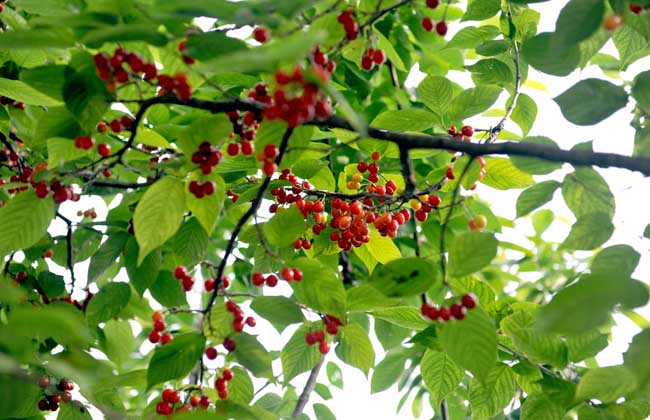
Cherry is a general term for certain plants of the genus Prunus, including the subgenus Cerasus, the subgenus sour cherry, the subgenus Laurocerasus, and others. The main producing areas in China include Shandong, Anhui, Jiangsu, Zhejiang, Henan, Gansu, Shaanxi, Sichuan, and others. The fruit is rich in sugar, protein, vitamins, and various elements such as calcium, iron, phosphorus, and potassium, and has extremely high cultivation value. Now let us take a look at how much cherry saplings cost!
How much do cherry saplings cost?
Category Ground diameter Price Category Ground diameter Price Category Ground diameter Price Cherry sapling 0.8 cm 3.0 yuan Cherry sapling 1.0 cm 3.5 yuan Cherry sapling 1.5 cm 5 yuan Cherry sapling 2.0 cm 8.0 yuan Cherry sapling 3.0 cm 30 yuan Cherry sapling 4.0 cm 80 yuanNote: The market price of cherry saplings varies according to cherry variety, sapling quality, sales origin, and purchase quantity. When buying, please rely on the actual situation.
Propagation techniques for cherry saplings
1. Seedling method: After harvesting the cherries, cut open the skin and flesh to remove the pit, wash away the flesh attached to the pit with clean water, then place it in a cool place to dry for 1-2 days before sowing. When sowing, sow the pit directly into a shallow pot, and it will germinate about 10-30 days after sowing. When the seedling grows to 5-250 cm, transplant it into a plastic soft pot. Cherry seeds germinate easily, but germination is not uniform, and the seeds produced by some plants often lack viable embryos, with the germination rate often lower than 30%. The seedling method reaches fruiting age relatively late, and the quality varies greatly among seedlings.
2. Cutting method: During the spring and summer growing season, select semi-mature, robust branches with a diameter of 0.7-30 cm, each segment 15-500 cm long, bearing 4-6 leaves. Insert them into river sand, vermiculite, peat soil, or a mixture of several kinds, all of which are suitable as a seedbed medium. The cuttings especially need to remain moist and be shaded. After cutting, roots develop in about 1.5-2 months, and transplanting is done after the root mass grows vigorously. If cutting is managed properly, the survival rate will be 60-90%. The cutting method is simple and has the highest success rate.
3. Layering method: Select branches more than two years old, make a ring of bark removed near the node on the lower part, then place moist moss into a transparent plastic bag and wrap the entire wound well, tying both the upper and lower ends. After roots form, cut below the layered part, and pot it to become a new plant. This is usually done during the vigorous growth period of the cherry (in late spring and early summer), when rooting is easy. Although rooting is relatively easy, the effect differs greatly among varieties.
4. Grafting method: Cherry grafting uses cherry seedlings, mountain cherry, flowering cherry, and others as rootstock, and good cherry varieties as scions. It is carried out before spring germination, and it is best to choose a rootstock and scion with the same or similar thickness. Cleft grafting or approach grafting can both be used. Grafting is the most widely used method in actual production for propagating cherry saplings.
High-yield varieties of cherry saplings
1. Yinzhu cherry: Yinzhu cherry is produced in Nanjing. The tree is small, with fine branches and small leaves, and the fruit is pale red, hence the name Yinzhu. The fruit is conical and high-yielding, but the fruit is small and of poor quality. It matures in early May locally. Although this variety has poor quality, because its flowering period is late, it is not easily damaged by frost, and because the plant is relatively small, it can be densely planted as appropriate and is convenient to manage.
2. Winged-petiole cherry: Winged-petiole cherry is produced in Zhuji, Zhejiang. The fruit is large, flat-round spherical, with an average single fruit weight of 3.13 grams. The flesh is fine and juicy, sweet and sour and pleasant to the taste, with excellent quality. The skin is thin and not suitable for storage and transport. The fruit stalk is thick, short, and straight, hence the name short-stalk cherry. It matures in late April locally. This variety is one of the best-quality fresh-eating varieties among Chinese cherries.
3. Dongtang cherry: Dongtang cherry is produced in Nanjing. The tree is tall, the branches are upright, and the leaves are dark in color and thick. The fruit is round and bright in color, and its quality is slightly inferior to that of Chuisi cherry. It is high-yielding but not cold-resistant, and matures in early May. It is one of the most commonly cultivated varieties in the suburbs of Nanjing.
4. Chuisi cherry: Chuisi cherry originated in Nanjing and is one of the local excellent varieties. The tree vigor is robust, the fruit is large, with an average single fruit weight of 2.14 grams. It is juicy and sweet, with delicate flesh, bright fruit color, early maturity, and high yield. Because the fruit stalk of this variety is slender and drooping, it is called Chuisi, and its quality is excellent. However, because its flowering period is relatively early, it is prone to frost damage.
5. Xiaowo cherry: Xiaowo cherry is also called pointed-leaf cherry or small-leaf cherry. It is produced in Zaozhuang, Shandong, and is one of the main local cultivars. The fruit is medium to large, with an average single fruit weight of 1.5 grams. The fruit is spherical, purplish red, glossy, with thin skin, yellow flesh, relatively little juice, sweet taste, and freestone. It matures in early May.