How much is loach per jin? An introduction to market prices
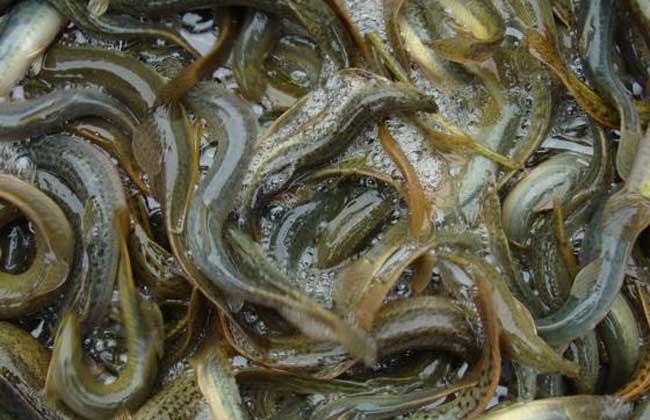
Loach is a popular aquatic delicacy, with delicious meat and rich nutrition. It is rich in protein and also contains a variety of vitamins, and it has medicinal value. It is mainly used for symptoms such as spleen deficiency with diarrhea and dysentery, thirst due to febrile disease, night sweats and edema in children, difficult urination, inability to have an erection, viral hepatitis, hemorrhoids, boils, and itchy skin. Now let us take a look at how much loach costs per jin!
How much is loach per jin?
In China, except for the Qinghai-Tibet Plateau and excluding the Nyingchi area of Tibet, loach is distributed in natural freshwater waters such as rivers, ditches, paddy fields, ponds, lakes and reservoirs across the country. Its nutritional value is very high, and its market price is relatively expensive, usually around 15 to 20 yuan per jin, and prices also vary from place to place. The price of wild loach is higher, but usually does not exceed 30 yuan per jin.
How to select loach
1. The best ones have protruding eyes, clear and glossy eyes, and strong activity ability. If the eyes are sunken and the mucus on the fish skin is dry and dull, it may have been dead for a relatively long time.
2. High-quality loach has tightly closed mouth and gills, gill filaments that are bright red or red, and transparent mucus on the fish skin that appears glossy.
3. Loach that is too fat may have been given hormones. It is best not to buy dead loach; the cause of death is unknown, and it may have been poisoned by pesticides.
Classification of loach varieties
1. Green loach: Green loach is generally called loach. Its body is long and cylindrical, with the tail laterally compressed, and the mouth inferior, shaped like a horseshoe. It has 5 pairs of barbels, 3 pairs on the upper jaw, relatively large, and 2 pairs on the lower jaw, one large and one small. The caudal fin is round, and the scales are small and buried under the skin. The back and dorsolateral parts of the body are grayish black, with small black spots. The lower half of the sides of the body is white or light yellow, and there is a large black patch above the base of the caudal peduncle. The body surface has relatively abundant mucus, the head is pointed, the snout protrudes forward, and the eyes and mouth are relatively small.
2. Large-scale loach: Large-scale loach is distributed in the middle and lower reaches of the Yangtze River and its affiliated water bodies. Its body shape closely resembles that of loach. It has 5 pairs of barbels. The eyes are covered by a membrane. There is no suborbital spine. The scales are large and buried under the skin. The skin fold ridge at the caudal peduncle is well developed and connected to the caudal fin. The length and height of the caudal peduncle are approximately equal. The caudal fin is round. The anus is near the starting point of the anal fin.
3. Chinese sand loach: Chinese sand loach is distributed in the middle and upper reaches of the Yangtze River. It is also called steel loach. The snout is long and pointed. It has 3 pairs of barbels. There is 1 pair of knob-like protrusions under the chin. The suborbital spine is forked, with the tip extending beyond the posterior margin of the eye. There are no scales on the cheeks. The anus is close to the starting point of the anal fin. The caudal peduncle is relatively low. It inhabits slow-water areas of river sections with a sandy and gravel bottom, and often moves in the bottom layer.