How much do Chinese wingnut trees cost? Latest market price analysis
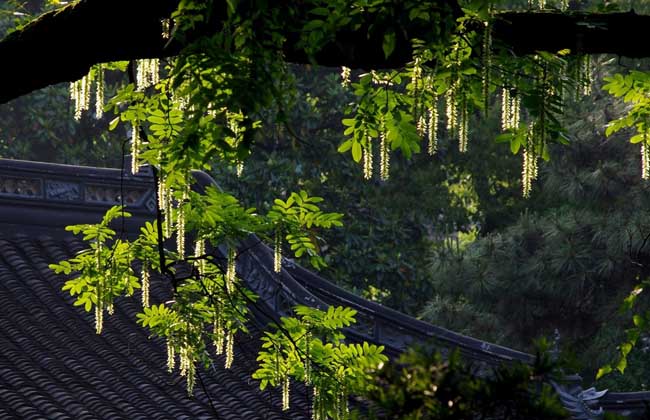
The Chinese wingnut tree is a common shade tree and shelterbelt tree species, also known as white poplar, large-leaf willow, large-leaf poplar, and so on. It is a deciduous tree of the genus Pterocarya in the walnut family (Juglandaceae), mainly distributed south of the Yellow River basin. Its crown is broad, its branches and leaves are dense, and it grows rapidly. Its bark also has effects such as dispelling wind and relieving pain, killing insects, and healing sores. Let us take a look below at how much Chinese wingnut trees cost!
How much do Chinese wingnut trees cost?
Category DBH Price Category DBH Price Category DBH Price Chinese wingnut tree 8 cm 60 yuan Chinese wingnut tree 10 cm 120 yuan Chinese wingnut tree 12 cm 240 yuan Chinese wingnut tree 15 cm 450 yuan Chinese wingnut tree 18 cm 600 yuan Chinese wingnut tree 25 cm 800 yuanNote: The real-time sapling prices of Chinese wingnut trees may fluctuate up or down depending on factors such as time and season, market conditions, root ball size, and quality grade. Please refer to the actual situation at the time of purchase.
Cultivation value of the Chinese wingnut tree
1. Economic value: The wood of the Chinese wingnut tree is light and soft and not prone to warping or cracking, but it is not resistant to decay. It can be used to make box boards, furniture, matchsticks, and so on. The bark is rich in fiber and can be made into high-grade ropes. The leaves are toxic and can be used as an agricultural insecticide. Chinese wingnut seedlings can be used as rootstock for grafting walnut. The bark and branch bark contain tannins, from which tannin extract can be obtained, and they can also serve as fiber raw material. The fruit can be used as feed and for brewing alcohol, and the seeds can also be pressed for oil.
2. Ornamental value: The Chinese wingnut tree has a broad crown, dense branches and leaves, rapid growth, and a well-developed root system. It is a good greening tree species for low-lying wetlands on both banks of riverbeds and can also help prevent soil erosion. It can be used as a street tree, or planted in patches or as a single specimen on lawns and slopes, and in all cases it can form a certain landscape.
Cultivation techniques for the Chinese wingnut tree
1. Land preparation: Although the Chinese wingnut tree has strong adaptability, during seedling raising and propagation it is still necessary to choose a suitable growing environment and areas with deep, fertile soil for cultivation. First, the soil should be deep-plowed and finely harrowed to a depth of 20-30 cm, turning the subsoil up to the surface layer and then watering the base water. Then add phoxim granules to fine soil, mix evenly, and spread it in the nursery to reduce seed damage caused by underground pests. Then apply decomposed manure, farmyard manure, organic fertilizer, and so on to improve the soil growing environment. After piling and weathering for a period of time, the soil can be used.
2. Seed collection: The Chinese wingnut tree is propagated by seed. Select mother trees that are 10-20 years old, with straight trunks, good development, and no pests or diseases for seed collection. After the fruit matures, pick the fruit clusters or wait until they fall to the ground and then sweep them up. After the seeds are collected, they can be sown the same year, or the wings can be removed, dried in the sun, and stored in bags or mixed with sand until sowing the following spring.
3. Seed sowing: Autumn sowing is preferable for the Chinese wingnut tree, but spring sowing is also possible. For spring sowing, first soak the seeds in warm water at 60-80°C, then after cooling, change to clean water and soak for 1-2 days, then sow in rows with a row spacing of 20-25 cm, with a seeding rate of 8-10 kg per mu. After germination, when the seedlings reach 10-15 cm in height, thin them, and do a good job of weeding, loosening the soil, drainage and irrigation, fertilization, and pest and disease control. The seedling yield per mu is 8,000-15,000 plants. When the seedlings are 1.5-2 m tall and 1-2 cm in ground diameter, they can be lifted from the nursery for planting.
4. Planting techniques: The planting holes for the Chinese wingnut tree should be 40-50 cm deep and in diameter, with a hole spacing of 3-4 m. In order to cultivate straight, tall, high-quality timber, the density should be relatively high when establishing a plantation in patches, so as to inhibit the growth of side branches; after canopy closure, conduct thinning in stages. Whether planting in spring or winter, deep planting, spread roots, and firm compaction are required. When planting seedlings, pay attention to preventing dieback of the shoot tips; this phenomenon is especially common when planting in winter. Therefore, when planting in winter, it is advisable to cut back the trunk after planting, or cut back the trunk first and then plant. The cutting height is 10-15 cm, and the cut should be smooth and must not be torn.
5. Water and fertilizer management: The Chinese wingnut tree grows relatively slowly in its young stage, and sufficient fertilizer can accelerate plant growth. Generally speaking, when planting, dried chicken manure or decomposed and fermented cow and horse manure can be applied as base fertilizer. The base fertilizer must be thoroughly mixed with the planting soil. In June and July of the planting year, apply a compound fertilizer containing the three main elements once to promote branch and leaf growth and expand the nutrient area. In late autumn, in combination with watering for freezing, apply semi-decomposed cow and horse manure once. This fertilizer can be applied shallowly or directly scattered on the tree disk. After budding the following spring, apply urea once; in early summer, apply a phosphorus-potassium fertilizer once; in late autumn, apply organic fertilizer according to the method used in the first year. From the 3rd year onward, it is only necessary to apply farmyard manure once each year in late autumn, but the amount should be greater than in the first two years. Fertilizing in this way can help improve the plant's growth.