How much does a passion fruit seedling cost per plant?
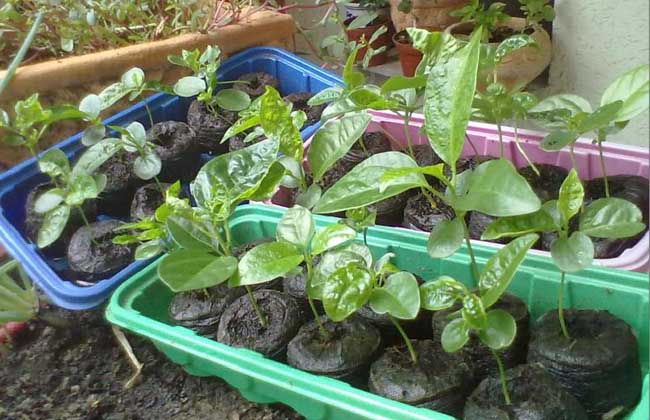
Passion fruit is a perennial evergreen climbing vine tropical fruit, named for its juice having the aroma of guava, mango, banana and other fruits. It has strong adaptability, vigorous growth, resistance to pests and diseases, early production, high yield, good quality, tolerance to storage and transport, broad market demand and high economic benefit. Abroad it has the laudatory name of "money tree". Let us take a look below at how much passion fruit seedlings cost!
How much do passion fruit seedlings cost?
Variety category Reference price Minimum order quantity Passion fruit small seedling 5 yuan/plant 50 plants Passion fruit large seedling 15 yuan/plant 50 plantsNote: According to the variety of passion fruit seedlings, there are purple types, yellow types and hybrid types. Prices will differ according to the variety and quality of the seedlings. Please take the actual price as the standard when purchasing.
Cultivated varieties of passion fruit
1. Purple type: The purple type passion fruit is also called the wild type or local purple type. The plant has weaker growth vigor but stronger cold resistance, and can adapt to growing in mountainous areas at an altitude of 1000 m. The stems, leaves and tendrils are all green. The fruit is round or oblong, and the peel turns purple-black when ripe. The fruit is small, with an average fruit weight of 35 g, and the yield is low, about 5000 kg per hectare. Under natural conditions, the purple type passion fruit is pollinated by insects to set fruit and does not require artificial pollination.
2. Yellow type: The yellow type passion fruit plant is climbing, grows vigorously and has strong adaptability, but its cold resistance is weak, and it is suitable for growing at low altitude (below 500 m). The stems, leaf veins and tendrils are purplish-red. The fruit is oblong or round, and the peel is bright yellow when ripe. The juice rate is high, about 34.18%. The fruit is large, the quality is excellent, and the yield is high, about 25000-30000 kg per hectare. Because of the special flower structure and its self-incompatibility, self-pollination easily fails to set fruit. It must be pollinated between different plants or different varieties, and only artificial pollination can achieve fruit set.
3. Hybrid type: "Tainong No. 1" was selected from a hybrid F1 bred with the purple type as the female parent and the yellow type as the male parent. The growth characteristics, yield and quality of this variety are all between those of the two parents. The stems, petioles and leaf veins are green tinged with purplish-red, and the tendrils are also green, but the tips are slightly purplish-red. The natural fruit-setting rate can reach more than 60%. When the fruit is ripe, the peel is bright red, slightly smooth, slightly thinner than that of the yellow type, and has relatively fine dense white fruit dots. The maximum fruit weight reaches 120 g, with an average fruit weight of 62.8 g. The average annual yield per plant can also reach 20.86 kg, and the yield per hectare is about 20000 kg, reaching 25000-30000 kg in the second year.
Bare-root seedling raising techniques for passion fruit
1. Selection of good varieties: During the fruit ripening period, select fully mature fruits that are large, juicy, thin-skinned and free of pests and diseases from superior mother plants. Take out the seeds, wash them clean and dry them in the shade for use as seedling propagation material. Seeds of the current year have a high seedling emergence rate when sown in the same year, reaching more than 95%. The seedling raising time is generally from September to May of the following year.
2. Nursery preparation: Deeply plow the soil and expose it to the sun for 5-7 days. Harrow finely and make beds. The bed height is 20 cm, and the width is 80-100 cm. Leave a path 40 sq cm wide between beds. Remove stones, tree roots and other debris from the nursery. When making the beds, apply 7.5 kg of calcium magnesium phosphate fertilizer or superphosphate per 100 sq m of nursery. Mix thoroughly with the topsoil and level the bed surface.
3. Seed treatment: Soak the seeds in water for 2-3 days, and rub them by hand to wash off the outer gelatinous layer of the seeds. Mix 10-15 g of carbendazim or thiophanate-methyl per kilogram of seeds. After mixing for 20-30 minutes, sowing can begin.
4. Seed germination: The germination bed is prepared in the same way as the nursery. After the germination bed is prepared, evenly scatter the seeds on the germination bed and cover with a 1-2 cm layer of fine river sand. Then cover with a 5 cm layer of grass. Water thoroughly. Surround the germination bed with plastic sheeting to form a wall 60 cm high to retain moisture and prevent rats. Build a shade shed or install shade netting to maintain 40-50% shade. After sowing, water once every 3 days, open the shade shed for ventilation for 1 day, and close the shed at 7:00 in the afternoon. After 7-10 days the seeds begin to germinate, and some emerge from the soil. At this time remove the covering grass and the plastic sheeting wall.
5. Timely transplanting: Before transplanting, the nursery should be covered with shade netting or a shade shed should be built to maintain 10-50% shade. When the seedlings grow until the cotyledons are stable, they can be transplanted from the germination bed. Before lifting the seedlings for transplanting, water thoroughly first to make lifting easier, and take care to preserve the root system. The transplanting depth should be the depth at which the seedlings grew in the germination bed. Seedlings should be taken and planted immediately. After transplanting, water thoroughly to settle the roots.
6. Nursery management: After transplanting, water once every 2 days to keep the nursery moist. Remove weeds in the nursery. Every 15 days, spray with 15 kg of water plus 15 ml of dichlorvos and 15 g of thiophanate-methyl to prevent and control pests and diseases. Within 10 days after transplanting, if missing plants are found, replant them in time. After the seedlings grow two true leaves, lightly apply nitrogen and phosphorus, spraying with 0.1% urea and 0.2% potassium dihydrogen phosphate solution once every 7 days to promote good seedling growth.
7. Management before leaving the nursery: After the seedlings grow for 60-80 days, the stem diameter can reach 0.3-0.5 cm and the height can reach 30-40 cm, and they can leave the nursery for field planting. Twenty days before leaving the nursery, gradually reduce the shade in the nursery, or remove the shade netting 10 days before leaving the nursery, to harden the seedlings. Before lifting the seedlings, water the seedbed thoroughly to make lifting easier. After lifting the seedlings, promptly prune some leaves (generally remove one third) and excessively long roots, and promptly coat the roots with mud slurry to facilitate transport and ensure the survival rate after planting.