How much is porcupine per jin? Market price analysis
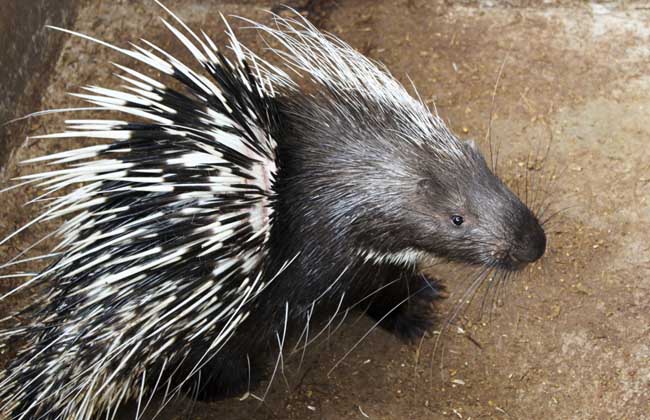
The porcupine is a rare animal with high economic value, a general term for animals of the family Hystricidae. Because its meat is fine-textured and delicious, it is deeply loved by people, and it also has high medicinal value, being called the “green medicine.” Farmed porcupines have good market prospects. Let us take a look below at how much porcupine costs per jin!
How much is porcupine per jin?
Porcupine meat is tender, delicious and easy to digest. It is a low-fat, low-cholesterol, high-protein meat, with very high nutritional and medicinal value. Its price on the market is relatively expensive. Generally, commercial porcupine costs about 70 yuan per jin, and porcupine breeding stock about 100 yuan per jin. Prices may vary somewhat by region, but the range will not be too large.
The nutritional value of porcupine meat
1. Porcupine meat is a typical high-protein edible meat, with a protein content as high as 26.58%, which is 18.31%, 18.30%, 33.48%, 20.67% and 0.33% higher than lean pork, beef, mutton, chicken and rabbit meat respectively.
2. Porcupine meat is a low-fat meat food, with a crude fat content of only 5.13%. Apart from being higher than a few dietary meats such as rabbit meat (62.77% higher), it is 24.47%, 20.83%, 35.71% and 34.23% lower than lean pork, beef, mutton and chicken respectively.
3. Porcupine meat has a very high glutamic acid content, and glutamic acid is a major flavor substance in meat foods. In every 100 grams of pure porcupine meat, the glutamic acid content is as high as 4761 mg, which is 61.29%, 36.75%, 32.58%, 62.72%, 53.79% and 69.10% higher than ordinary commercial pork, Bama fragrant pork, guinea pig meat, duck meat, chicken and mutton respectively.
4. Porcupine meat is richer in mineral elements than other commonly used dietary meats. Its crude ash content is 40.22%, 50.00%, 35.33%, 47.83% and 17.39% higher than lean pork, beef, mutton, chicken and rabbit meat respectively.
The farming advantages of porcupines
1. Strong disease resistance: Porcupines can survive from minus 10 degrees to 45 degrees. As long as the pen is kept clean and ventilated, they usually do not get sick.
2. Great market potential: At present, high-end hotels in large and medium-sized cities charge high prices. Because porcupine output is not high and development is slow, market demand cannot be met in three to five years. When the national number increases, the price of commercial porcupine will be around 40 yuan per jin, and there is still room for profit. If the price of porcupine meat is lowered so that it can enter supermarkets and ordinary hotels and become affordable to the general public, and related porcupine parts can enter the pharmaceutical market, the market prospects will be even broader.
3. Low feeding cost: The annual feeding cost per porcupine is 220 yuan. The feed is mainly self-produced by farming households, mainly sweet potatoes, corn, pumpkin, soybeans, radishes and various vegetables and wild grasses. The feed is simple and abundant, with wide sources.
4. Low labor input: One person can raise 400 to 500 porcupines per year.
5. Low farming difficulty: At present, many rural people go out to work, and those left at home are mainly the elderly and children. Highly technical industries are not easy to master, but feeding 10 to 20 porcupines is an easy task. If large-scale breeding is needed, the technical difficulty is not great either.
6. Long-term benefits: Once you have breeding porcupines, only feed input is needed. Porcupines can live up to 12 years, and the peak farrowing period is 6 to 8 years.
7. High return on investment: The net profit per commercial porcupine is more than 1000 yuan. Each female porcupine produces 2 to 4 porcupines per year. The capital can be recovered in the second year, and from the third year the profit obtained is greater than the principal, rising year by year.
8. Small farming site: Each porcupine needs only 1.2 sq m of pen space. Raising ten requires only 12 sq m, and a simple single-story house is enough. The pen investment is not large.
9. Low farming risk: Some people with courage, insight, space and a certain amount of funds invest steadily in advance and open up a broad sales market, so there is no risk.