What is the market price of clownfish?
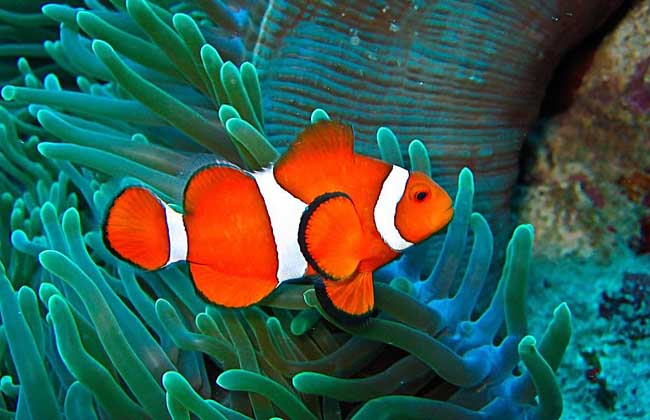
The clownfish is one of the easier marine fish species to keep, commonly known as a fish of the subfamily Amphiprioninae in the family Pomacentridae. Although it is called the clownfish, it is actually not ugly at all but very beautiful. It is a beginner fish that only rose in popularity in recent years, and many fish keepers also choose the clownfish as a tank-cycling fish. Let's take a look below at how much clownfish cost!
How much do clownfish cost?
The cheapest clownfish cost roughly 35 yuan each. The price is not only related to the species and size, but also directly related to the quality of the fish. Some clownfish with good quality cost around 300 yuan. At the same time, because clownfish are marine fish, the choice of tank must also be professional. If a beginner is keeping them, the tank is a must-buy, along with the aeration equipment, lighting and decor in the tank, which is equivalent to building an ecosystem. This kind of tank is rather expensive, often costing several thousand and, in expensive cases, tens of thousands.
How to identify clownfish
1. Color: The color of captive-bred clownfish is somewhat paler than that of wild clownfish. If the color is especially pale, it may be due to a lack of light during the rearing process, and this kind of fish also has a relatively weaker constitution, so pay attention when choosing.
2. Size: Due to the physiological characteristics of clownfish, only a few can grow large when kept in a group. When the other fish grow to 1.5-2.5 cm, it is very difficult for them to grow any further. They can only grow quickly when kept separately. Therefore, when you see a group of captive-bred clownfish that are all very large, you should pay attention to distinguishing them.
3. Habits: Wild clownfish are especially territorial and kill each other over territory. Captive-bred clownfish are less territorial than wild clownfish and play with each other more.
Clownfish keeping techniques
1. Rearing environment: To keep clownfish, you first need to create a comfortable and cozy environment for them. Find a few pieces of live rock and build a small cave with a natural barrier for them, keeping appropriate water flow inside the cave. It is best to place an oval pebble inside the cave, with the pebble touching the outside of the cave entrance. Since clownfish live symbiotically with sea anemones, it is best to find a relatively large sea anemone and place it at the cave entrance to protect the clownfish.
2. Quarantine before entering the tank: When keeping multiple clownfish, try to introduce them into the tank at the same time. When you buy clownfish and bring them home, quarantine them first, and once you confirm there are no problems, they can go into the tank. Note that the suitable water temperature for clownfish is 26-27°C, the seawater specific gravity is 1.022-1.023, the seawater pH is between 8.0-8.5, and the water hardness is 7-9 degrees. Try to adjust the water quality and water temperature within this range.
3. Acclimation and feeding: After clownfish arrive in a new environment, they may need 2-3 days to adapt. During these few days, there is no need to feed them. After the acclimation period, get the clownfish to start eating. First feed them brine shrimp, then gradually switch to flake food. Once they have fully settled down, pellet food, crushed shrimp meat or other omnivorous foods are all fine.
4. Light control: If clownfish are kept in a bare tank, the water flow must be reduced at night so as not to disturb the clownfish's rest and thereby affect their development. Also, before they grow into adults, they must be given plenty of light. At this stage the fish grow relatively quickly, and insufficient light can easily affect their development.