What is the market price of Small-tailed Han sheep?
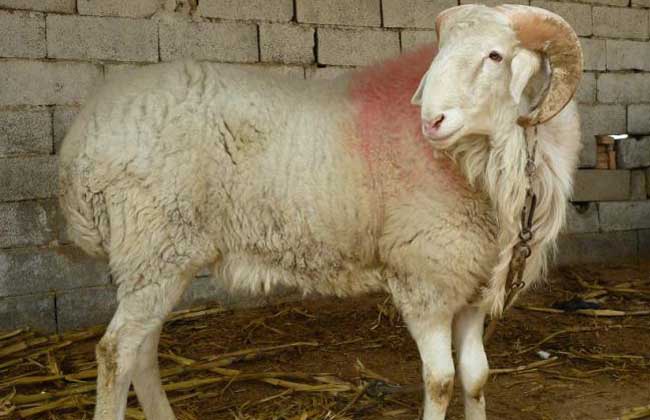
The Small-tailed Han sheep is a dual-purpose meat and fur sheep breed in China, characterized by fast growth and development, early maturity, strong reproductive capacity, stable genetic performance, and strong adaptability. It has been designated by the state as a fine breed of livestock. It is not only one of the best projects for farmers to escape poverty and achieve prosperity, but also an important measure for the state to close hillsides for afforestation, return farmland to grassland, plant grass and raise sheep, and build ecological agriculture. Let us take a look at the market prices of Small-tailed Han sheep!
Market prices for Small-tailed Han sheep
The Small-tailed Han sheep has stable genetic performance, and high-yielding offspring can well inherit the production potential of the parents, with breed characteristics remaining obvious. In particular, the multi-lamb and high-prolificacy traits of the Small-tailed Han sheep can be stably inherited. Typically, a female lamb weighing around 40 jin costs about 600 yuan, a pregnant ewe on its first pregnancy costs about 1,300 yuan, one on its second pregnancy costs 1,600 yuan each, and an adult breeding ram costs about 3,000 yuan.
Production performance of Small-tailed Han sheep
The Small-tailed Han sheep can be bred and conceive at 6 months of age, producing 2 litters per year, with 2 to 6 lambs per litter, sometimes as many as 8. The average lambing rate reaches over 266% per litter, and the annual lambing rate reaches over 500%. They can be fattened and sent to market at 4 months of age, with an annual market rate of over 400%. Body weight can reach 50 kg at 6 months of age, 100 kg at one year of age, and adult sheep can reach 130 to 190 kg. The slaughter rate of yearling fattened sheep is 55.6%, and the net meat rate is 45.89%. At the same time, the meat is tender, with intramuscular fat showing a marbled pattern, moderate fat and lean, delicious and juicy, fatty but not greasy, fresh without a mutton odor. It is also rich in nutrients, high in protein, low in cholesterol, and rich in various amino acids, vitamins, and mineral elements essential to the human body.
How to select and purchase Small-tailed Han sheep
1. Healthy sheep: You should select healthy sheep from large-scale sheep farms in disease-free areas. They should be lively in spirit and good in temperament, with no vesicular skin lesions on the eyes, lips, hooves, sparse-haired areas of the skin, or between the toes. Do not buy sick sheep just because they are cheap.
2. Appearance and body type: An excellent Small-tailed Han sheep has a large body and long trunk, a slightly elongated face, a raised bridge of the nose, a wide nose tip, large drooping ears, a broad chest, a tall body, evenly developed front and hindquarters, slender but solid legs, a straight back and loin, solid hooves, and a rectangular shape when viewed from the side. The ram's horns are triangular and spiral-shaped, while most ewes have small horns or horn roots. The tail is slightly oval, with a longitudinal groove in the middle of the lower end, and the tail tip turns upward, growing above the hock. Do not choose those with slender, thick, or broad tails, and check whether the tail has been tied with a thin thread. The coat is white, and a few ewes have dark brown mixed hair on the face. Carefully check whether black hair has been cut off and white hair pasted on.
3. Body length and weight: An excellent Small-tailed Han sheep develops quickly, with tall legs, a broad chest, a large frame, and many lambs, which can be used to distinguish it from counterfeit or inferior sheep. Ewes that are too obese are mostly infertile sheep or intersex sheep.
4. Teeth and dental age: The teeth and dental pad should bite together neatly. Do not purchase sheep with defective teeth. Lambs and young sheep have snow-white milk teeth, while permanent teeth are yellow and large. Permanent teeth wear over a long period, and the shorter the tooth root, the older the age. There are 8 incisors on the lower jaw. At 1.5 years of age, the middle 2 incisors are replaced with new ones, and thereafter teeth are replaced approximately one pair per year. When all 8 teeth have been replaced, it is called "even mouth," which is around 4 years of age. The breeding and utilization lifespan of rams and ewes is 5 to 8 years, and old sheep should not be kept.
5. Hoof selection: Due to large-scale raising, sheep do not exercise enough and may suffer from foot rot and swollen leg disease. Let the sheep move to see whether the gait is steady or lame, and whether there is foot rot. The surface of the sheep's hoof is a relatively fresh, moist, pure waxy yellow. If there are abnormal lines, then it is not a Small-tailed Han sheep.
6. Notes: When selecting breeding sheep, it is best to ask professionals from the animal husbandry department to choose. It is best to buy 10-month-old sheep. At this time, the sheep have matured, with good skeletal development, and can be bred and give birth immediately. Alternatively, buy multiparous ewes and lambs at a ratio of 1:1 to shorten the capital turnover period. The ratio of rams to ewes should be around 1:10, and at most not exceed 1:15. Too many rams wastes feed and increases costs, while too few rams causes ewes to remain empty, rams to become impotent, and inbreeding.