How much is broiler chicken per jin? Latest market prices
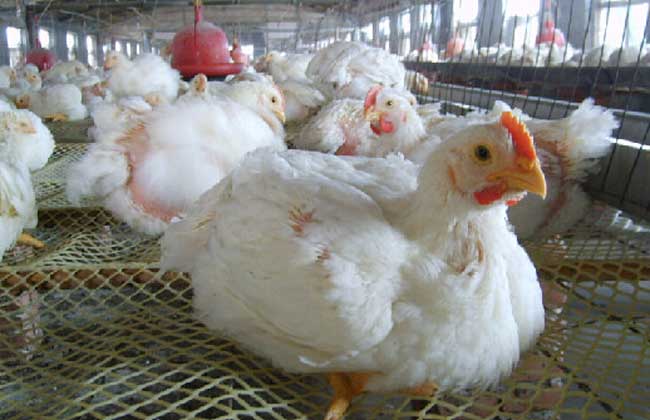
Broiler chicken is the most commonly raised poultry by humans. Domestic chickens originate from the wild red junglefowl, with a domestication history of at least about 4000 years, but it was not until around 1800 that chicken meat and eggs became mass-produced commodities. The market price of broiler chicken is not fixed either, with sales ranging from 4.5 yuan per jin to 5.7 yuan per jin. Let's take a look below at exactly how much broiler chicken costs per jin!
How much is broiler chicken per jin?
The market price of broiler chicken fluctuates considerably, generally 5 yuan to 8 yuan per jin, but at most no more than 10 yuan. The price of free-range chicken is much higher than that of broiler chicken, usually 18 yuan to 20 yuan per jin, and good-quality ones can sell for over 30 yuan per jin.
How much does a broiler chicken weigh?
The body weight of broiler chicken is related to the breed. The AA white-feathered broiler has an average weight of 3 kg, the Avian white-feathered broiler about 3.5 kg, the Peterson white-feathered broiler about 3 kg, the Dixie red-feathered broiler an average of 3.5 kg, the Redbro red-feathered broiler around 3 kg, the Hypeco red-feathered broiler an average of about 3.5 kg, the Shiqi hybrid broiler about 2 kg, and the Lingnan yellow chicken about 1.5 kg.
How to select broiler chicken
1. Healthy chicken: A healthy chicken is lively and energetic, with tight and glossy feathers, bright and alert eyes with eyeballs filling the entire eye socket, a bright red comb and wattles, an upright comb, soft wattles, wings held close to the body, glossy feathers, and strong and powerful claws, moving freely. Sick chickens lack the above characteristics. If touching a chicken's breast and crop gives a feeling of swelling with gas or hard impacted food, and it cannot stand steadily, it should not be bought.
2. Choose a young chicken: To identify whether a chicken is old or young, mainly look at the feet. A young chicken has thin skin on the foot pad, no stiffness, little wear on the toe tips, and short protrusions between the ankles.
3. Free-range chicken: We all like to use free-range chicken (also called chai chicken, grass chicken, or native chicken, meaning chickens raised by farming families) for making chicken soup. The way to identify them is to look at the feet. Free-range chickens have thin, pointed and long claws that are rough and strong, while confined chickens have short feet, thick claws, and round, fleshy legs.
4. Live-slaughtered chicken: If buying a chicken that has already been slaughtered, pay attention to whether it was slaughtered after death. If the slaughter cut is uneven and the blood was well drained, it was slaughtered while alive. If the cut is even, or even there is no cut, the blood was not well drained and there is residual blood that is dark red, then it can be determined that the chicken was slaughtered after death.
5. Water-injected chicken: If you find red needle points behind the chicken's wings with black coloring around them, it is definitely a water-injected chicken. If pinching the chicken's skin gives an obvious slippery feeling, it has also definitely been injected with water.