How much is a jin of eggs? A look at market prices
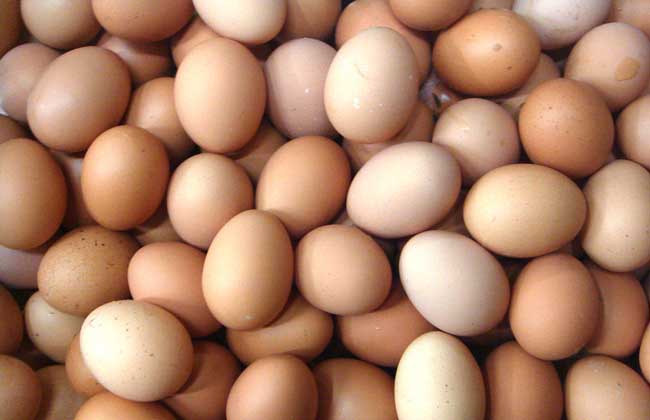
Eggs are the ova laid by hens, with a hard shell on the outside and an air chamber, egg white and yolk inside. The amino acid ratio of their protein fits human physiological needs very well and is easily absorbed by the body, with a utilization rate of over 98% and very high nutritional value. One egg weighs about 50 grams and contains 7 grams of protein. Let's take a look below at how much a jin of eggs costs!
How much is a jin of eggs?
The price of eggs differs from place to place; ordinary eggs are generally around 4.5 yuan. At the same time, prices also differ according to the variety of egg: eggs from hens fed on feed (larger in size, not very nutritious) are about 4 to 5 yuan per jin, eggs from hens fed on coarse grains are about 6 to 7 yuan per jin, eggs from home-raised hens fed on green vegetables and rice (smaller in size, high nutritional value) are about 8 to 9 yuan per jin, and green-shelled eggs are about 10 to 15 yuan per jin.
How should eggs be stored?
1. Soak the eggs briefly in salt water and they can be kept fresh for several months.
2. Wash the eggs, dip them in boiling water for half a minute, dry them and seal them, and they can be kept for several months.
3. Coat the surface of the eggs with a layer of cooking oil or vaseline to block bacteria from entering and extend the freshness period.
4. Spread some wood shavings, sawdust, fine sand, rice bran, grain husks or plant ash in a container, and place the eggs upright with the small end down to extend the freshness period.
5. Put a 6 cm thick layer of beans at the bottom of the container, arrange a layer of eggs with the large end up, then spread another layer of beans; they can be kept for several months.
6. Soak the eggs in a 2 to 5% alum water solution and they can be kept fresh for a longer time.
How can free-range eggs be identified?
1. Size: free-range eggs are laid by hens raised at home. If the breed of such chickens is relatively pure, they generally lay very few eggs, because the chickens themselves grow up eating rice, grain and grass rather than feed, so the eggs they lay are not as large as those of feed-fed chickens.
2. Appearance: if the eggs are laid by free-range chickens, the color is certainly not as bright and distinct as that of feed-fed chickens; their color appears rather pale and whitish, while feed-fed chickens' eggs are darker in color.
3. Shaking the egg: everyone knows there are still many artificial eggs and bad eggs around. In this situation, you can shake it with your hand; if there is a slight movement, it shows it is a real egg. If when you shake it, it feels as though the inside is loose, or for a long time there is no weight or movement at all, this shows it is a fake egg or a bad egg.
4. Breaking the egg: for a seller you are not very confident about, you can ask to break the egg open. If the other party is very certain and is also willing to let you break it, believe that he will think you are an expert, and he is probably not wrong.
5. Inner membrane: eggs all have a thin membrane. If you have tried the method above, you can choose to look at this membrane. If it is thick, then it is definitely not a free-range egg; generally free-range eggs have a very thin, very soft membrane. If you cannot judge this, just pay attention when you eat eggs normally and you will find that some shells are really thin and some are very thick.
6. Yolk: the yolks of free-range eggs are all quite small, because the eggs themselves are small, and the yolk cannot be much bigger either; the color is generally more of a golden yellow. If it is relatively large and pale yellow, then it is not a real free-range egg.
7. Stirring: usually before frying an egg, we beat the egg, and at this point we need to stir it. When stirring with a utensil, if it breaks apart right away, that shows it is not a free-range egg; generally free-range eggs need to be stirred for quite a while before they break apart, because they are very thick.