What is the general market price of turkey?
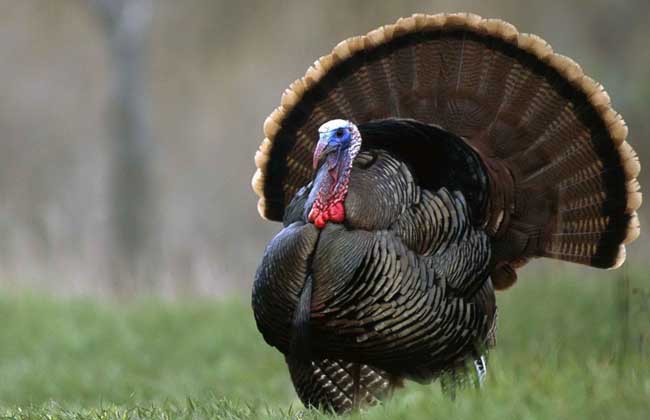
Turkey is also known as the tufted turkey, common turkey, seven-faced chicken, seven-faced bird, and so on. It originated in the United States and Mexico, and was first domesticated as poultry in Oaxaca, Mexico. It was introduced to Europe at the end of the 15th century and was introduced to China even later. It is an essential food for Thanksgiving. Let us take a look at the market price of turkey below!
Market price of turkey
At present, domestic live turkey is about 25 yuan/jin, and dressed turkey is about 30 yuan/jin, but on the eve of Thanksgiving and Christmas, the market price of turkey rises sharply. The price of turkey poults is much more expensive than that of ordinary chicks, generally around ten to twenty-plus yuan each.
Selection of turkey breeds
1. Bronze turkey: The Bronze turkey originated in the Americas and is named for the bronze sheen of its feathers. It lays about 60 eggs per year. The hen weighs 8 kg and the tom weighs 16 kg. It was introduced to China too long ago, and at present it has degenerated seriously.
2. Nicholas turkey: The Nicholas turkey was developed through selection by the Nicholas Turkey Breeding Company of the United States. The largest adult tom weighs 25 kg, and the hen weighs about 12 kg. It lays 60-80 eggs per year. Its feathers are pure white. There is a great disparity in weight between males and females, and the fertilization rate of natural mating is poor, so artificial insemination must be carried out. It is suitable for intensive factory farming.
3. Beltsville turkey: The Beltsville turkey originated in Mexico and was later bred and domesticated by the Beltsville Turkey Breeding Company of France. It has now become the only breed in the world that can be both grazed and raised in housing. It tolerates coarse feed, gains weight quickly, has a high feed conversion rate, and strong disease resistance. It lays 90-120 eggs per year. The tom weighs about 10 kg, and the hen about 5 kg.
Advantages of raising turkeys
1. Rapid growth: Under normal conditions, at 140 days heavy-type turkey toms can reach 16-20 kg and hens 9-15 kg, medium-type turkey toms can reach 13-15 kg and hens 8-10 kg, and light-type turkey toms can reach 10-12 kg and hens 5-8 kg.
2. High meat yield: Turkey has long had the fine reputation of being a “meat-making machine”. It has well-developed breast meat and leg meat, accounting for more than 40% of live weight. The live slaughter rate reaches 64%, and the carcass slaughter rate can reach more than 85%. It is currently the poultry with the highest meat yield among all poultry. The weight of breast meat and leg meat alone accounts for more than 40% of live weight, which many poultry cannot compare with.
3. Strong reproductive capacity: With artificial incubation, each turkey can lay 180 eggs per year, and with natural incubation it can lay 80-100 eggs per year. The fertilization rate and hatching rate are both above 90%. Turkeys generally begin laying eggs at 6-7 months of age. After laying 15-25 eggs, they begin to brood, and the incubation period is 26-28 days.
4. High survival rate: Generally, newly hatched turkeys can weigh 110-130 grams, and the survival rate is above 95%.
5. Strong adaptability: Turkeys tolerate coarse feed, are easy to raise, can resist heat and cold, and can adapt to various harsh environments by sleeping outdoors and scratching through snow to find food. In artificial rearing, all kinds of wild grasses, wild vegetables, insects, and all crop straw crushed into powder and mixed evenly can all be used as turkey feed, and they can adapt to both housing and grazing. Generally, one person raising 200-300 commercial turkeys does not affect other field work.
6. Resource saving: Turkeys are especially suitable for free-range raising in orchards, woodlands, riverbanks, barren slopes, and other places. They are not only the best “weeding machines” but their manure can also improve the soil and fertilize trees.
7. Waste utilization: After crop straw, dry leaves, vegetable leaves, and so on are crushed, they can be used as feed; turkey manure can be used both as fertilizer and as fish feed. This truly achieves ecological farming, healthy farming, grain saving, and circular economy development.
8. High benefits: Turkeys save on grain, with concentrated feed accounting for only 30%, and they can save 50% of grain compared with ordinary meat chickens. Turkeys have a high input-output ratio. Each turkey requires only 20 yuan per year in water, electricity, and feed costs to achieve the effect of scientific rearing, and can bring in 80-100 yuan. The input-output ratio reaches 1:4 to 1:5. Commercial turkeys can grow to 10-17 kg in six months, and after deducting breeding costs, each turkey can make a profit of about 50 yuan.