How much does a Princess Chicken cost now?
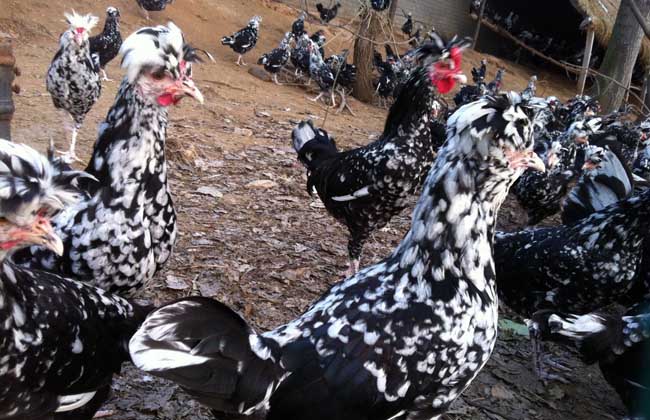
The Princess Chicken, also known as the Lady Chicken, originated from the British royal family. It wears a phoenix crown on its head and is covered in black-and-white patterned feathers. Born with natural beauty, it was named “Princess Chicken” by the British royal family, kept exclusively for court viewing and imperial use, and commoners were forbidden to raise it. Prices vary by region. Let's take a look at the market price of the Princess Chicken below!
How much does a Princess Chicken cost?
Princess Chickens are generally ready for market at 4 months. The cost per chicken is about 18 yuan, retail price is 25 to 30 yuan per jin, and wholesale price is about 18 yuan per jin. Market prices vary by region.
Physical Characteristics of the Princess Chicken
The Princess Chicken has whiskers that cover part of its eyelids, large and alert eyes, and prominent exposed nostrils. Adult Princess Chickens have black as the base color of their whole-body plumage, with irregular white splashes distributed across the body; the white splashes are denser on the head, neck, and chest. The beak is pale flesh-colored, and the shanks are flesh-pink with pale black spots. The tail tilts upward, the body is light, the gait is slow, and the bearing is noble. Adult roosters have very obvious “three comb” features. Unlike ordinary chickens, the Princess Chicken has five “toes”, plus a “spur” that can be used to estimate age. Princess Chickens generally begin to grow the “spur” at 4 months of age, and it can grow to more than 1 cm by 12 months of age. To the layperson, five “toes” plus one “spur” looks like six toes.
Living Habits of the Princess Chicken
1. The Princess Chicken has all the characteristics of domestic chickens. It is more tolerant of coarse feed and has stronger disease resistance than domestic chickens, but is more sensitive to changes in the external environment than domestic chickens.
2. Princess Chickens are highly gregarious and not prone to fighting. During rearing, if the original pecking order is disrupted, it can cause the whole flock to fight and re-establish the order. Lady Chickens adapt to various rearing methods.
3. Princess Chickens are lively in temperament and agile in movement. Once startled, they can take flight and are good at low flying. Therefore, the poultry house for Lady Chickens should have an exercise yard, with both perimeter netting and overhead netting.
4. Princess Chicken meat is good, egg production is high, feeding habits are broad, and feed conversion rate is high. They grow quickly; at 90 days of age, the live weight for market reaches 900-1000 grams, consuming about 5-6 kg of feed.
5. Lady Chickens can be infected by any infectious disease of domestic chickens, but recover faster than domestic chickens, and are relatively sensitive to infectious bursal disease of chickens.
6. Princess Chickens basically have no broodiness; the few that show broody behavior can be brought out of it in a relatively short time.
7. Princess Chickens are afraid of dampness, love dust bathing, and have phototaxis.
8. Princess Chickens do not like to lay eggs in nest boxes. They prefer to dig small pits in the sand to lay eggs, and sometimes several chickens crowd into one sand pit to lay eggs at the same time. They do not peck eggs.